
The Reader wire sculpture by Peter Walker outside former Ashton Public Library
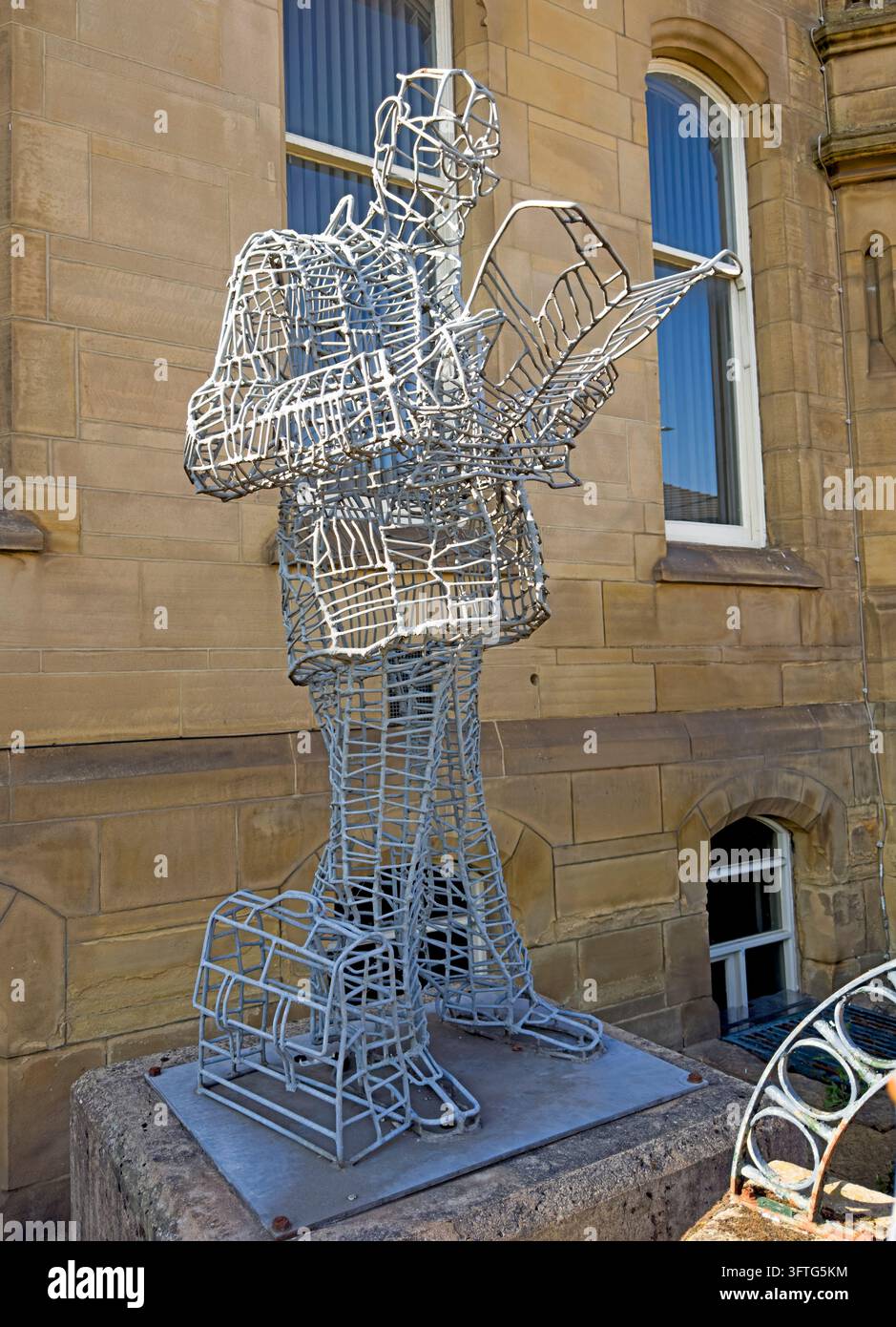
Image details
Contributor:
Tony SmithImage ID:
3FTG5KMFile size:
89.2 MB (3.3 MB Compressed download)Releases:
Model - no | Property - noDo I need a release?Dimensions:
4749 x 6568 px | 40.2 x 55.6 cm | 15.8 x 21.9 inches | 300dpiDate taken:
22 August 2026Location:
Ashton-under-Lyne, Tameside, Greater Manchester, EnglandMore information:
Metal wire sculpture titled The Reader, unveiled in 2007 by artist Peter Walker, photographed outside the former Ashton Public Library in Ashton-under-Lyne, Greater Manchester. The work depicts a seated or posed human figure holding an open book, constructed from a lattice of silvery metal that allows the building behind to be seen through the form. The figure’s head, arms and book are suggested by the framework rather than by a solid sculpted surface. This transparent construction gives the artwork a light visual presence while still making the act of reading recognisable. Installed in a setting connected to a former public library, the sculpture has a close thematic relationship with literacy, learning and civic education. Libraries have long been important institutions in British towns, providing access to books, information, research and communal cultural activity. The photograph links that history to a contemporary form of public art. Sandstone architectural details and windows in the background provide a strong historic contrast with the modern metal figure. The mesh technique keeps the outline of the book and figure light against the heavy masonry of the former library. From the photographed angle the book is held at chest height, with the hands and arms forming an open shape around it. Public art at former library buildings can preserve a cultural memory of education and reading even as municipal property changes use over time. The blue-painted windows, carved stone surrounds and deeply set openings give the background a formal civic character, contrasting with the sculpture’s open, almost weightless outline. Because the metal strands admit light and views of the façade, the figure changes against the building as the viewer moves. The artwork occupies a public-facing position where passers-by can encounter it without entering the former library, extending the reach of civic art beyond a gallery or exhibition room.

