
Woman with dogs by a polling-station sign in Grappenhall, Warrington.
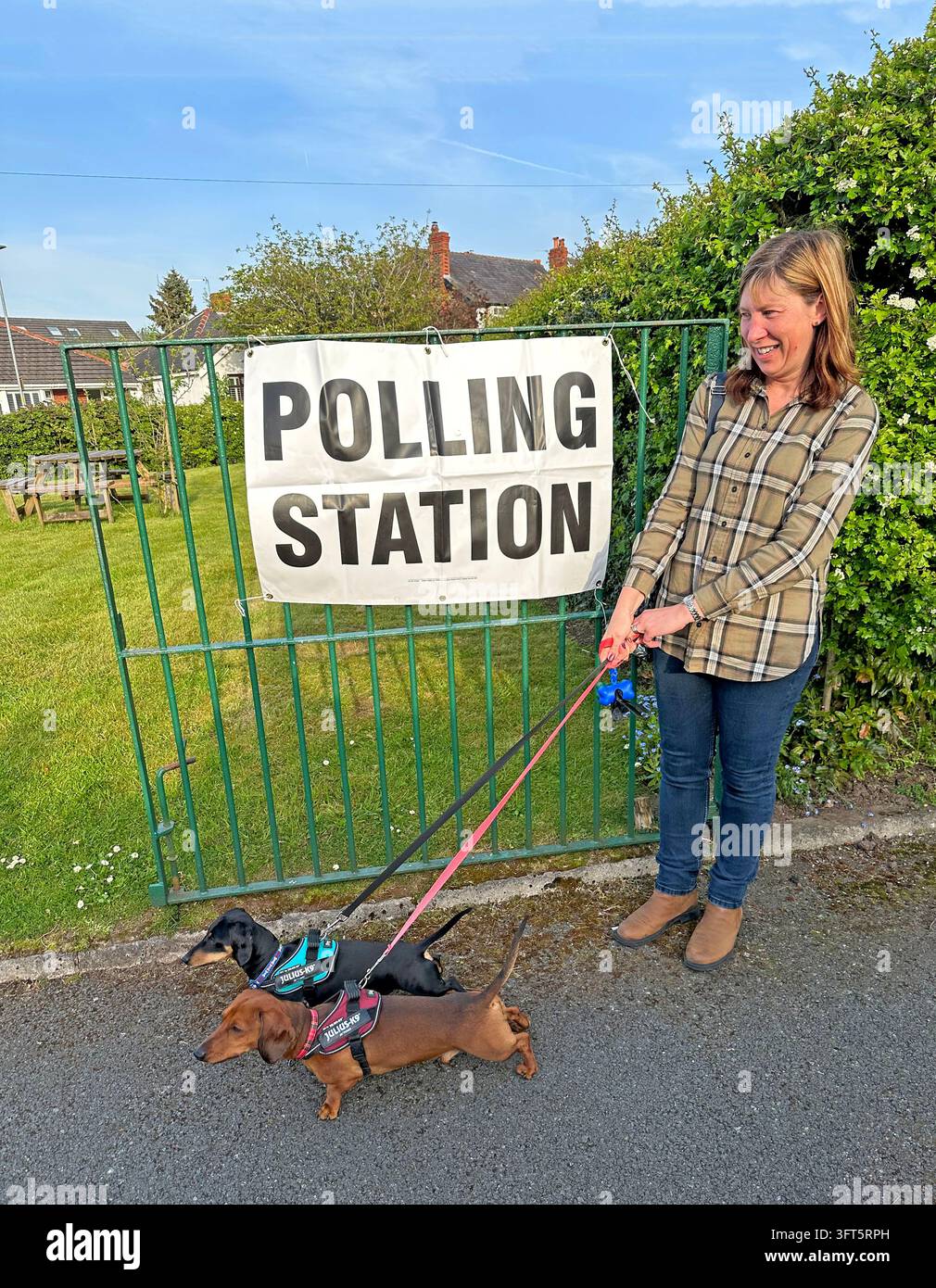
Image details
Contributor:
Tony SmithImage ID:
3FT5RPHFile size:
39 MB (2.8 MB Compressed download)Releases:
Model - no | Property - noDo I need a release?Dimensions:
3257 x 4190 px | 27.6 x 35.5 cm | 10.9 x 14 inches | 300dpiDate taken:
2 May 2024Location:
Grappenhall, Warrington, Cheshire, EnglandMore information:
A woman stands outside beside two small dogs on leads next to a large white sign marked 'POLLING STATION'. The polling venue sits in a green area behind metal railings in Grappenhall, Warrington, while strong daylight creates a clear view of the temporary election sign. The dogs bring an everyday domestic element to an image of British democratic participation. The photograph can accompany reports on elections, polling-place accessibility, people combining voting with normal daily activities, and the familiar online phenomenon of photographing dogs outside polling stations. No ballot paper or vote is shown. Elections in the UK rely on numerous local polling venues that are temporarily signed and staffed for the duration of voting. People attend these sites as part of ordinary daily routines, sometimes on journeys made for other reasons. The familiar image of a dog near a polling-station sign has also become part of informal social-media election-day culture. A white temporary notice with large black lettering is fixed to a metal fence, facing people approaching the location. The woman stands beside it holding leads attached to the small dogs, one brown and one darker coloured, with grass stretching out behind the railings. The open-air foreground makes the scene feel informal even though the sign identifies an official electoral facility. Polling-station notices are important for wayfinding on election days, particularly where voting takes place inside a school, community building or hall that serves other purposes throughout the year. The familiar phrase 'dogs at polling stations' also connects public participation with pets accompanying their owners on the way to vote. Neither the election being contested nor the woman's voting status is established by this exterior photograph. The clear composition is primarily a view of how democratic events sit within everyday neighbourhood routines.

