
Hamilton Square Merseyrail station, Hamilton Square, UK.
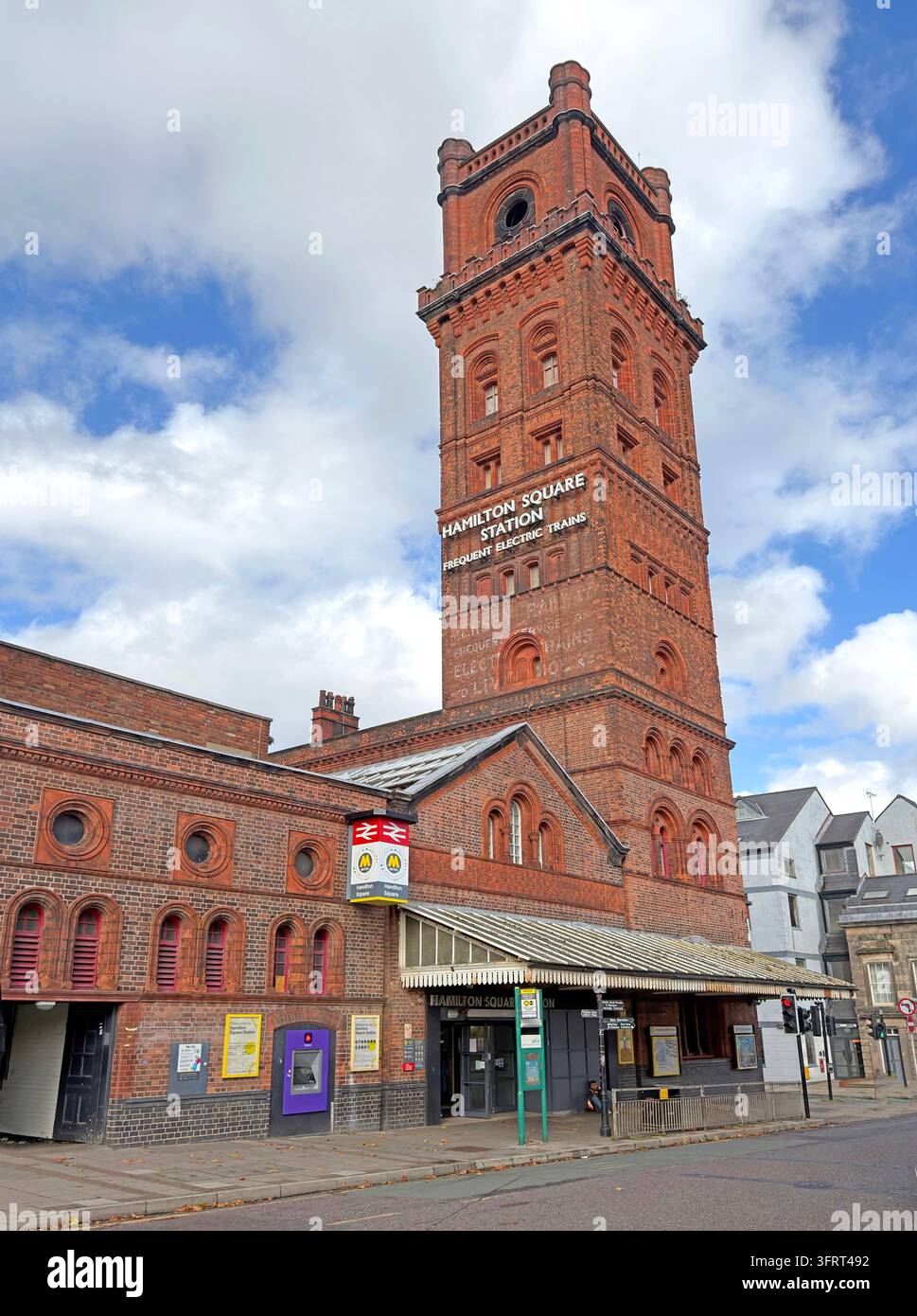
Image details
Contributor:
Tony SmithImage ID:
3FRT492File size:
90 MB (3.5 MB Compressed download)Releases:
Model - no | Property - noDo I need a release?Dimensions:
4843 x 6492 px | 41 x 55 cm | 16.1 x 21.6 inches | 300dpiDate taken:
9 October 2026Location:
Hamilton Square, Birkenhead, Wirral, Merseyside, England, UKMore information:
Birkenhead Hamilton Square railway station is photographed from the street, showing its tall red-brick and terracotta entrance building, arched openings, historic tower and Merseyrail branding. The building combines the elaborate public architecture of the nineteenth-century railway with the signage of a present-day urban transport network. Its brick masonry rises above the station entrance to form a conspicuous landmark on Hamilton Street in Birkenhead, Wirral. The station was constructed for the Mersey Railway and opened to passengers on 1 February 1886. Architect G E Grayson designed the building in an Italianate style, and it is protected as a Grade II listed structure. Its original railway formed one of the earliest underground cross-river links between Birkenhead and Liverpool. The line passed beneath the River Mersey to Liverpool's James Street station, providing a lasting alternative to ferry journeys and helping connect employment, shopping and residential districts on opposite banks. This demanding engineering requirement helped determine the unusual scale and form of the surface building. The original steam-operated line was subsequently electrified, with electric passenger services introduced in 1903. The railway frontage stands close to Hamilton Square, an area distinguished by its nineteenth-century planned townscape and civic buildings. Ornamental terracotta, deeply recessed windows and the entrance's decorative elements belong to an architectural period when railway companies invested in prominent street-level structures. The deep underground alignment was a significant achievement for Victorian railway engineering, especially where tracks passed beneath a major tidal river. The station frontage therefore represents the visible entrance to a much larger system of tunnels, platforms, lifts and electric railway equipment. Its survival gives the streetscape a tangible link to the early Mersey Railway.

