
A historic red railway destination board reads All Stations to Middleton-in-Teesdale in white lettering.
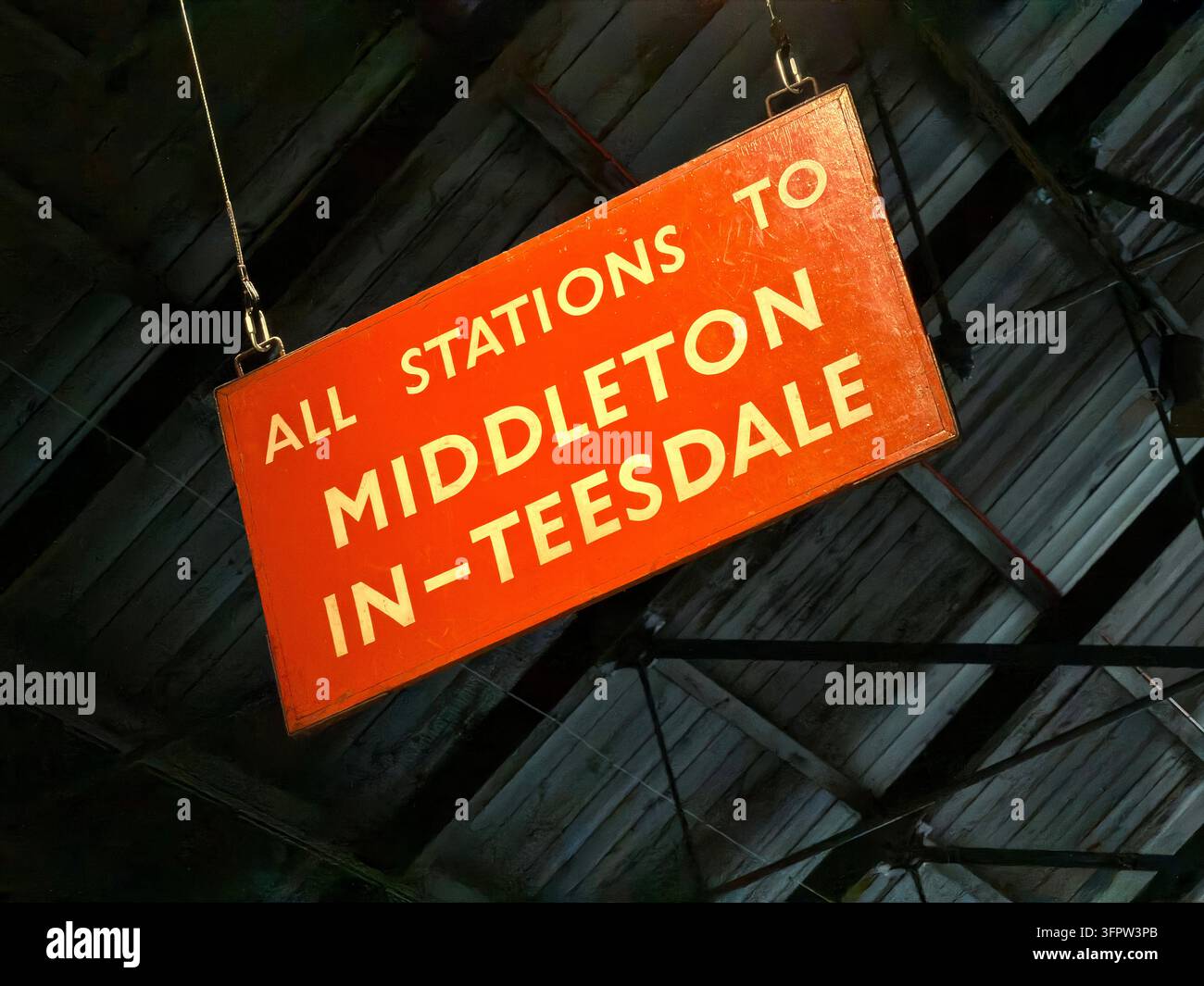
Image details
Contributor:
Tony SmithImage ID:
3FPW3PBFile size:
66.4 MB (3.2 MB Compressed download)Releases:
Model - no | Property - noDo I need a release?Dimensions:
5564 x 4173 px | 47.1 x 35.3 cm | 18.5 x 13.9 inches | 300dpiDate taken:
5 September 2026More information:
. A rectangular red sign hangs under an old roof or display structure with bold white capital letters reading ALL STATIONS TO MIDDLETON-IN-TEESDALE. Its well-worn finish and traditional typography make it recognisable as a historic form of passenger railway information. Middleton-in-Teesdale lies in County Durham and was historically served by a branch railway connection into the Tees Valley network. As rural branch lines contracted during the twentieth century, many local stations and the public notices associated with them disappeared from everyday use. Surviving signs are important small artefacts of that era because they preserve names, destinations, operating conventions and the visual design of railway passenger information. Railway heritage collections often bring such material together so that visitors can understand how ticketing, station management and journey information functioned before electronic displays. The distinctive lettering is comparatively simple: a statement of the line’s destination rather than a complex timetable or route diagram. Such fixed boards were sufficient where railway staffing and locally understood service patterns supplied the remaining information. Rural branch railways connected communities with market towns and larger junctions, enabling travel, parcels and freight movements before widespread private car ownership. Their closures have left physical traces in the landscape, along with surviving tickets, plans, photographs and enamel notices. The photographed board is valuable because it names a particular destination that no longer appears as a regular National Rail passenger terminus. Its direction to Middleton-in-Teesdale recalls the North Eastern Railway network and branch-line services that once linked market towns and rural communities. The railway station sign uses suspended mounting fittings suited to prominent display beneath a station roof.

