
No sexists no racists no fascists sign inside the King Charles I pub in King's Cross London
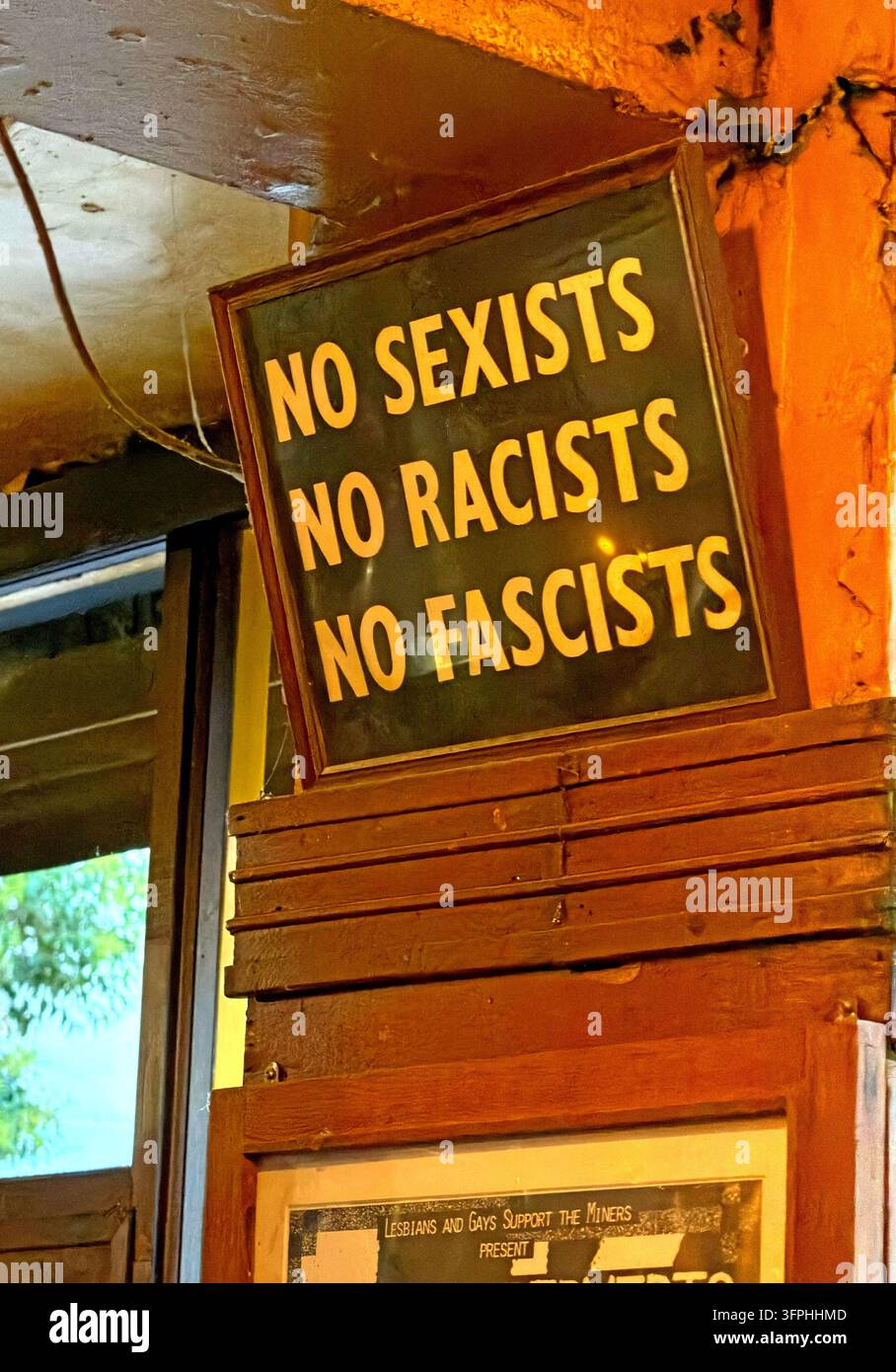
Image details
Contributor:
Tony SmithImage ID:
3FPHHMDFile size:
58.7 MB (3.7 MB Compressed download)Releases:
Model - no | Property - noDo I need a release?Dimensions:
3786 x 5416 px | 32.1 x 45.9 cm | 12.6 x 18.1 inches | 300dpiDate taken:
23 September 2026Location:
King Charles I, Kings Cross, London, England, UKMore information:
. A framed notice inside the King Charles I pub near King's Cross in London sets out three firm messages: No Sexists, No Racists and No Fascists. The sign hangs against warm-coloured interior woodwork and is presented as part of the pub's visible character. It provides an editorial illustration of anti-discrimination messaging, the political identity of hospitality venues and the way public houses communicate expectations about behaviour and inclusion. The photograph captures the wording of the notice rather than proving how rules are enforced or how patrons respond. The uncompromising wording is a statement of social boundaries within an independent London pub: sexism, racism and fascism are explicitly unwelcome. Signs of this kind can become symbols in discussions of inclusivity, prejudice and the place of political expression in public-facing hospitality spaces. They may also reflect the cultural identity and traditions of an establishment rather than an enforceable description of its customers. In 2026 debates around migration, extremism, equalities and discrimination continue across British politics and public life, including arguments about freedom of expression and responsibility for maintaining safe venues. The photograph captures a physical notice in an informal social environment, not an actual racist, sexist or extremist incident. The timber wall and framed treatment give the message the appearance of a settled house rule. It can be used to illustrate how local businesses express values directly to patrons, the role of pubs as community meeting places, and anti-discrimination messages displayed in everyday urban culture. The strength of the three-line message lies in its plain language and lack of qualification. It is designed to be read quickly inside the venue and functions as an unmistakable signal about acceptable conduct, rather than as a formal statement of public law or government policy.

