
The Dolphin public house on Mare Street in Hackney London with its traditional blue frontage
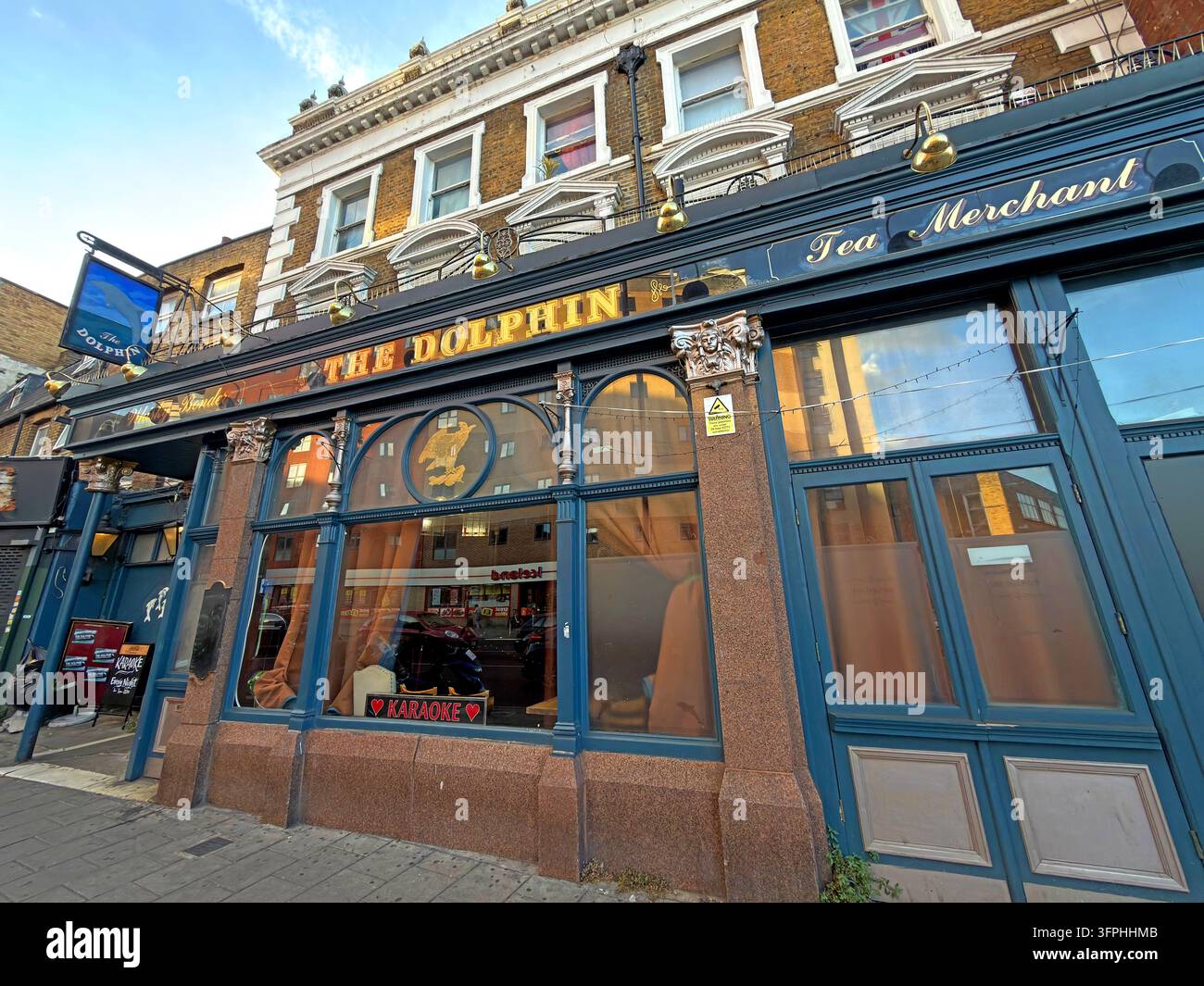
Image details
Contributor:
Tony SmithImage ID:
3FPHHMBFile size:
101.1 MB (4.4 MB Compressed download)Releases:
Model - no | Property - noDo I need a release?Dimensions:
6864 x 5148 px | 58.1 x 43.6 cm | 22.9 x 17.2 inches | 300dpiDate taken:
23 September 2026Location:
The Dolphin, Mare Street, Hackney, London, England, UKMore information:
. The Dolphin public house stands on Mare Street in Hackney with an ornate deep-blue frontage and gold signage reading THE DOLPHIN. Its upper brick facade and traditional ground-floor pub design are seen from across the street. The photograph documents a well-known type of East London neighbourhood venue and can be used in stories about the capital's pub culture, historic commercial facades, hospitality business pressures and changing nightlife. The scene itself does not establish the pub's current management, operating hours or heritage designation. Traditional London pubs face a combination of changing drinking habits, property costs, staffing expense and pressure on commercial premises, while many remain important local social venues. The Dolphin's dark-blue and gold frontage stands out against neighbouring brick buildings on Mare Street, close to the London Fields area of Hackney. In 2026 hospitality industry debate continues to centre on business rates, energy costs, labour costs and whether policy gives enough support to independent pubs. Pubs may also serve as landmarks in neighbourhoods where housing costs, new development and the mix of residents have changed over time. This street-level exterior shows the architectural role of a public house within a commercial parade; it does not establish that a business is profitable, struggling or closing. The ornate lettering and painted woodwork offer strong visual material for documenting traditional pub identities, London's night-time economy, community hospitality, heritage shopfronts and the way established venues distinguish themselves from modern branded bars. Pub buildings often retain distinctive architectural identities even as neighbouring retail tenants change. Maintaining prominent painted signage and decorative exterior timberwork can be costly, but those features help older establishments remain recognisable landmarks in their immediate neighbourhood.

