
Ornate Philharmonic Dining Rooms hanging pub sign on Hope Street in Liverpool
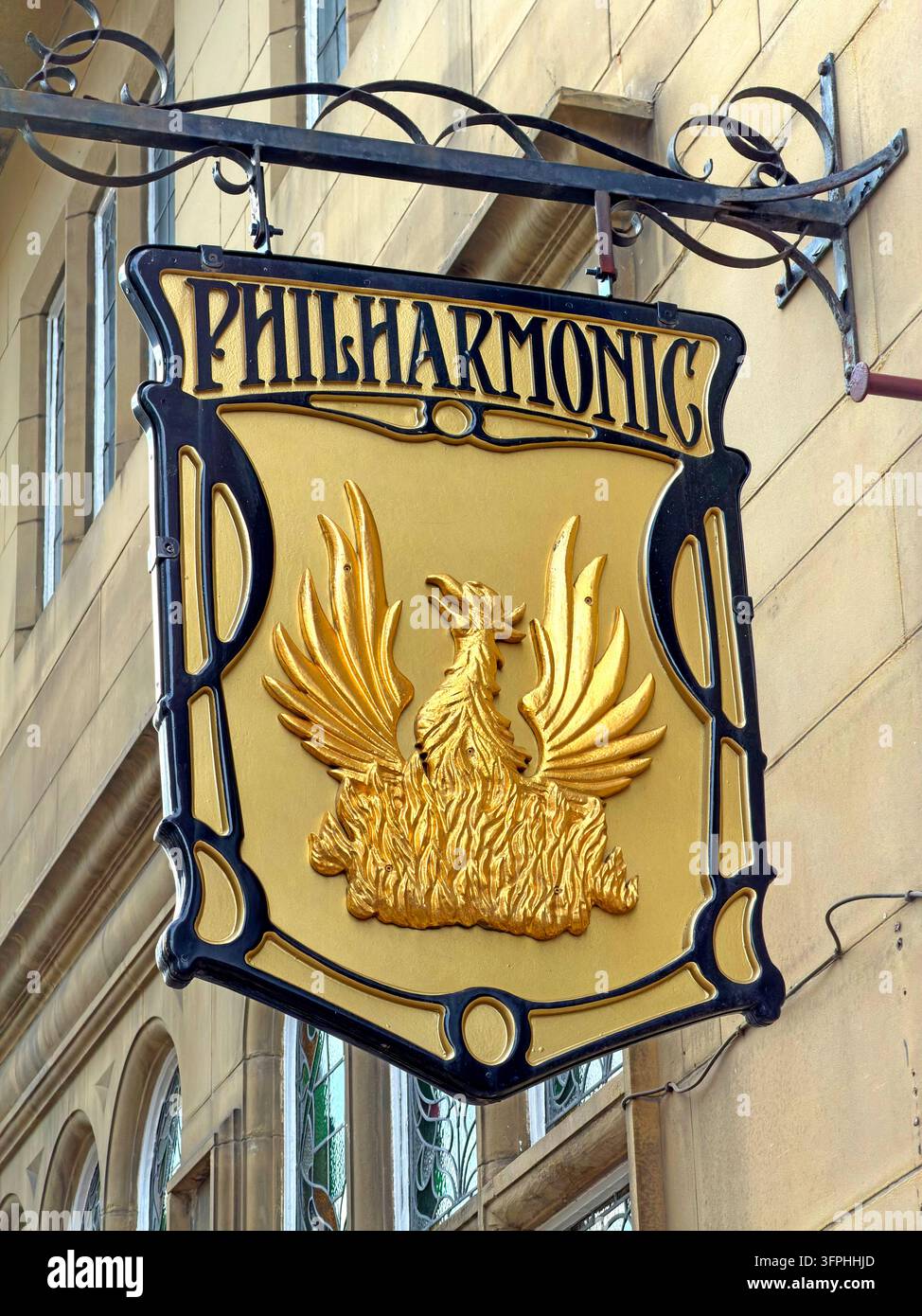
Image details
Contributor:
Tony SmithImage ID:
3FPHHJDFile size:
107.1 MB (5.1 MB Compressed download)Releases:
Model - no | Property - noDo I need a release?Dimensions:
5298 x 7064 px | 44.9 x 59.8 cm | 17.7 x 23.5 inches | 300dpiDate taken:
19 September 2026Location:
The Philharmonic Dining Rooms, Hope Street, Liverpool, Merseyside, England, UKMore information:
. An ornate projecting sign outside the Philharmonic Dining Rooms on Hope Street in Liverpool features the word PHILHARMONIC above a golden bird emblem. A dark decorative frame and curled metal bracket make the sign a prominent piece of street-level craftsmanship. The image is useful for illustrating British pub signage, historic hospitality architecture, Liverpool's cultural quarter and the preservation of ornamental commercial detailing. The photograph focuses on the sign itself, not the entire pub or its internal facilities. The projecting sign outside Liverpool's Philharmonic Dining Rooms is an emblem of the building's connection to the music and architectural heritage of Hope Street. Historic England identifies the pub, completed in 1900, as a Grade I-listed example of a highly ornate late-Victorian gin palace designed by Walter W Thomas. The elaborate phoenix-like golden motif, wrought-metal support and decorative lettering fit the building's unusually rich design vocabulary. Hope Street links important cultural venues including Liverpool Philharmonic Hall and the Everyman Theatre, making the sign part of a recognisable cultural route. Heritage tourism and preservation of older commercial buildings remain relevant issues in 2026 as pubs face maintenance costs and wider pressure on the hospitality industry. The image is especially valuable for illustrating architectural details that are easily overlooked in wider street views, including the use of metalwork as both advertising and ornament. It can accompany reporting on listed pubs, Liverpool visitor attractions, the city's musical identity and the economic role of historic buildings. The hanging sign serves two roles: helping passers-by find the premises and announcing an association with Liverpool's established music quarter. Its silhouette can be recognised without a full exterior photograph, an advantage when documenting the smaller architectural details of a protected landmark.

