
A richly coloured stained-glass window depicts a figure playing a stringed instrument and carries words about music as a universal language.
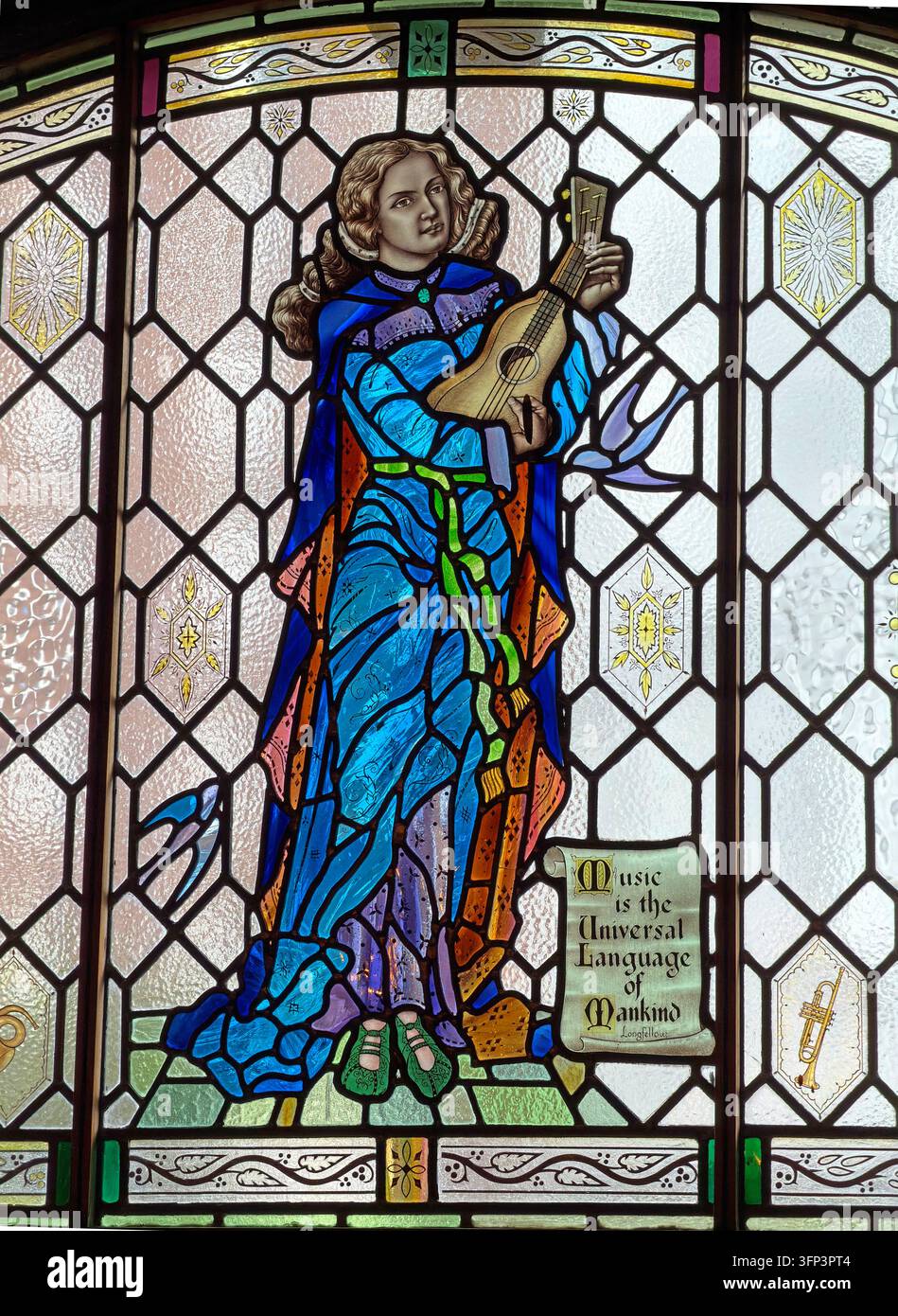
Image details
Contributor:
Tony SmithImage ID:
3FP3PT4File size:
101.8 MB (6.1 MB Compressed download)Releases:
Model - no | Property - noDo I need a release?Dimensions:
5097 x 6978 px | 43.2 x 59.1 cm | 17 x 23.3 inches | 300dpiDate taken:
19 September 2026Location:
Hope Street, Liverpool, Merseyside, L1 9BX, England, UKMore information:
. A richly coloured stained-glass window depicts a figure playing a stringed instrument and carries words about music as a universal language. The decorative glass illustrates the elaborate interiors associated with Liverpool's Philharmonic pub and the cultural connections between music, ornament and the Hope Street area. The stained-glass panel combines coloured pieces of glass, dark lead outlines and a figure holding an instrument. Decorative windows in traditional pubs can contribute to the atmosphere of an interior as well as recording quotations and artistic motifs. Liverpool's Hope Street district has longstanding associations with performance and cultural institutions, which gives a music-themed window a clear local resonance. The leaded glass shows a robed musician against an elaborate decorative backdrop, with strong blues and other saturated colours. The Philharmonic Dining Rooms was built in 1898–1900 for Robert Cain & Sons and is Grade I listed. Its decorative glazing is part of a carefully designed musical and artistic theme, not simply a generic pub window. Leaded and coloured glass are characteristic elements of some richly decorated late nineteenth-century and Edwardian drinking rooms. Glass panels filter daylight, provide privacy and advertise a venue's status through craft detail rather than external signs alone. The Philharmonic Dining Rooms is associated with Liverpool's Hope Street, a cultural area between the city's two cathedrals. Its ornate interiors attract architectural interest as well as ordinary pub customers. Patterns, coloured borders and hand-finished surfaces provide a visual record of the craftsmanship invested in public houses at the height of urban expansion. Such decorative features are relevant to conservation reporting, pub heritage, stained-glass art and the reuse of historic leisure interiors. Photographs of the details help convey what makes a particular venue distinctive.

