
Progesterone 100mg soft capsules beside Vagifem 10 microgram estradiol vaginal tablets, medicines used in menopause hormone replacement therapy.
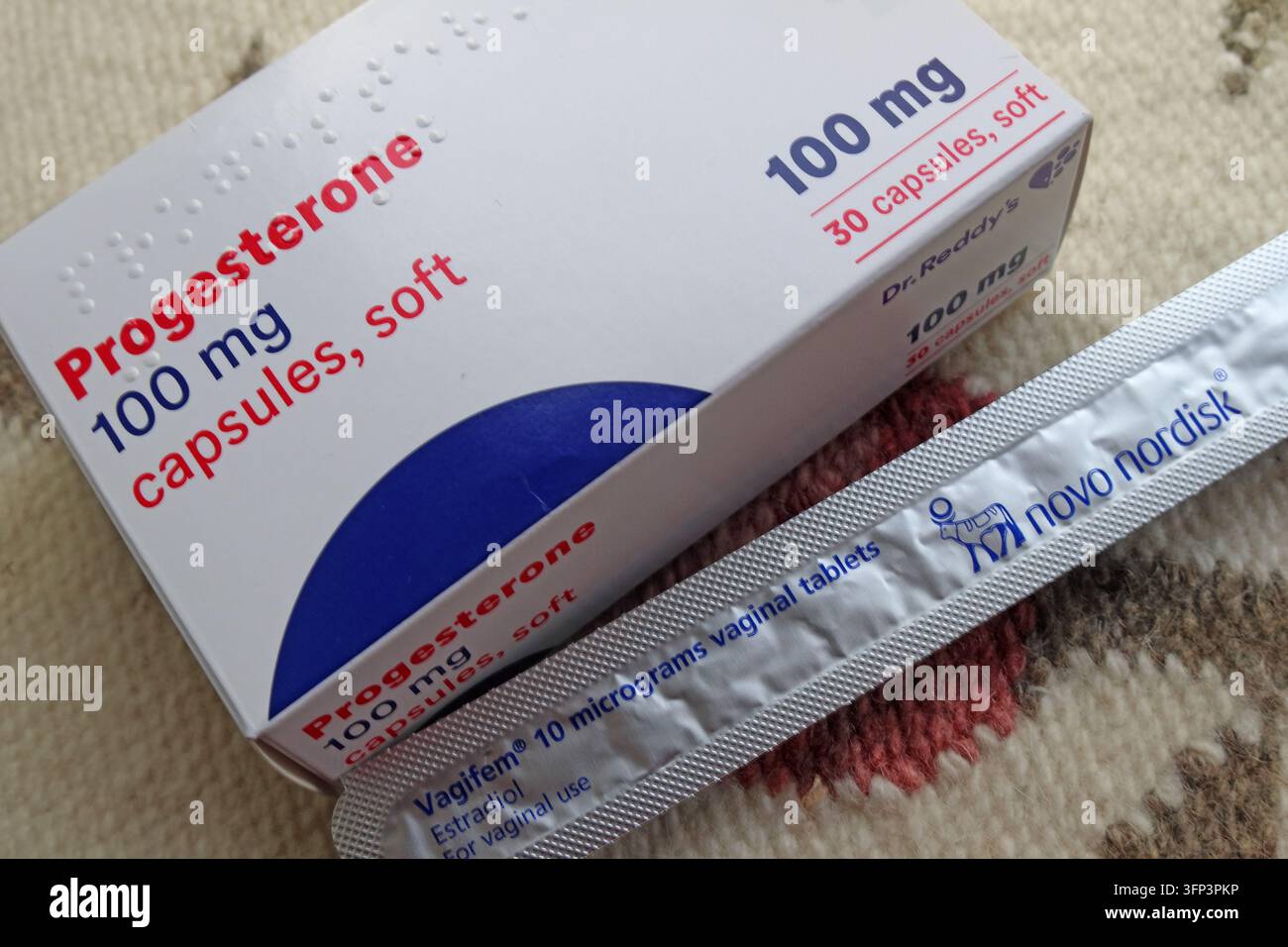
Image details
Contributor:
Tony SmithImage ID:
3FP3PKPFile size:
57.1 MB (1.8 MB Compressed download)Releases:
Model - no | Property - noDo I need a release?Dimensions:
5472 x 3648 px | 46.3 x 30.9 cm | 18.2 x 12.2 inches | 300dpiDate taken:
5 October 2026Location:
UKMore information:
A carton of Progesterone 100 mg soft capsules, marked with Dr Reddy's branding and a pack size of 30, lies beside a silver blister strip for Vagifem 10 microgram estradiol vaginal tablets from Novo Nordisk. Both are prescription hormonal medicines associated with menopause care, but they serve different purposes. Progesterone may be prescribed alongside systemic oestrogen in hormone replacement therapy (HRT) for women with a uterus, helping protect the endometrium against overgrowth. Vagifem delivers a low dose of oestrogen directly to vaginal tissue to relieve genitourinary symptoms of menopause, including dryness and irritation. It is a local treatment rather than a substitute for systemic HRT, and vaginal oestrogen used alone does not usually require progesterone. The medicines are pictured together for illustration; the photograph does not establish that they were prescribed to the same patient. Menopause treatment remains prominent in UK health news in 2026. NHS Business Services Authority figures published in August showed that around two million women aged 40 and over in England received NHS HRT prescriptions in 2025/26, up from about 800, 000 in 2020/21. The statistics also highlighted differences in prescribing between more and less deprived areas, renewing debate about equitable access, symptom recognition and the availability of informed GP consultations. In England, the HRT Prescription Prepayment Certificate offers eligible HRT medicines under a fixed annual charge, although not every hormonal prescription is covered. Current clinical discussions emphasise individual assessment of treatment benefits and risks, and distinguish local vaginal oestrogen from systemic regimens used for wider menopausal symptoms. The packaging, printed doses and contrasting tablet and capsule formulations make this a specific illustration of modern prescription menopause medicines, pharmaceutical provision and women's healthcare in Britain.

