
Warrington's Own Buses vehicles stand at the town centre bus interchange during routine passenger operations.
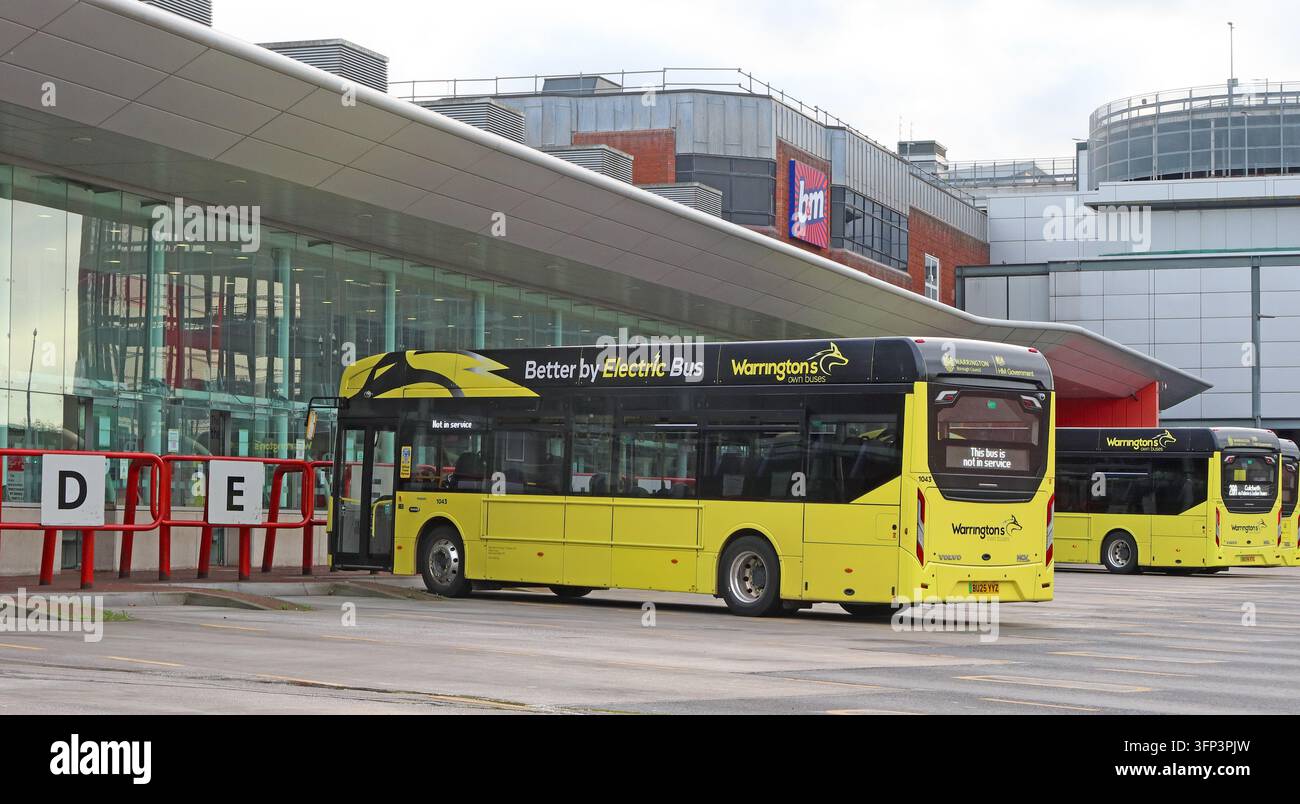
Image details
Contributor:
Tony SmithImage ID:
3FP3PJWFile size:
47.1 MB (1.9 MB Compressed download)Releases:
Model - no | Property - noDo I need a release?Dimensions:
5472 x 3008 px | 46.3 x 25.5 cm | 18.2 x 10 inches | 300dpiDate taken:
4 October 2026Location:
Warrington Interchange, Cheshire, England, UKMore information:
. Yellow and black Warrington's Own Buses electric vehicles are parked at stands alongside the town centre passenger interchange. Electric buses are a visible element of local fleet modernisation and air-quality policy; their environmental impact also depends on electricity generation, manufacturing and actual operation. The yellow battery-electric buses are visible at the interchange rather than in moving traffic. Public charging and depot infrastructure, route suitability and driver training are practical elements of converting a bus fleet from diesel. The presence of an electric bus at a stand confirms neither its battery state nor how many zero-emission services have operated that day. The external livery remains a recognisable local transport feature. A single yellow-and-black bus dominates this frame, with an electric bus message displayed on its body. Other vehicles and the lettered interchange bays sit further behind. Unlike the wider interchange photograph, this image emphasises the individual battery-electric vehicle, external branding and local fleet transition. Warrington's Own Buses has been replacing parts of its fleet with battery-electric vehicles as part of a wider transition in local transport. An interchange photograph records the visible passenger-facing aspect of that change: vehicles arriving at stands in the middle of an established bus network. The yellow-and-black colour scheme is not on its own sufficient to establish a particular vehicle's propulsion system, so an identifying number or visible charging and electric branding is the preferable evidence. Electric buses produce no exhaust emissions at the tailpipe, with broader environmental outcomes linked to the electricity supply and manufacturing. The buses remain part of everyday local journeys, linking residents with work, shopping and services. This view is distinct from wider shots that include retail signage behind the terminus.

