
Asda Rollback display on a UK supermarket aisle, illustrating discount pricing, promotions and household grocery budgets.
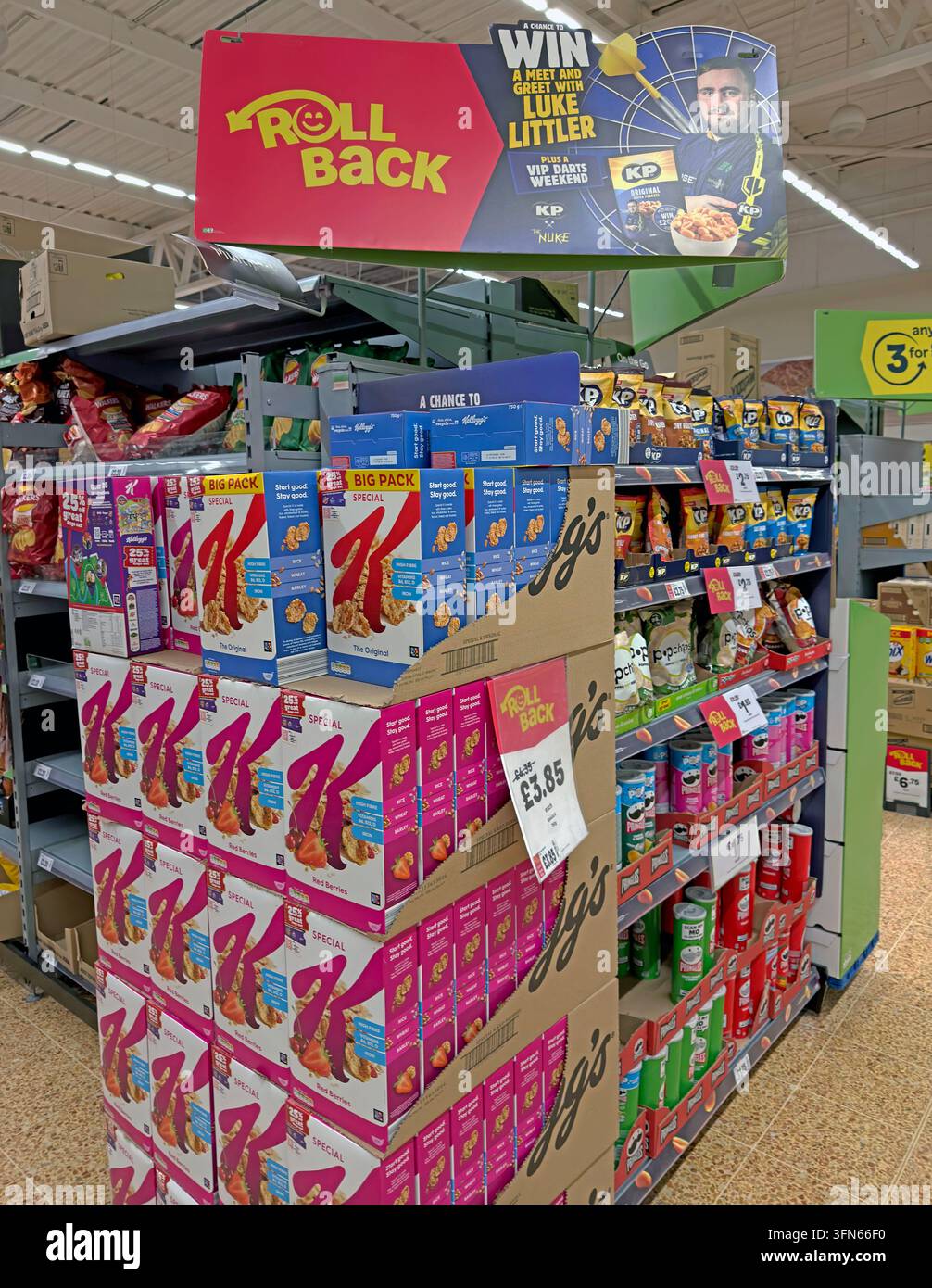
Image details
Contributor:
Tony SmithImage ID:
3FN66F0File size:
88.2 MB (3.2 MB Compressed download)Releases:
Model - no | Property - noDo I need a release?Dimensions:
4886 x 6308 px | 41.4 x 53.4 cm | 16.3 x 21 inches | 300dpiDate taken:
26 September 2026Location:
United KingdomMore information:
. An Asda Rollback promotional display dominates a UK supermarket aisle, with stacked branded grocery products beneath red price-promotion signage. Rollback is one of Asda’s best-known value messages and is designed to signal temporary or sustained price reductions on selected lines. That makes the photograph directly relevant to supermarket price competition, household budgets and the tactics major grocers use to persuade shoppers that they are offering better value. During periods of elevated food costs, promotional mechanics such as Rollback, multibuys, loyalty prices and own-brand alternatives become more important to families trying to control weekly spending. The image can illustrate stories about grocery inflation, supermarket price wars, discounting and changing consumer behaviour without claiming that every product shown is cheaper than at a competitor. The aisle presentation is also a useful example of retail merchandising: products are stacked in volume, promotional boards interrupt the normal shelf layout and strong red branding is used to create urgency. Asda competes in a market where Aldi and Lidl have increased pressure on established supermarkets to demonstrate value, while Tesco, Sainsbury’s and Morrisons use their own combinations of loyalty schemes and promotions. Rollback therefore functions as both a pricing tool and a brand promise. The photograph is suited to coverage of cost-of-living pressures, grocery spending, promotional retail, supermarket marketing, packaged food sales and the everyday decisions households make between brands, offers and lower-cost alternatives. The branded display can also support coverage of promotional dependence, where shoppers increasingly time purchases around temporary reductions rather than standard shelf prices. It shows the visual language supermarkets use to make value claims prominent before a customer has compared unit prices in detail.

