
Lumo Class 222 222601 at London Euston for Stirling, competing with Avanti West Coast on the WCML.
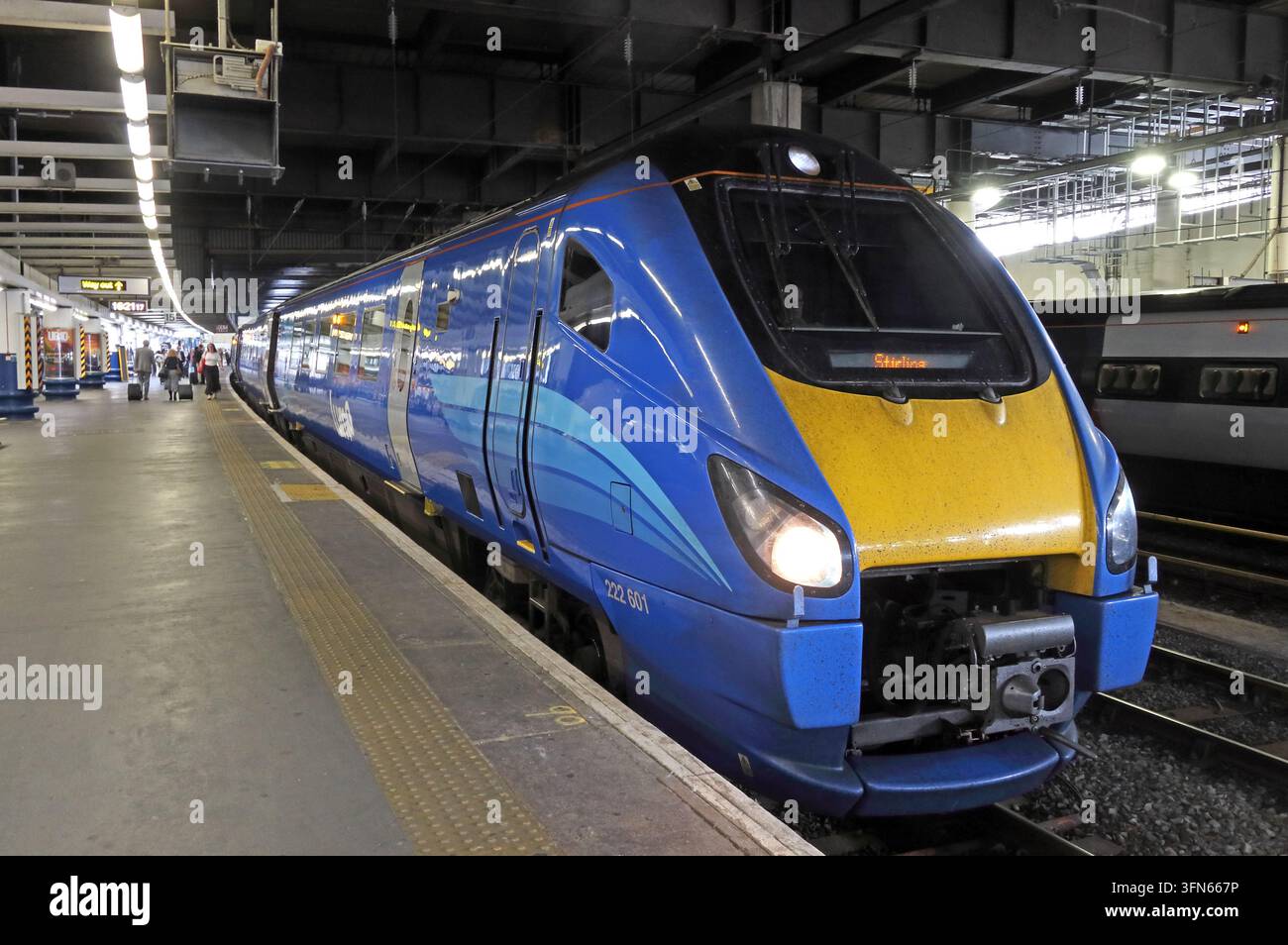
Image details
Contributor:
Tony SmithImage ID:
3FN667PFile size:
53.8 MB (1.8 MB Compressed download)Releases:
Model - no | Property - noDo I need a release?Dimensions:
5320 x 3536 px | 45 x 29.9 cm | 17.7 x 11.8 inches | 300dpiDate taken:
23 September 2026Location:
London Euston station, London, England, UKMore information:
. Lumo Class 222 unit 222601 is pictured at London Euston for a Stirling service, placing the new open-access operator directly inside the traditional West Coast Main Line market. This view is useful for stories about competition between Lumo and Avanti West Coast rather than simply the launch of a new train. Avanti remains the principal long-distance operator on the route until its services transfer to public ownership in March 2027, while Lumo’s separate commercial model allows it to run selected services without holding the main government contract. The result is an unusual period in which passengers can compare an established intercity operator with a newer low-fare challenger on overlapping journeys. Class 222 trains are diesel multiple units previously associated with other British intercity work, giving Lumo a practical route to starting the service without waiting for a completely new fleet. Euston provides the strongest visual context because it is the London terminus for the West Coast Main Line and the point where branding, fares, timetable paths and passenger choice become visible side by side. The image can support coverage of open-access policy, rail competition, ticket prices, service reliability, capacity and the changing structure of Britain’s railway as contracted operations move into public ownership. It also has a Scotland angle through the direct link to Stirling, creating another London connection beyond the established Glasgow and Edinburgh patterns. The photograph documents a specific train, 222601, in service branding rather than a generic stock image of a blue passenger train. The timing makes the image especially useful in 2026–27 coverage because competition is arriving just as the principal West Coast operator is changing ownership model. A passenger can therefore see two separate forms of rail reform at once: commercial open access and government-led public ownership.

