
Reduced in price. Just as nice: yellow sticker supermarket discounts highlight cost-of-living pressures, bargain hunting and food waste reduction
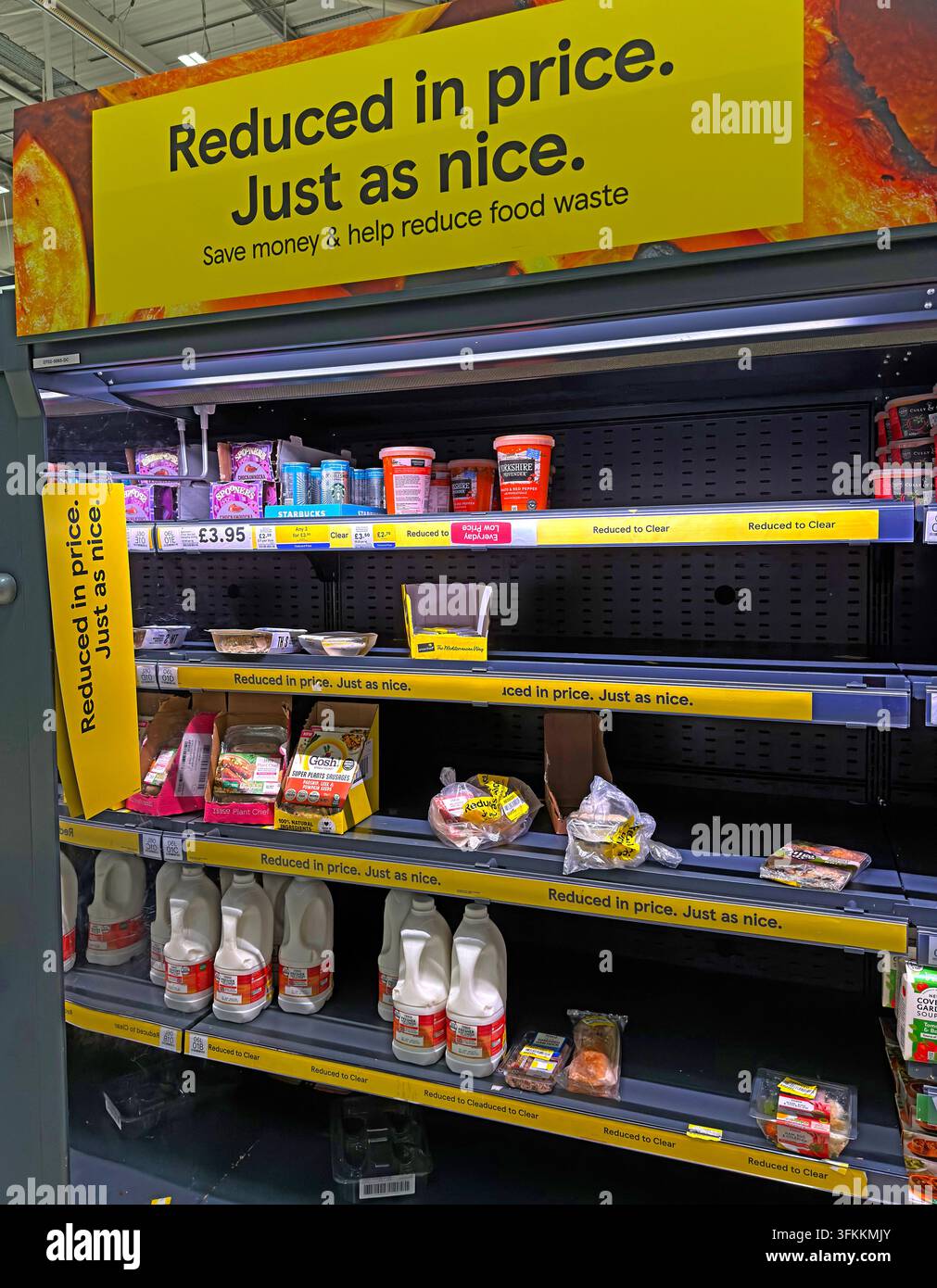
Image details
Contributor:
Tony SmithImage ID:
3FKKMJYFile size:
90.8 MB (3.8 MB Compressed download)Releases:
Model - no | Property - noDo I need a release?Dimensions:
4968 x 6388 px | 42.1 x 54.1 cm | 16.6 x 21.3 inches | 300dpiDate taken:
22 September 2026Location:
British supermarket, United KingdomMore information:
Yellow reduced-price shelf labels mark short-dated supermarket food on a clearance fixture carrying the slogan ‘Reduced in price. Just as nice’, illustrating how everyday grocery shopping in the UK is shaped by food inflation, household budgeting and the continuing cost-of-living squeeze. The image shows a partially emptied reduced-to-clear section with discounted chilled items, bakery goods and bottled milk, visually conveying late-day markdown routines used by supermarkets to sell products approaching their use-by or best-before date. Editorially, the frame connects strongly with current themes around price-sensitive shoppers, families trying to stretch weekly food budgets, pensioners and lower-income households seeking value, and wider consumer behaviour in which promotions, own-label buying and yellow-sticker bargains help make essential spending more manageable. It also supports stories about supermarket competition, grocery affordability, changing shopping habits, reduced food waste and the commercial logic of clearing short-dated stock rather than discarding it. The prominent yellow signage gives the picture immediate recognisable relevance for topics such as discount retailing, budget meals, frugal living, rising household bills, careful meal planning, cash-strapped consumers and the search for affordable food. It can also illustrate reporting on supermarket pricing strategy, the psychology of bargains, pressure on family finances and the role of offers in helping shoppers manage weekly essentials. Because no store name is clearly identifiable, the image works best as a generic British supermarket illustration of reduced food, special offers, markdown strategy, household thrift and the practical link between personal finances, inflationary pressure and food waste reduction in modern retailing, especially in stories about everyday coping strategies during periods of squeezed disposable income.

