
Myprotein high-protein ready meals promoted inside The Food Warehouse by Iceland supermarket. High protein meals for gym or GLP-1 users
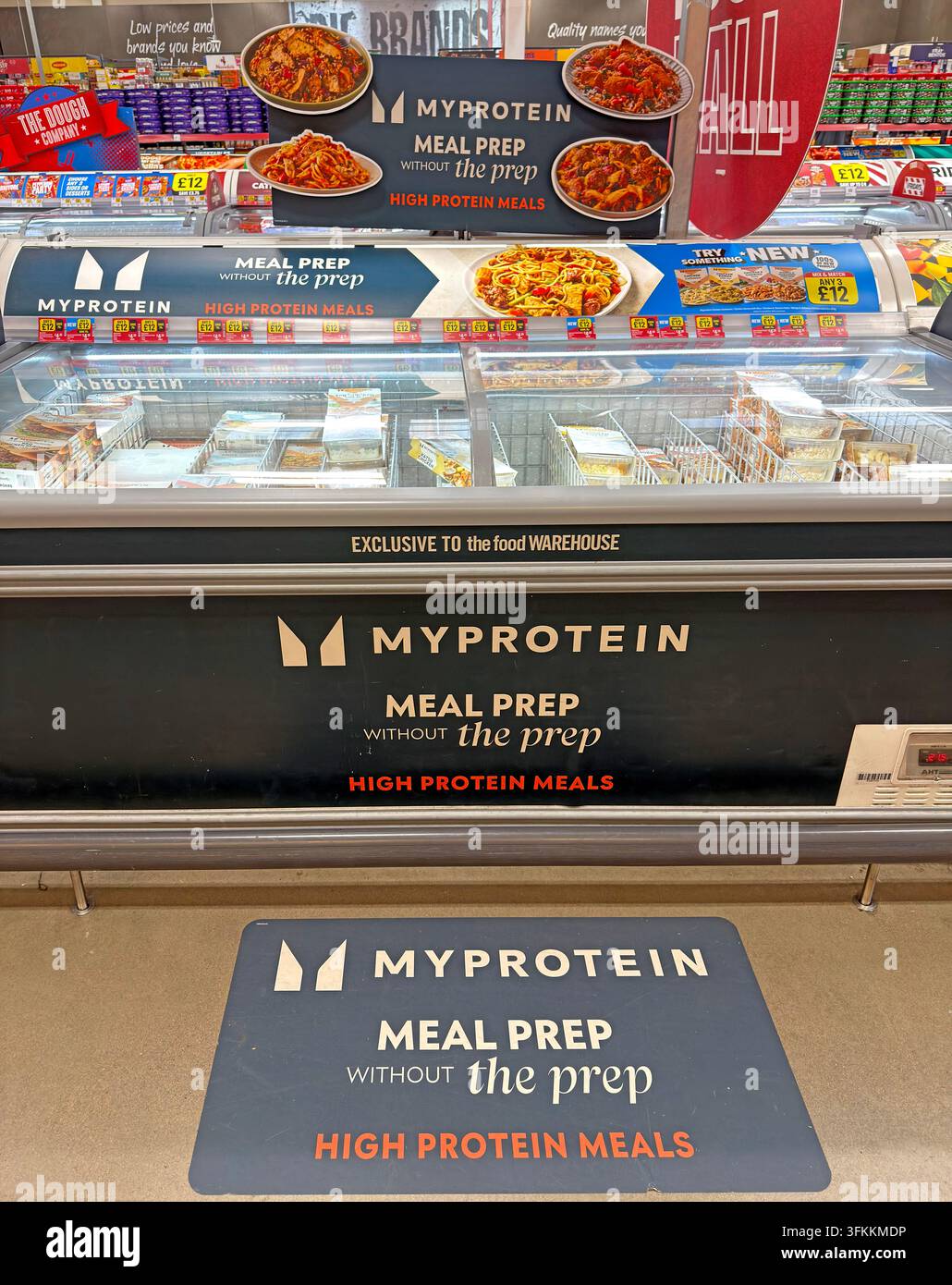
Image details
Contributor:
Tony SmithImage ID:
3FKKMDPFile size:
93.8 MB (4.1 MB Compressed download)Releases:
Model - no | Property - noDo I need a release?Dimensions:
5097 x 6432 px | 43.2 x 54.5 cm | 17 x 21.4 inches | 300dpiDate taken:
22 September 2026Location:
The Food Warehouse, Junction 9 Retail Park, Warrington, Cheshire, WA2 8TWMore information:
Myprotein high-protein frozen ready meals promoted in a branded freezer display inside The Food Warehouse, part of Iceland Foods, illustrating the rapid growth of protein-focused convenience food in UK supermarkets. Iceland launched its exclusive Myprotein frozen food range in January 2023 after agreeing a licensing partnership with brand owner THG, initially positioning the meals around high protein, lower fat, fibre and convenient meal preparation. By 2026 the range had expanded substantially beyond its original launch, covering frozen ready meals, pasta dishes, rice meals, chicken products, pizzas, snacks and other protein-led foods aimed at consumers seeking convenient nutrition without traditional batch cooking. In September 2026 Iceland and Myprotein announced another 25 frozen products, with retail sales through the partnership reported to have risen 26% year on year during 2025 and distribution extending across Iceland, The Food Warehouse, SPAR and The Range stores. Some new meals offer very high protein portions, reflecting wider supermarket demand for protein-labelled products. High-protein food has moved beyond specialist bodybuilding and gym audiences into mainstream shopping, driven by fitness culture, muscle maintenance, active ageing, weight management, satiety and consumer interest in functional foods. Ready meals are increasingly marketed using protein grams, calories, fibre and macronutrient claims alongside taste, convenience and value. The trend also overlaps with social-media fitness culture, busy working lifestyles and interest in quick post-workout or meal-prep alternatives. Protein branding does not automatically make a ready meal nutritionally superior, however, and consumers increasingly compare salt, saturated fat, calories, processing level, portion size and ingredient quality alongside headline protein content. This supermarket display therefore illustrates both the commercial growth of high-protein convenience foods and the wider debate

