
Yorkshire Building Society branch at 66 Lord Street in Liverpool city centre.
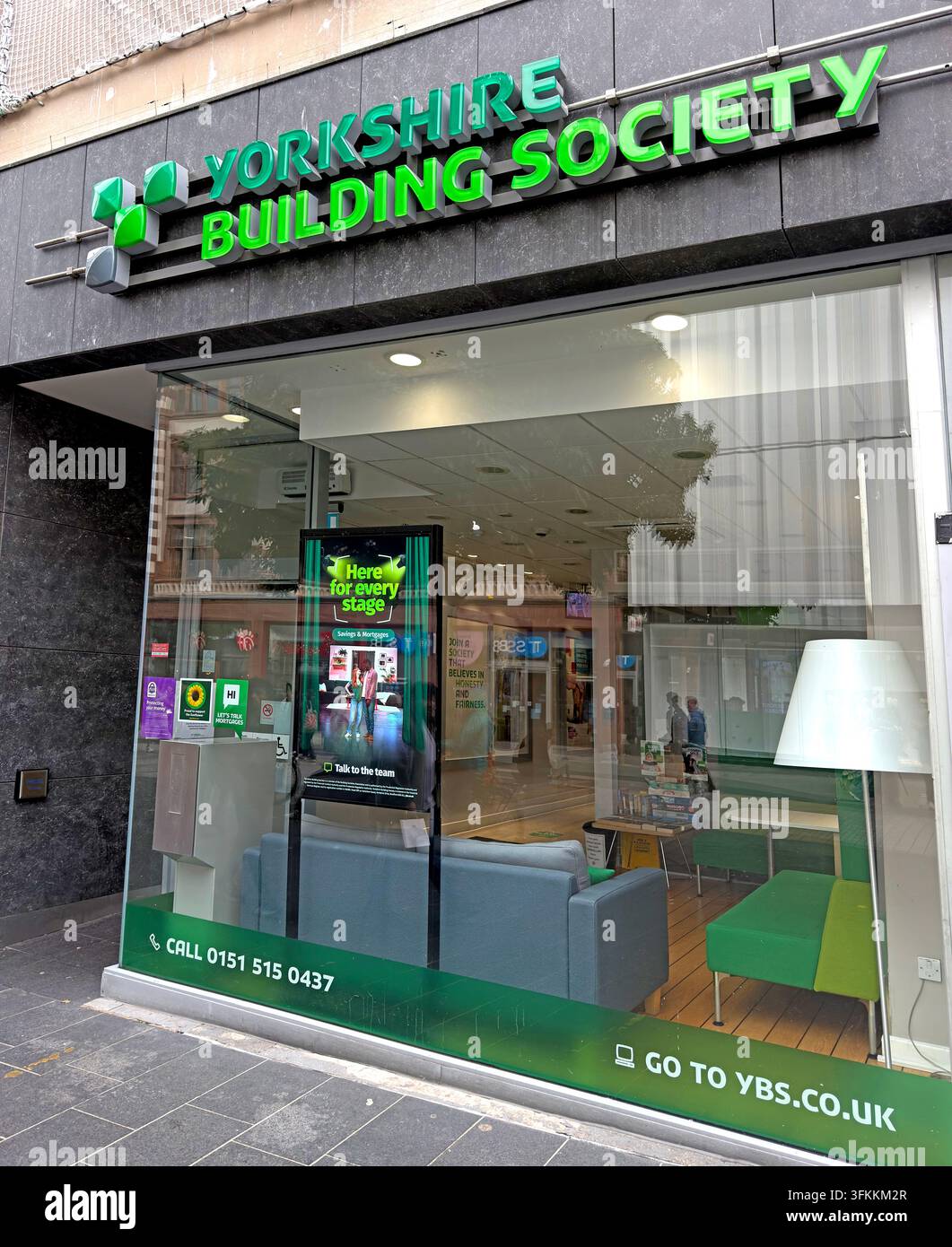
Image details
Contributor:
Tony SmithImage ID:
3FKKM2RFile size:
95.9 MB (3.8 MB Compressed download)Releases:
Model - no | Property - noDo I need a release?Dimensions:
5232 x 6408 px | 44.3 x 54.3 cm | 17.4 x 21.4 inches | 300dpiDate taken:
19 September 2026Location:
Yorkshire Building Society, 66 Lord Street, Liverpool, Merseyside, L2 1TDMore information:
. Yorkshire Building Society branch at 66 Lord Street in Liverpool city centre. The green frontage of Yorkshire Building Society at 66 Lord Street stands out among the commercial premises of central Liverpool. Building societies occupy a place in British financial services because they are mutual organisations owned by members rather than shareholder-owned banks. A visible branch can therefore illustrate savings, mortgages and access to face-to-face financial advice at a time when many banks are reducing high-street networks. The Liverpool branch provides a concrete urban example for wider stories about first-time buyers, mortgage affordability, interest rates, savers and the survival of physical financial services in busy retail centres. Yorkshire Building Society is a mutual rather than a shareholder-owned bank, and the branch frontage represents a part of Britain's financial landscape that continues to compete through savings, mortgages and face-to-face service. A Lord Street location gives that model a visible presence in a major retail centre where many traditional banks have reduced branch networks. Building societies remain relevant to stories about first-time buyers, mortgage affordability, fixed-rate deals, savings rates and the role of mutual ownership in financial services. The open glazed frontage and green branding create a different visual language from an anonymous online lender, emphasising a place where customers can still walk in and speak to staff. That physical access can matter to people dealing with complex transactions, fraud concerns or large financial decisions, even as routine account management moves online. It therefore records both a specific Liverpool branch and broader survival of branch-based financial advice within a rapidly digitising sector. It can also support coverage of high-street occupancy, because financial-service premises remain important tenants on streets shaped by hospitality, leisure and changing retail use.

