
Chinese Freemasons Hongmen headquarters sign in Liverpool Chinatown at 10 Nelson Street, home to a historic Chinese association.
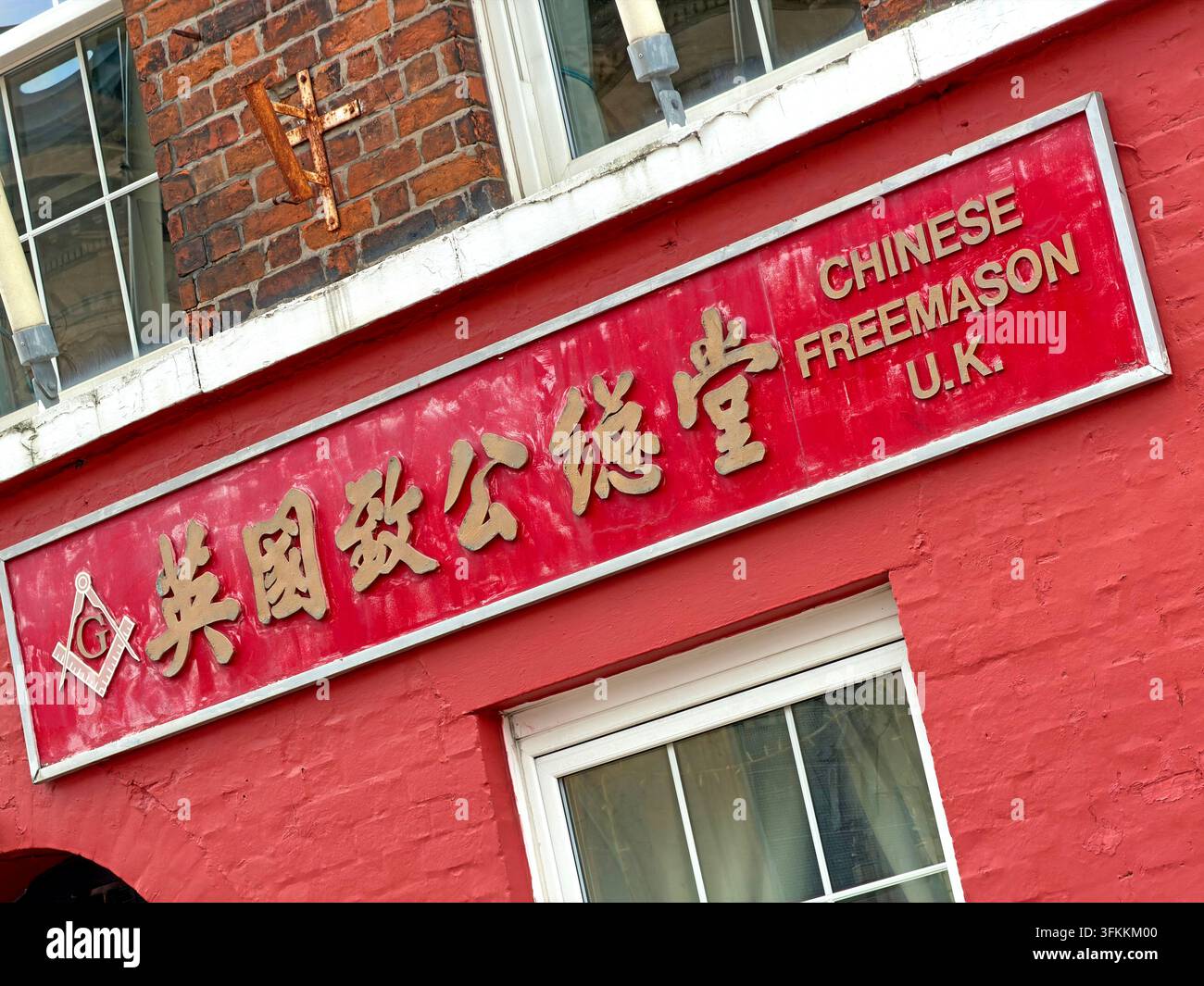
Image details
Contributor:
Tony SmithImage ID:
3FKKM00File size:
92.4 MB (4 MB Compressed download)Releases:
Model - no | Property - noDo I need a release?Dimensions:
6561 x 4921 px | 55.5 x 41.7 cm | 21.9 x 16.4 inches | 300dpiDate taken:
19 September 2026Location:
Chinese Freemasons, 10 Nelson Street, Liverpool, Merseyside, England, United KingdomMore information:
Historic Chinese Freemasons sign at 10 Nelson Street in Liverpool Chinatown, headquarters of the Che Gong Tong or Hongmen association and part of the social history of Europe’s oldest established Chinese community. Despite the English wording “Chinese Freemason U.K.”, the organisation is not part of conventional British or European Freemasonry. Hongmen developed as a Chinese fraternal tradition based around loyalty, mutual assistance, community identity and shared cultural values, while overseas branches became important meeting places for Chinese migrants. Liverpool’s organisation has particularly deep roots. Historical accounts place a Che Kung Tong presence in the city by around 1900, while British Chinese heritage records trace an earlier Chinese Freemasons Hall to Cleveland Square in 1880. The association later had links with the Chinese republican movement and Sun Yat-sen, supporting opposition to Qing rule before the 1911 revolution. Liverpool Chinese Business Association describes the organisation as one of the city’s oldest Chinese community bodies, established to unite overseas Chinese and provide mutual support. Its members have also maintained traditions of visiting local cemeteries to honour Chinese people who died in Britain without relatives nearby. Liverpool’s first Chinatown developed around the docks as Chinese seamen arrived through nineteenth-century shipping links with Shanghai, Hong Kong and other Asian ports. Wartime bombing damaged the earlier Pitt Street and Cleveland Square district, and Chinese community life gradually shifted towards Nelson Street. Heritage sources record that Chinese seamen raised funds after the Second World War to secure new premises on Nelson Street, where the association remains part of Chinatown’s cultural landscape. The red frontage, Chinese characters and English sign therefore represent migration, maritime trade, diaspora networks, mutual aid, political history and the continuity of Liverpool’s long-established

