
Henry Bohn Books projecting shop sign at the long-established second-hand bookshop on London Road, Liverpool.
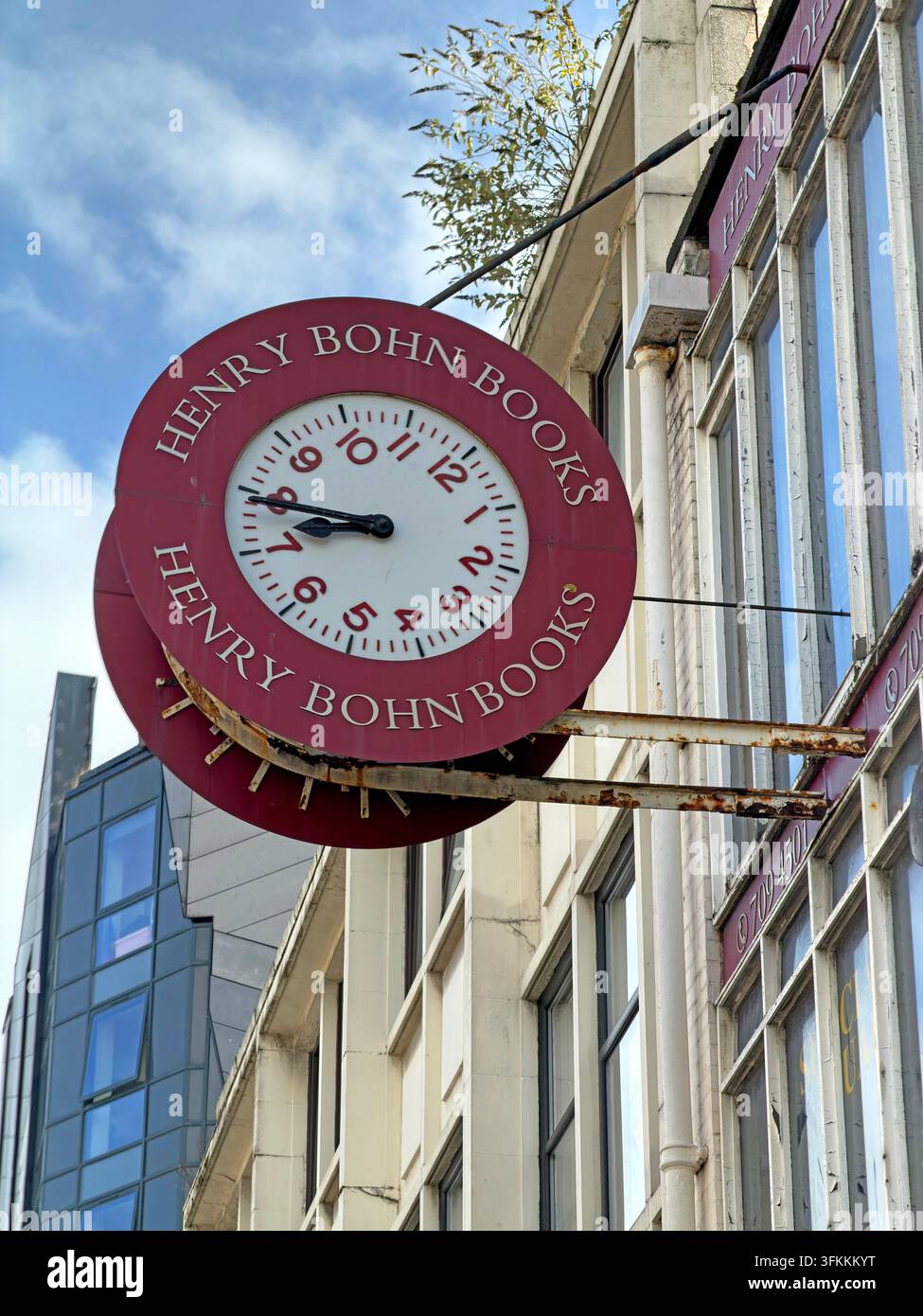
Image details
Contributor:
Tony SmithImage ID:
3FKKKYTFile size:
92.5 MB (3.2 MB Compressed download)Releases:
Model - no | Property - noDo I need a release?Dimensions:
4923 x 6564 px | 41.7 x 55.6 cm | 16.4 x 21.9 inches | 300dpiDate taken:
19 September 2026Location:
Henry Bohn Books, 12 London Road, Liverpool, Merseyside, L3 5NFMore information:
. Henry Bohn Books projecting shop sign at the long-established second-hand bookshop on London Road, Liverpool. The round projecting sign for Henry Bohn Books hangs above London Road in Liverpool, advertising an independent shop that sells second-hand and antiquarian books as well as music. Independent second-hand bookshops are useful symbols of the physical browsing culture that survives alongside online marketplaces and e-books, relying on specialist stock, knowledgeable owners and the pleasure of finding unexpected titles. The traditional hanging sign gives the photograph particular value for stories about bookselling, independent retail, literary culture and changing city-centre commerce. Second-hand bookshops depend on stock that is varied, unpredictable and often impossible to replace, which gives them a different character from chain bookselling. A projecting clock-style sign is an unusual and memorable marker for Henry Bohn Books, helping a long-established independent shop stand out on London Road. Such shops serve collectors, students, casual browsers and readers looking for out-of-print titles, while also providing a route for books to remain in circulation rather than being discarded. Liverpool's large student population and strong cultural life give second-hand bookselling a natural audience, but rising rents, online marketplaces and changes in reading habits have placed pressure on physical shops across Britain. The photograph therefore records more than a retail sign: it represents a form of browsing-led high-street commerce built around knowledge, chance discovery and slow turnover. The traditional projecting sign also contributes to the visual character of the street and acts as a piece of commercial heritage. The image can support stories about independent booksellers, reuse, print culture, collecting, literary cities and the survival of specialist shops alongside digital retail.

