
Chery Tiggo 9 SUVs outside a UK dealership as the Chinese car brand expands into the British market.growing debate over Britain’s divergence from EU
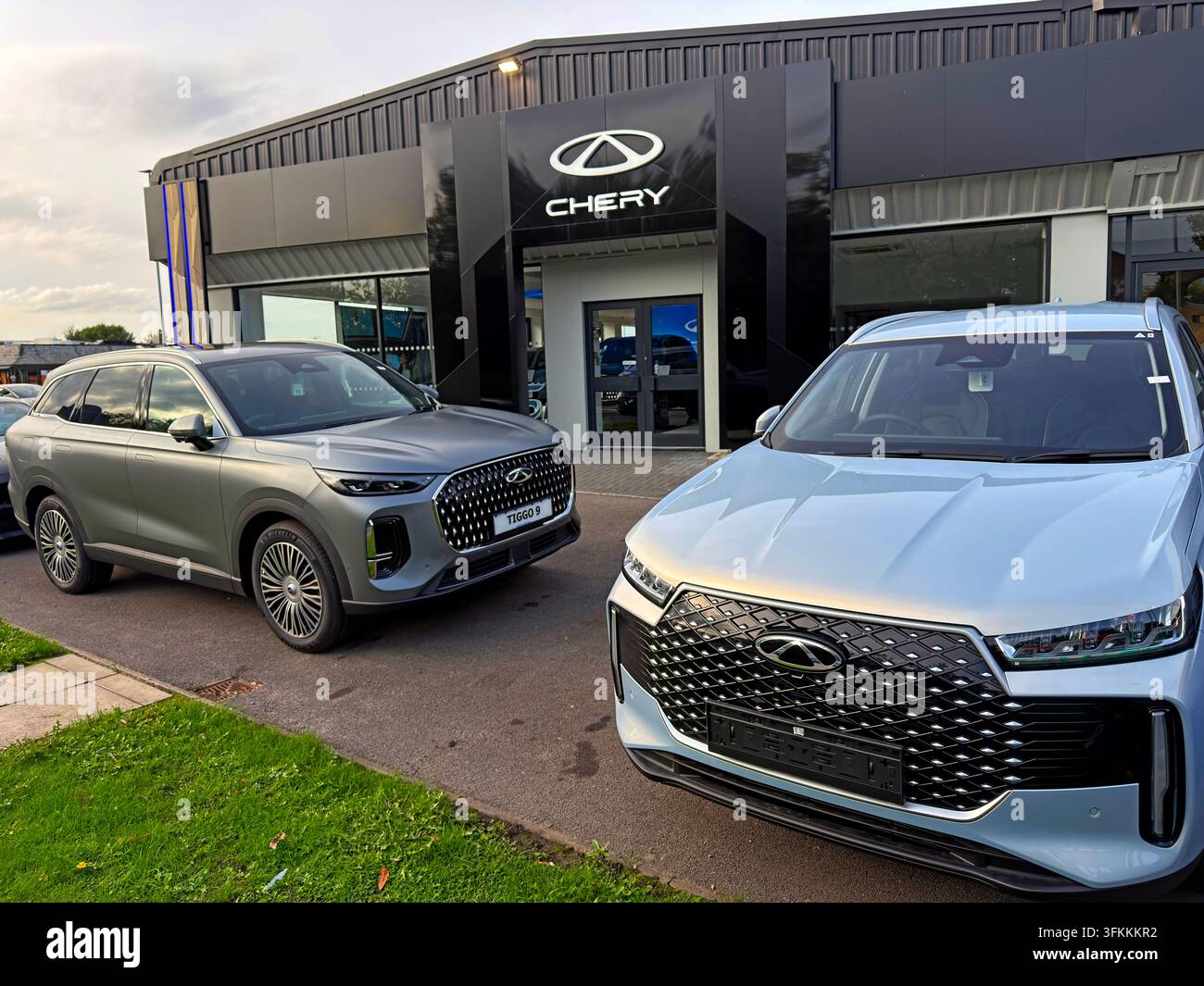
Image details
Contributor:
Tony SmithImage ID:
3FKKKR2File size:
98.2 MB (3.2 MB Compressed download)Releases:
Model - no | Property - noDo I need a release?Dimensions:
6764 x 5073 px | 57.3 x 43 cm | 22.5 x 16.9 inches | 300dpiDate taken:
13 September 2026Location:
Invicta Chery, 201 Winwick Road, Warrington, Cheshire, EnglandMore information:
Chery Tiggo 9 Super Hybrid SUVs displayed outside a UK dealership, illustrating the rapid expansion of Chinese car manufacturers in the British new-car market. Chery describes the Tiggo 9 as a seven-seat plug-in Super Hybrid SUV combining a 1.5-litre turbocharged petrol engine with electric drive, an official electric range of up to 87 miles and a starting UK price of £43, 105. Chinese manufacturers including Chery, BYD, MG, Geely, Omoda, Jaecoo and Leapmotor are increasing their presence in Britain through competitive pricing, high equipment levels, hybrid and electric technology and expanding dealer networks. Recent reporting indicates Chinese brands are taking a growing share of UK registrations, while Britain remains more open to Chinese vehicle imports than the European Union. The EU has imposed additional anti-subsidy duties on battery-electric vehicles manufactured in China, with rates varying by producer, while the UK has not introduced equivalent measures. That divergence has become increasingly relevant to wider UK-EU trade discussions. European officials have pressed Britain to align more closely with EU trade defences if it wants deeper participation in European industrial supply chains and “Made in Europe” initiatives. Closer customs or trade alignment could therefore create difficult choices between protecting European automotive manufacturing, maintaining independent UK trade policy and preserving access to competitively priced Chinese vehicles. The issue is complicated further by rapid growth in Chinese plug-in hybrids, which are not covered in the same way as the EU’s current battery-EV duties. The photograph can illustrate Chinese automotive expansion, hybrid technology, EV competition, dealership growth, consumer choice, tariff divergence, post-Brexit trade policy, UK-EU alignment, European industrial policy, battery supply chains and the changing balance of power in the global car industry

