
Vintage Peugeot 201 Coupé from around 1931 displayed indoors in Lyon, France.
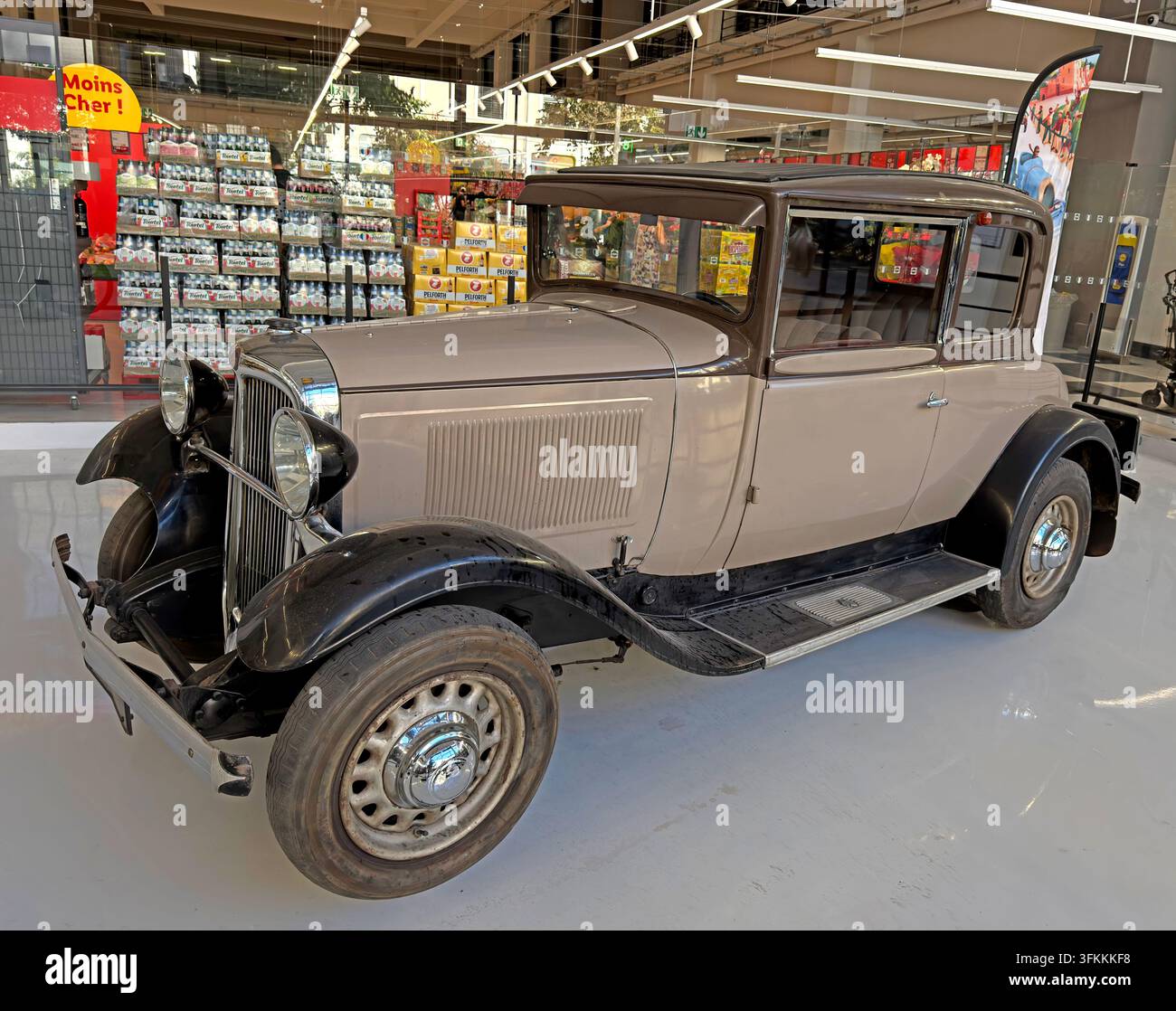
Image details
Contributor:
Tony SmithImage ID:
3FKKKF8File size:
90.4 MB (2.9 MB Compressed download)Releases:
Model - no | Property - noDo I need a release?Dimensions:
6320 x 5002 px | 53.5 x 42.4 cm | 21.1 x 16.7 inches | 300dpiDate taken:
11 September 2026Location:
Lyon, Rhône, Auvergne-Rhône-Alpes, FranceMore information:
. Vintage Peugeot 201 Coupé from around 1931 displayed indoors in Lyon, France. A cream and black vintage Peugeot 201 Coupé, dating from around 1931, is displayed indoors in Lyon with its upright grille, separate headlamps, running boards and narrow period tyres visible. The Peugeot 201 is an important model in French motoring history and helped establish the three-digit naming convention with a central zero that became closely associated with Peugeot cars. Its compact proportions show how dramatically private motoring changed between the interwar years and modern traffic. Photographed as a preserved display rather than moving on the road, the car works well for stories about automotive heritage, industrial design, collecting and France's long manufacturing tradition. The Peugeot 201 belongs to the inter-war period when motoring was becoming more widely accessible but car ownership still carried a strong sense of novelty and status. Its upright body, narrow tyres, external running boards and separate wings are immediately different from the integrated shapes of modern vehicles, making the engineering changes of nearly a century visible at a glance. Peugeot's numbering system, with a central zero, became one of the company's most recognisable naming conventions, and the 201 helped establish that pattern. An indoor display protects details that would otherwise be difficult to preserve on a regularly used vehicle, including chrome fittings, body trim and period cabin features. In Lyon, the car can connect local audiences with wider history of French manufacturing and mobility without needing to be photographed on a road. It can support automotive history, industrial design, collecting, restoration and the social history of early mass motoring. It provides a contrast with today's electric and software-heavy cars: this machine is mechanically simple by comparison, yet it represents an earlier technological transformation in how ordinary people travelled.

