
Centre Nautique Tony Bertrand, formerly Piscine du Rhône, beside the Rhône river in central Lyon.
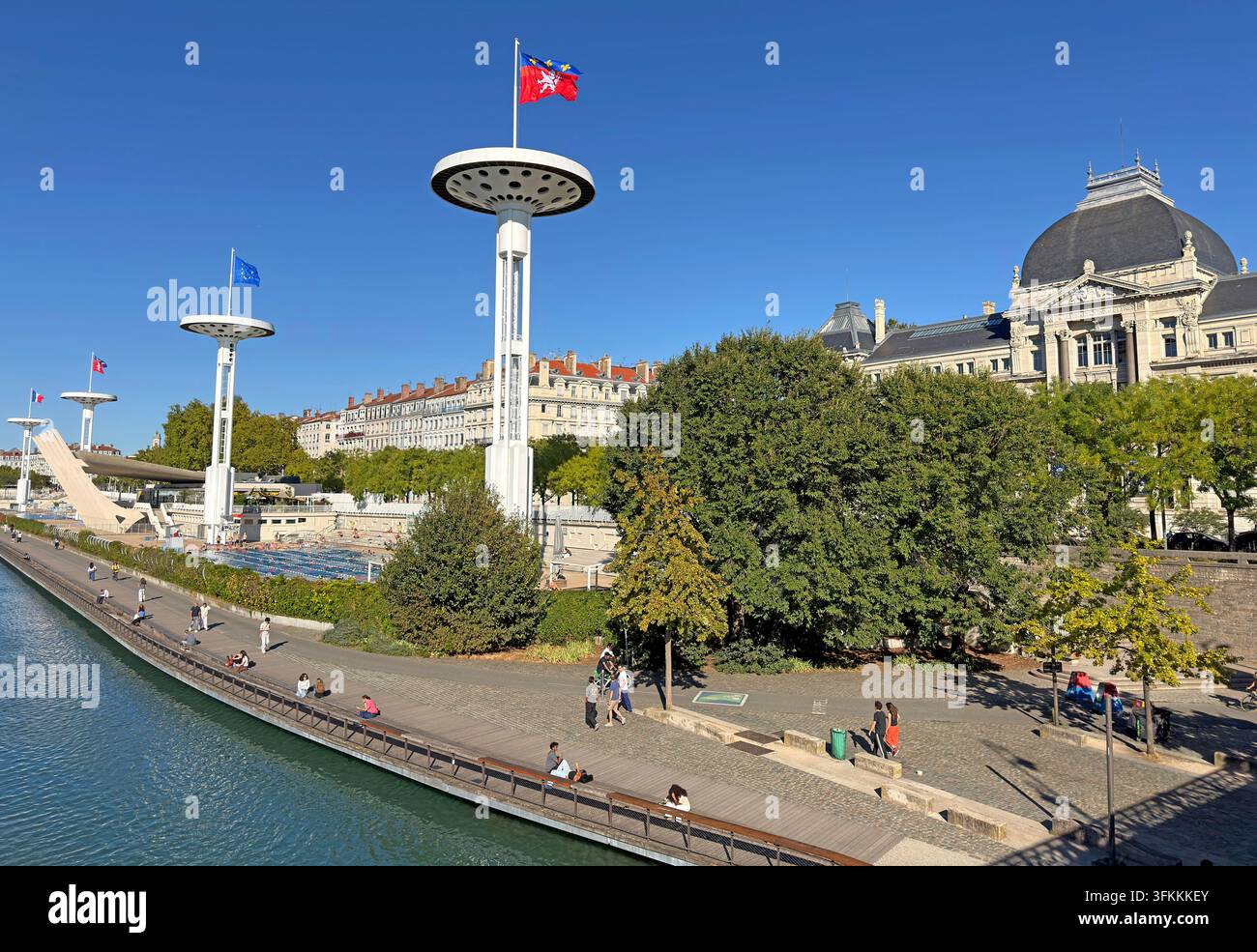
Image details
Contributor:
Tony SmithImage ID:
3FKKKEYFile size:
90.2 MB (5.1 MB Compressed download)Releases:
Model - no | Property - noDo I need a release?Dimensions:
6764 x 4660 px | 57.3 x 39.5 cm | 22.5 x 15.5 inches | 300dpiDate taken:
11 September 2026Location:
Centre Nautique Tony Bertrand, 8 Quai Claude Bernard, 69007 Lyon, FranceMore information:
. Centre Nautique Tony Bertrand, formerly Piscine du Rhône, beside the Rhône river in central Lyon. The distinctive towers, terraces and outdoor pools of Lyon's Centre Nautique Tony Bertrand are seen beside the Rhône under a clear blue sky. The complex, long known as the Piscine du Rhône, was designed by Lyon architect Alexandre Audouze-Tabourin and opened in the 1960s in connection with the city's ambitions around the 1968 Olympic Games. Now carrying Tony Bertrand's name, it remains a prominent municipal leisure facility on Quai Claude Bernard and a striking example of post-war civic architecture. The riverside position adds another layer, showing how Lyon has developed recreation and public space directly along the Rhône rather than treating the river only as transport or flood infrastructure. The pool occupies an unusually prominent riverside position, turning a stretch of the Rhône into a place for public recreation as well as movement through the city. Its distinctive circular-topped towers are visible from a distance and have become recognisable elements of Lyon's river frontage. Outdoor municipal pools are important pieces of social infrastructure: they provide swimming lessons, exercise, cooling during hot weather and affordable leisure in dense urban areas where private gardens and pools are uncommon. The open-air setting also makes the complex relevant to discussions about heatwaves and how cities adapt public space to hotter summers. From this viewpoint, the pool sits directly alongside quays, trees and the river, showing how recreation is woven into central Lyon rather than pushed to the edge of the city. The photograph can support coverage of public sport, municipal investment, urban design, swimming, summer heat and Rhône waterfront regeneration. It also records the present-day appearance of a well-known civic facility whose naming and refurbishment history reflect changing approaches to preserving post-war leisure architecture.

