
Emirates Airbus A380 wide-body aircraft being serviced on the apron at Manchester Airport, England.
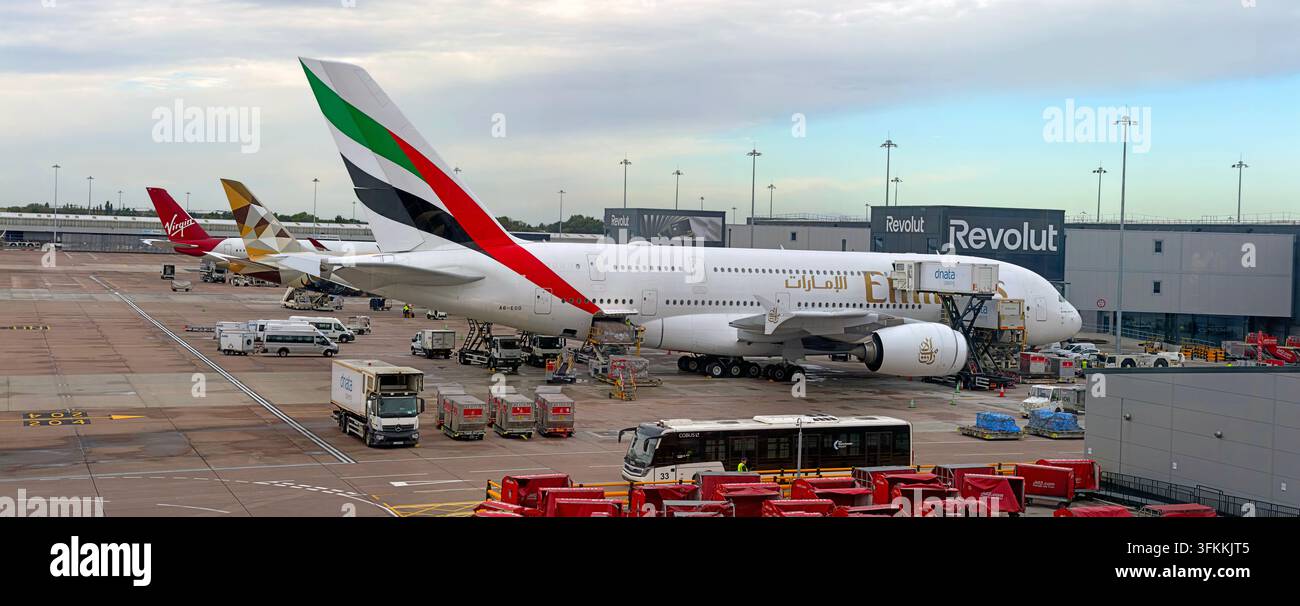
Image details
Contributor:
Tony SmithImage ID:
3FKKJT5File size:
334.4 MB (10.8 MB Compressed download)Releases:
Model - no | Property - noDo I need a release?Dimensions:
17149 x 6815 px | 145.2 x 57.7 cm | 57.2 x 22.7 inches | 300dpiDate taken:
8 September 2026Location:
Manchester Airport, Ringway Road, Manchester, Greater Manchester, M90 1QXMore information:
. Emirates Airbus A380 wide-body aircraft being serviced on the apron at Manchester Airport, England. An Emirates Airbus A380 is parked on the apron at Manchester Airport while ground-service vehicles and equipment surround the world's largest passenger airliner. The double-deck aircraft is closely associated with high-capacity long-haul travel and with Emirates' hub-and-spoke network through Dubai, making it a visual for international aviation and airport connectivity. Manchester has long been one of the UK regional airports where A380 operations give northern passengers direct access to global routes without travelling through London. The servicing scene reveals the hidden logistics behind a scheduled flight: catering, baggage, engineering, fuelling and turnaround activity all have to be coordinated before departure. The Airbus A380 remains one of the most distinctive passenger aircraft in commercial service, with two full-length decks and four engines giving it a scale that dominates an airport apron. Emirates has been the type's most prominent operator, using it on high-capacity international routes through Dubai. Ground servicing is a vital part of the image: baggage equipment, catering vehicles, fuel and engineering activity show how much work is compressed into the period between arrival and departure. Manchester Airport's ability to handle the A380 also reflects the demand for long-haul travel from northern England without passengers first transferring through London. The aircraft can illustrate regional connectivity, hub-and-spoke aviation, tourism, business travel and the operational complexity of large international flights. At the same time, four-engine wide-bodies remain central to debate about aviation emissions, airport expansion and the pace at which lower-carbon technology can realistically change long-haul flying. It records the A380 as a working transport machine surrounded by the practical infrastructure needed to keep it moving.

