
Skelmersdale Walk-in Centre at The Concourse beside William Hill, contrasting community urgent healthcare with high-street betting retail.
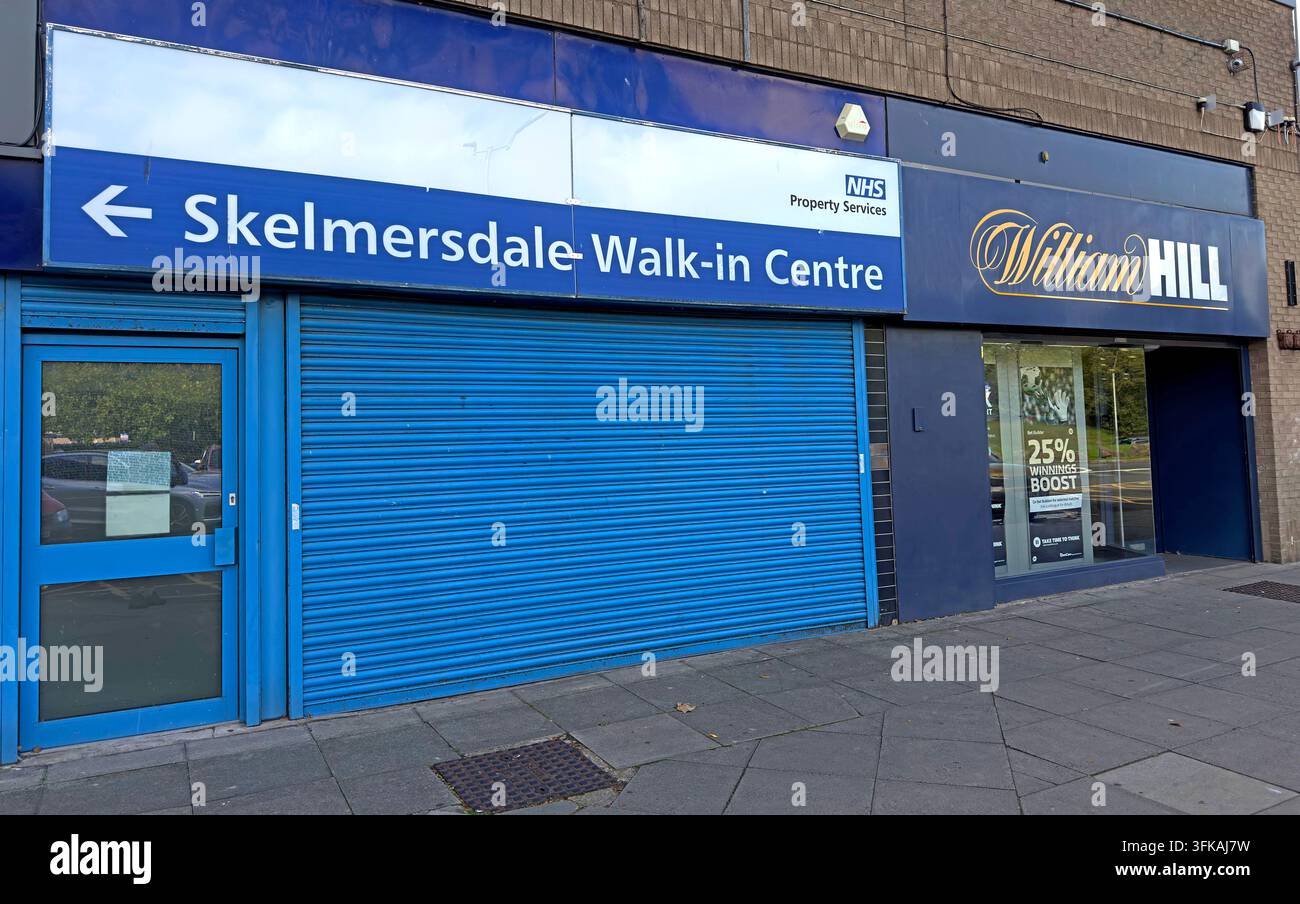
Image details
Contributor:
Tony SmithImage ID:
3FKAJ7WFile size:
82 MB (3.3 MB Compressed download)Releases:
Model - no | Property - noDo I need a release?Dimensions:
6764 x 4238 px | 57.3 x 35.9 cm | 22.5 x 14.1 inches | 300dpiDate taken:
13 September 2026Location:
Skelmersdale Walk-in Centre, 116-118 South Way, Skelmersdale, Lancashire, WN8 6LJMore information:
. Skelmersdale Walk-in Centre occupies a blue-fronted unit at The Concourse Shopping Centre, with a William Hill betting shop immediately alongside, creating a striking juxtaposition of community healthcare and commercial gambling within the same town-centre frontage. The walk-in centre is registered at 116-118 South Way, Skelmersdale, WN8 6LJ and provides accessible urgent care for local people without the setting of a major hospital. Its position in the principal shopping centre places healthcare close to bus services, shops and other everyday destinations, an approach that can make unscheduled care easier to reach for residents who do not drive or who need help outside a routine GP appointment. The scene also illustrates how modern health services increasingly occupy ordinary retail-style premises, blurring the traditional divide between civic buildings, clinics and commercial space. Next door, the bookmaker signage introduces a separate public-policy theme around gambling availability, high-street land use and the clustering of essential and discretionary services. Skelmersdale itself was designated a New Town in 1961, and The Concourse remains its planned central hub, so the photograph also documents how a twentieth-century shopping complex has diversified beyond pure retail. Useful editorial themes include urgent care access, primary and community health, health inequalities, outsourcing and commissioned services, town-centre regeneration, betting shops and the changing British high street. The image is especially effective because it is not a staged healthcare scene: shutters, signage and neighbouring units show the service as residents encounter it in everyday life, embedded in a mixed commercial environment rather than isolated on a hospital campus. The neighbouring uses underline how planned centres have become multi-purpose service environments, where healthcare, gambling, shopping, food and public administration can all sit within a few.

