
University of Liverpool’s red-brick Victoria Building and clock tower, the Alfred Waterhouse landmark associated with the term “red brick university”.
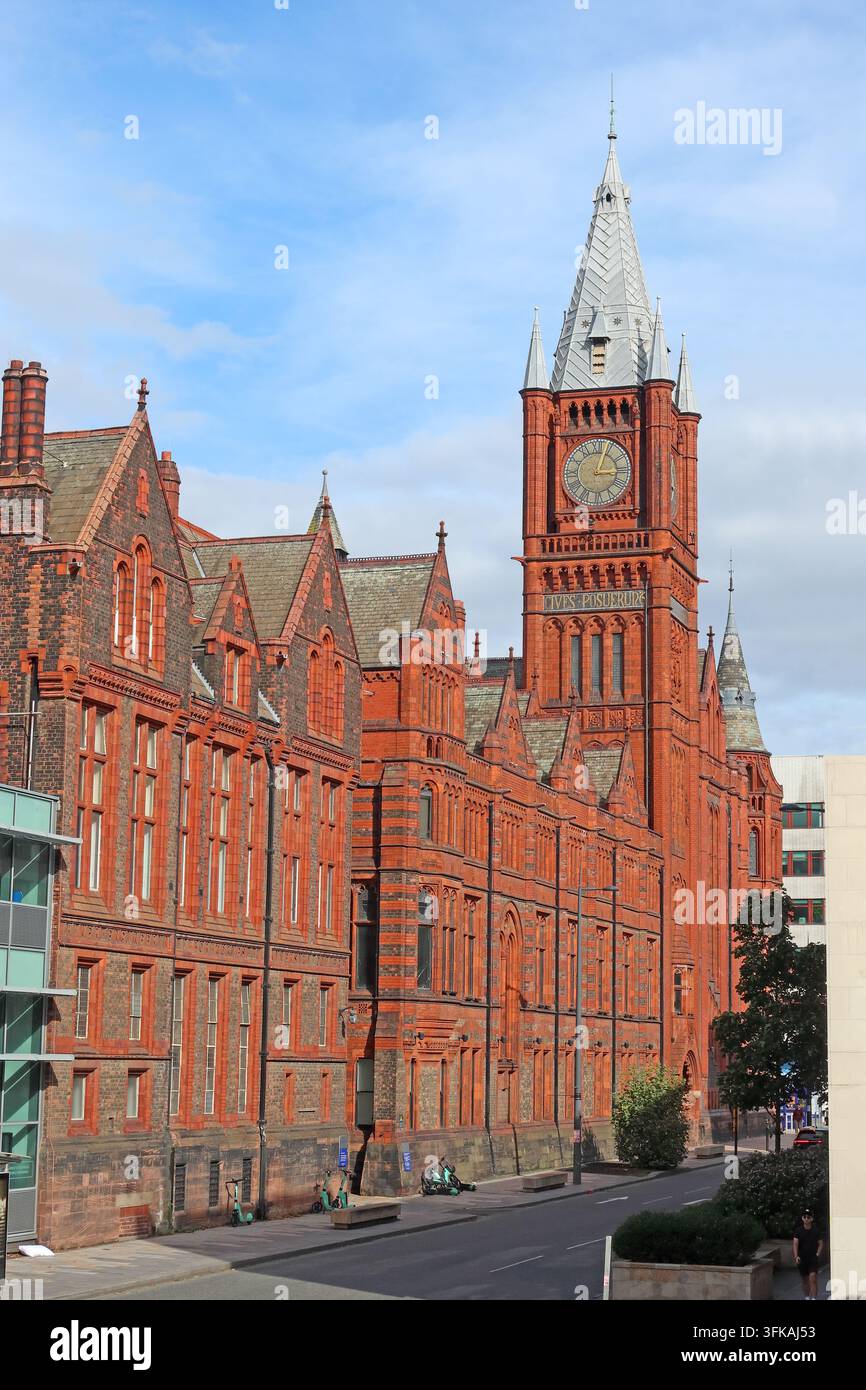
Image details
Contributor:
Tony SmithImage ID:
3FKAJ53File size:
57.1 MB (2.6 MB Compressed download)Releases:
Model - no | Property - noDo I need a release?Dimensions:
3648 x 5472 px | 30.9 x 46.3 cm | 12.2 x 18.2 inches | 300dpiDate taken:
19 September 2026Location:
Victoria Building, Brownlow Hill, University of Liverpool, Liverpool, Merseyside, L69 3BXMore information:
The University of Liverpool’s Victoria Building and clock tower on Ashton Street, a landmark of British higher education and one of the best-known examples of late Victorian university architecture. Designed by Liverpool-born architect Alfred Waterhouse, construction began in 1889 and the building was completed in 1892 as the purpose-built headquarters of University College Liverpool. Its Gothic exterior uses ordinary red brick with terracotta dressings, creating the distinctive appearance that later helped inspire the expression “red brick university”. The term was coined by Liverpool professor Edgar Allison Peers, writing under the pseudonym Bruce Truscot, and became associated with the civic universities founded in major industrial cities during the nineteenth and early twentieth centuries. The Victoria Building’s prominent clock tower was funded through civic philanthropy, with Liverpool businessman Sir William Hartley contributing towards the clock and bells. The clock itself was made by Leeds firm William Potts & Sons. Sir Henry Tate funded the library block, reflecting the close relationship between Liverpool’s commercial wealth, public benefactors and the growth of higher education in the city. Opened officially in December 1892, the building contained lecture rooms, offices, common rooms and the Tate Library and became the administrative and symbolic centre of the growing institution. The University of Liverpool received its Royal Charter in 1903. Following an £8.6 million restoration, the Grade II listed building reopened in 2008 as the Victoria Gallery & Museum, housing art and heritage collections while retaining its historic architectural character. The image records a defining Liverpool landmark associated with university history, Victorian philanthropy, civic education, Gothic Revival architecture and the origins of the term redbrick university.

