
Passenger boarding a Liverpool City Region EV Wrightbus Electroliner Metro electric bus at Queen Square during the 2026 rollout of franchised services
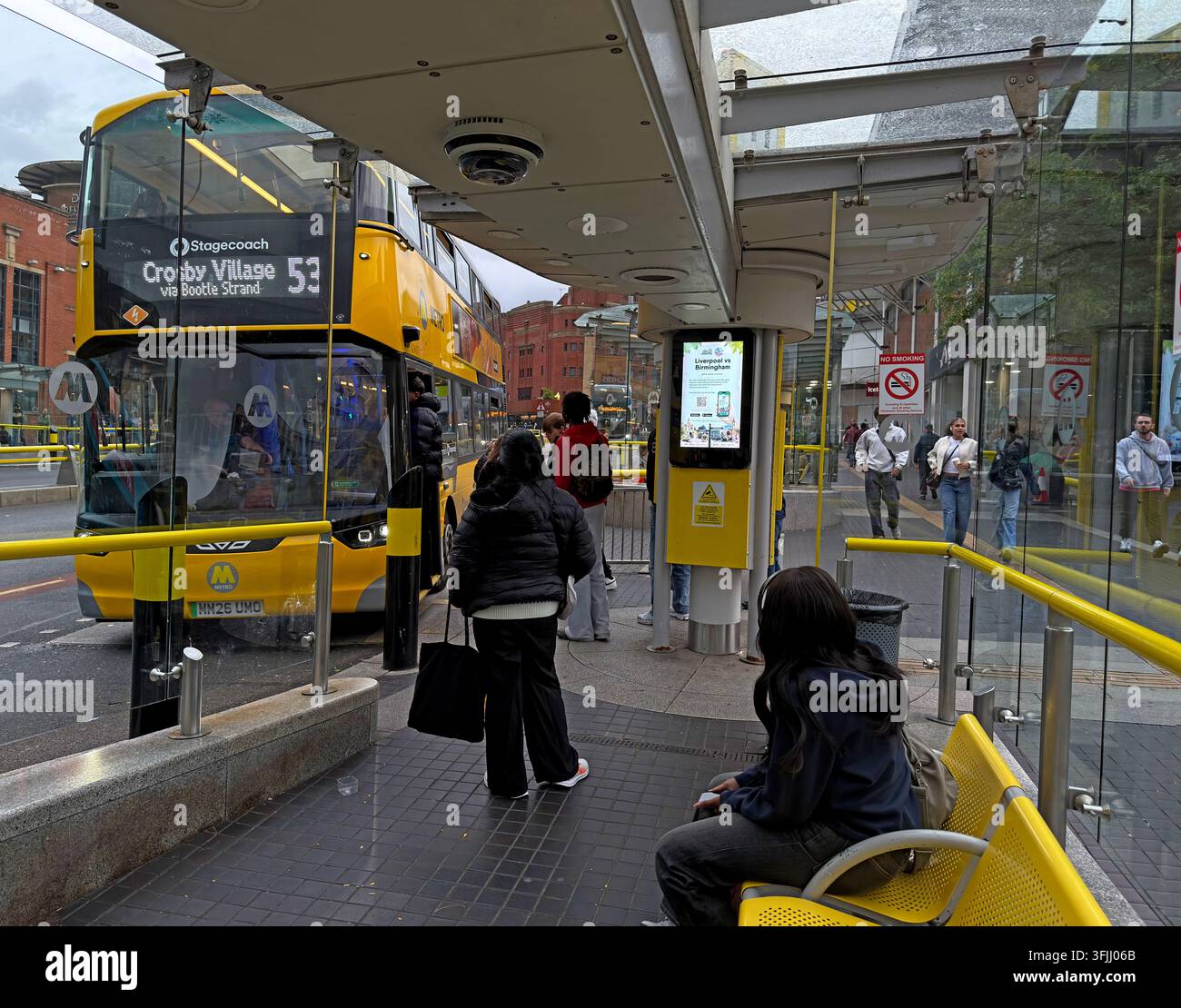
Image details
Contributor:
Tony SmithImage ID:
3FJJ06BFile size:
94.2 MB (3.7 MB Compressed download)Releases:
Model - no | Property - noDo I need a release?Dimensions:
6478 x 5083 px | 54.8 x 43 cm | 21.6 x 16.9 inches | 300dpiDate taken:
19 September 2026Location:
Queen Square Bus Station, Liverpool, Merseyside, L1 1RGMore information:
Passengers board a new yellow Metro-branded battery-electric double-decker on Stagecoach route 53 to Crosby Village at Queen Square Bus Station in Liverpool city centre. The modern Wrightbus StreetDeck Electroliner forms part of major changes to bus travel across the Liverpool City Region as local services move towards a publicly controlled franchising model. The region is introducing 108 new publicly owned electric buses as part of investment intended to modernise the network, cut emissions and improve passenger journeys. The vehicles have a claimed range of up to 275 miles and are supported by extensive charging infrastructure, including electrification of the Gillmoss bus depot. Although buses can be publicly owned and services brought under greater public control, private companies including Stagecoach can continue operating routes under contracts awarded within the franchised network. The distinction illustrates the changing relationship between public ownership, regulation and private operation in British bus transport. Liverpool City Region began the phased switch to bus franchising in September 2026, starting in St Helens, with Wirral following and Liverpool, Knowsley and Sefton due to transition during 2027. The policy gives the Combined Authority greater control over routes, timetables, fares and service standards instead of leaving individual commercial operators to determine much of the network. The distinctive yellow, black and grey Metro identity is intended to create a more recognisable integrated public transport network across the city region. The photograph captures passengers using the service during this period of transition and illustrates wider themes including bus reform, public transport investment, electric vehicle adoption, transport decarbonisation, accessibility, passenger experience and the future of urban mobility. With a traditional Stagecoach logo displayed alongside the new Metro identity, the Route 53 bus also provides a visible ex.

