
Red closing-down sale signs advertise discounts of up to 70%, illustrating pressure on shops and the changing UK high street.
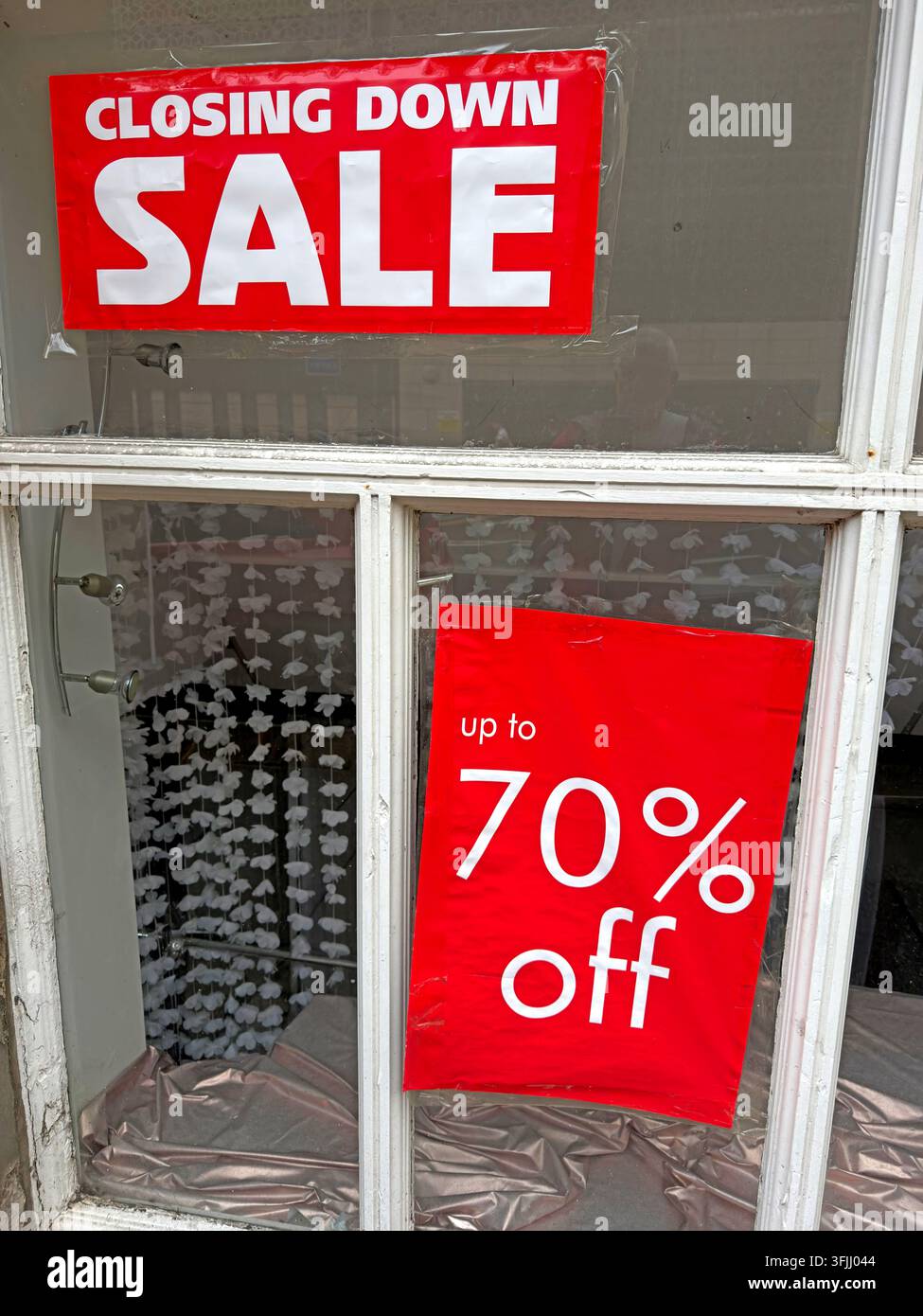
Image details
Contributor:
Tony SmithImage ID:
3FJJ044File size:
92.5 MB (2.3 MB Compressed download)Releases:
Model - no | Property - noDo I need a release?Dimensions:
4923 x 6564 px | 41.7 x 55.6 cm | 16.4 x 21.9 inches | 300dpiDate taken:
19 September 2026Location:
Liverpool city centre, Merseyside, EnglandMore information:
Bright red “Closing Down Sale” and “up to 70% off” posters fill the windows of a vacant-looking retail unit, creating a stark visual shorthand for shop closure, clearance discounting and the changing British high street. The signs advertise a final reduction campaign designed to clear remaining stock before trading ends, a familiar sight in town and city centres when retailers close individual branches, restructure estates or leave premises altogether. Closing-down sales can reflect many different circumstances, so the image does not establish why this particular shop ceased trading. More broadly, UK high streets have been reshaped by the growth of online shopping, changing consumer habits, rising operating costs, shifts in footfall, redevelopment and the continued movement of spending towards retail parks, supermarkets and digital channels. Empty units and temporary sale signage can therefore become visible markers of wider retail churn, even in places where new businesses later take over the same premises. The large white lettering on a red background is designed for maximum impact, using urgency and deep discounts to attract passing shoppers during the final trading period. The “up to 70% off” message also illustrates the psychology of clearance retail, where percentage reductions, scarcity and time-limited offers are used to encourage immediate purchases. Behind the posters, sparse fittings and the partly stripped-looking window display reinforce the sense of a business winding down and premises approaching vacancy. Photographed tightly through the shop window, the image concentrates attention on the language of closure rather than on a particular brand, making it useful for editorial themes including retail decline, business failure, changing town centres, cost pressures, consumer confidence, discount culture, vacant shops, high street regeneration and the transformation of traditional bricks-and-mortar retail in contemporary Britain.

