
Paddy Power betting shop in Williamson Square, Liverpool, with prominent green branding and gambling promotions, gaming levy, duty coming
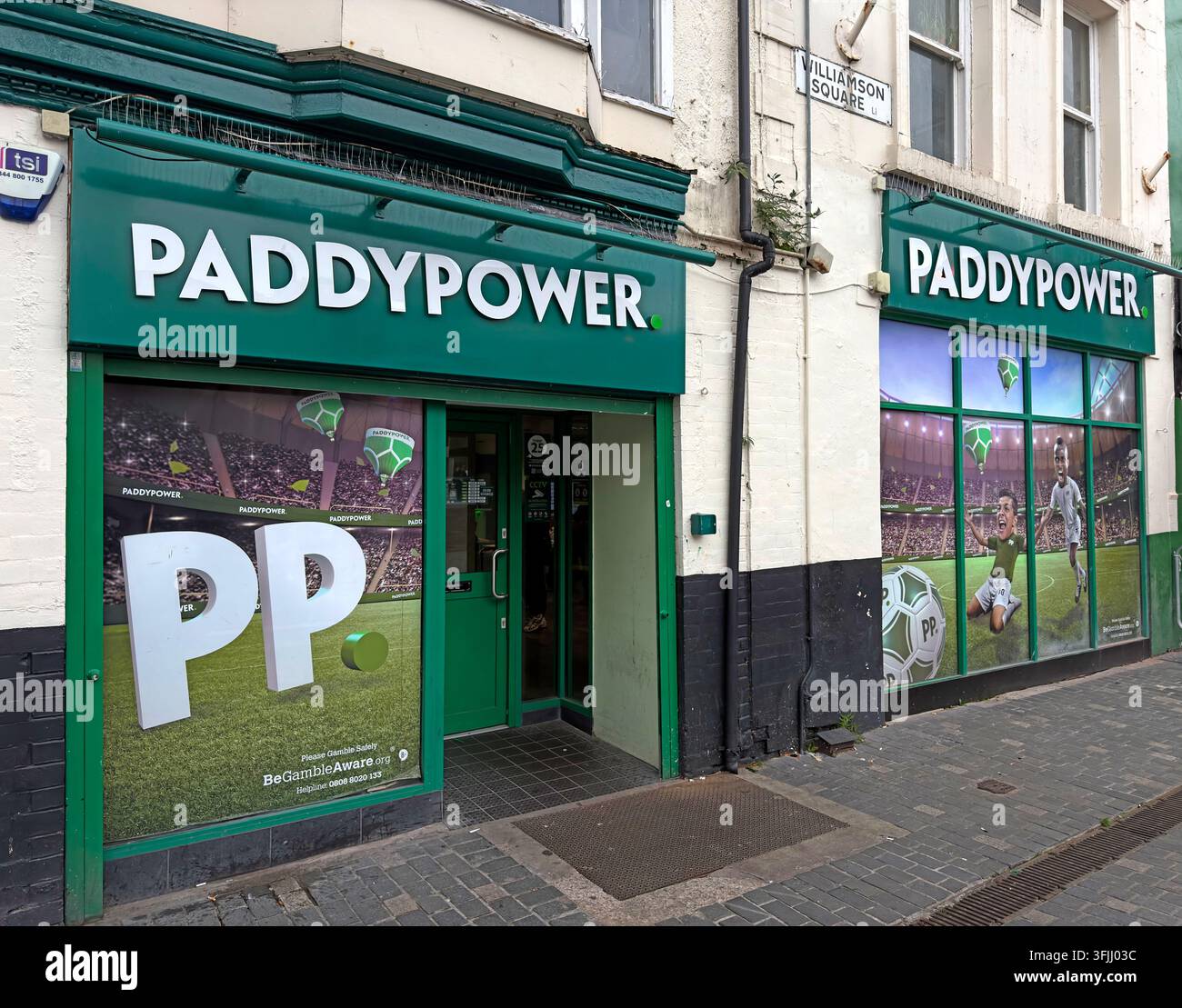
Image details
Contributor:
Tony SmithImage ID:
3FJJ03CFile size:
98.2 MB (3.8 MB Compressed download)Releases:
Model - no | Property - noDo I need a release?Dimensions:
6616 x 5186 px | 56 x 43.9 cm | 22.1 x 17.3 inches | 300dpiDate taken:
19 September 2026Location:
Paddy Power, 21–23 Richmond Street, Liverpool, Merseyside, L1 1EEMore information:
Paddy Power betting shop in Williamson Square, Liverpool city centre, with the bookmaker’s distinctive green branding and football-themed window graphics prominent across the traditional high-street premises. The photograph records a bricks-and-mortar bookmaker during a period of significant change for Britain’s gambling industry as betting increasingly moves from physical shops to websites and smartphone apps. Paddy Power is owned by Flutter Entertainment, the international gambling group whose brands also include Betfair and Sky Betting & Gaming. In September 2026 Flutter confirmed that up to 100 Paddy Power shops across the UK and Ireland were under review, potentially affecting around 400 jobs. The company cited economic uncertainty, rising operating costs, increased competition and changes to gambling taxation among pressures affecting its retail estate. The review provides a contemporary backdrop to this Liverpool shop and the wider future of bookmakers on British high streets. Gambling taxation has also become an important issue for the sector, with the UK’s Remote Gaming Duty increasing from 21% to 40% in April 2026. At the same time, gambling regulation continues to focus on consumer protection, financial risk, safer gambling and measures intended to reduce gambling-related harm. Betting shops remain familiar features of many British town and city centres, particularly around busy shopping and leisure areas, but their role has changed dramatically as customers increasingly place sports and racing bets digitally. The image therefore illustrates more than an individual Paddy Power branch, connecting traditional retail betting with wider themes of digital transformation, smartphone gambling, high-street change, employment, taxation, regulation and retail closures. It also documents the continuing visibility of gambling businesses within Liverpool’s city-centre economy at a time when politicians, regulators, communities and the betting industry continue to debate

