
Historic Paterson Zochonis Nigeria Superior Salt 40 lb sack, linking Cheshire salt production with West African trade.
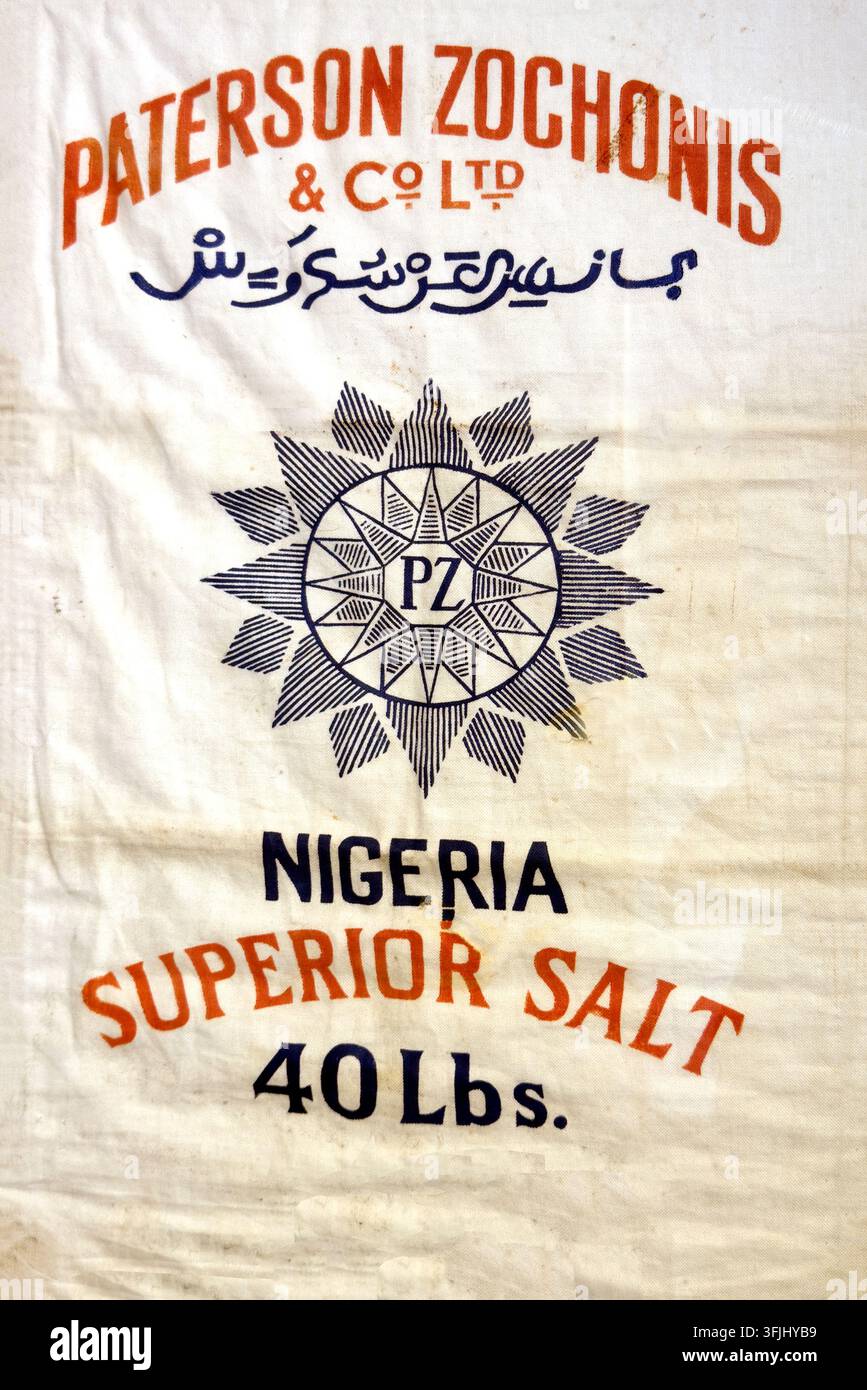
Image details
Contributor:
Tony SmithImage ID:
3FJHYB9File size:
52 MB (2.5 MB Compressed download)Releases:
Model - no | Property - noDo I need a release?Dimensions:
3482 x 5220 px | 29.5 x 44.2 cm | 11.6 x 17.4 inches | 300dpiDate taken:
23 August 2026Location:
Weaver Hall Museum & Workhouse, 162 London Road, Northwich, Cheshire, CW9 8ABMore information:
. A historic 40 lb cloth sack marked Paterson Zochonis & Co Ltd, Nigeria Superior Salt, photographed as a museum object in Northwich. The printed branding combines English text with an emblem and additional script, turning a utilitarian container into evidence of the international trade networks that connected Cheshire’s salt industry with markets in West Africa. Paterson Zochonis developed from a nineteenth-century trading business with deep commercial links to West Africa and later became associated with the PZ group. Salt was one of the basic commodities moved through imperial and post-imperial trade systems, while Cheshire’s brine and rock-salt resources made the Northwich area a major British production centre. Packaging such as this was designed to survive transport, handling and storage rather than to be preserved for display. The sack is therefore valuable for understanding industrial history, branding, colonial-era commerce and the movement of everyday goods between Britain and Nigeria. It can illustrate the economic relationships that sat behind consumer products, as well as the practical logistics of exporting bulk commodities before modern plastic packaging. The object also connects local Cheshire industry with a much wider story of shipping, trade, corporate expansion and Britain’s commercial presence in West Africa. The wording Nigeria Superior Salt also raises questions about how British firms branded imported or exported goods for particular markets and how commercial imagery reflected colonial-era assumptions. Museum interpretation can place such packaging within a more critical history of trade, labour and empire. For stock use, the bag is therefore relevant not only to salt production but also to corporate history, African commerce, packaging design and the long economic connections between British manufacturing centres and overseas consumers. It also has value for commercial, trade and packaging history.

