
University of Liverpool campus with the red-brick Victoria Building and its landmark clock tower in the city’s Knowledge Quarter.
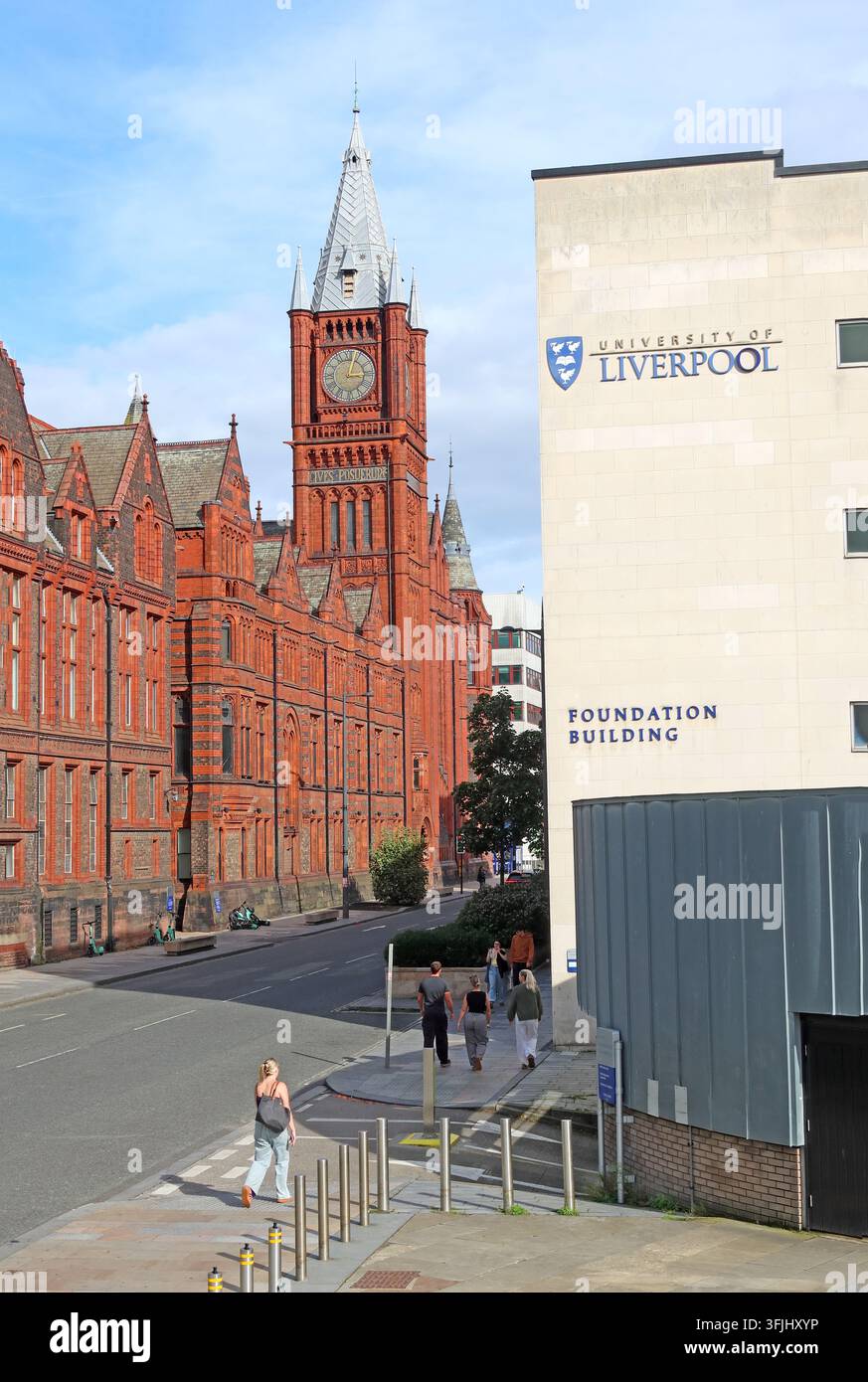
Image details
Contributor:
Tony SmithImage ID:
3FJHXYPFile size:
58.7 MB (2.3 MB Compressed download)Releases:
Model - no | Property - noDo I need a release?Dimensions:
3712 x 5523 px | 31.4 x 46.8 cm | 12.4 x 18.4 inches | 300dpiDate taken:
19 September 2026Location:
Victoria Gallery & Museum, Ashton Street, Liverpool, Merseyside, L69 3DRMore information:
. The University of Liverpool campus with the red-brick Victoria Building and its landmark clock tower forming a distinctive focal point on Brownlow Hill. The building’s ornate late-Victorian architecture is closely associated with the phrase red-brick university, a description later applied more broadly to the civic universities established in major industrial cities. The University of Liverpool developed from University College Liverpool and became an independent university in the early twentieth century. Its city-centre campus now forms a major part of Liverpool’s Knowledge Quarter, combining teaching, research, healthcare, student accommodation and cultural facilities. The Victoria Building has been repurposed as the Victoria Gallery & Museum, allowing an important historic structure to remain publicly accessible. The photograph can illustrate higher-education funding, university admissions, student numbers, research policy, international education and the economic role of universities in regional cities. It also has architectural value because the red brick, decorative stonework and clock tower contrast with newer academic buildings nearby. As a visual symbol of the institution, the Victoria Building connects Liverpool’s industrial-era civic ambition with the modern research university and the continuing regeneration of the surrounding Knowledge Quarter. The building’s present museum use is significant because universities increasingly reuse heritage structures rather than demolish them as teaching requirements change. Galleries and collections can open academic campuses to the wider public and strengthen links between universities and their host cities. The image therefore works for stories about university heritage, cultural outreach and adaptive reuse as well as conventional education coverage. Its clock tower remains one of the easiest visual identifiers of the University of Liverpool.

