
Hand flushing a domestic toilet, lid up illustrating bathroom hygiene and the potential spread of droplets and aerosols from flushing.
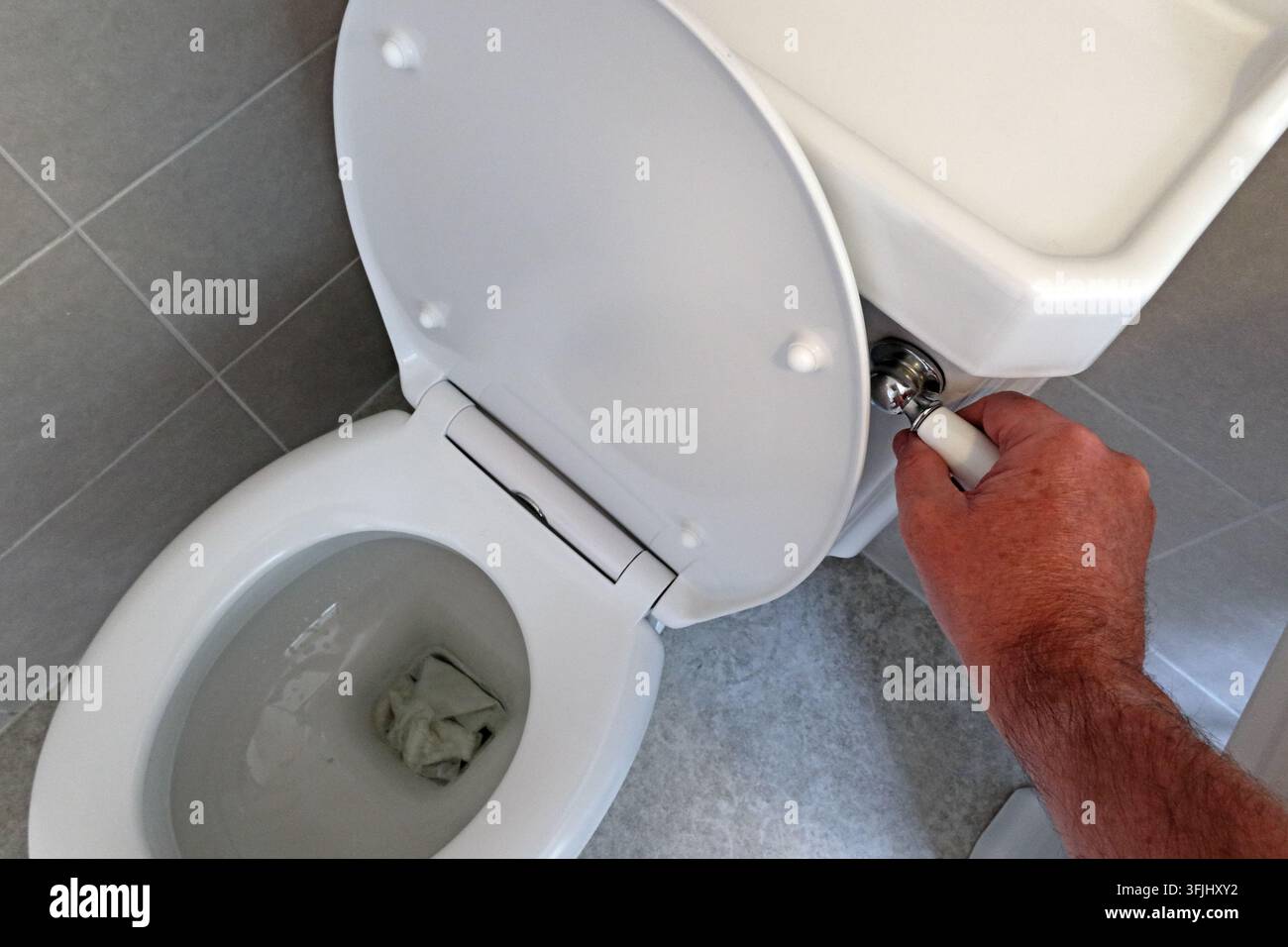
Image details
Contributor:
Tony SmithImage ID:
3FJHXY2File size:
57.1 MB (1.8 MB Compressed download)Releases:
Model - no | Property - noDo I need a release?Dimensions:
5472 x 3648 px | 46.3 x 30.9 cm | 18.2 x 12.2 inches | 300dpiDate taken:
19 September 2026Location:
United KingdomMore information:
A hand operates the flush on a domestic toilet while the seat and lid remain raised, illustrating bathroom hygiene, sanitation and the potential spread of droplets and aerosols during flushing. Research into the so-called toilet plume has shown that flushing can propel small water droplets and aerosol particles from the toilet bowl into the surrounding air, potentially carrying microscopic material from the bowl onto nearby surfaces. The photograph shows a conventional white ceramic WC viewed from above in a modern tiled bathroom, with the open lid, raised seat, cistern and flush handle clearly visible. Closing the toilet lid before flushing is commonly recommended as a simple hygiene precaution because it can reduce the direct dispersal of larger droplets, although it does not completely prevent very small aerosol particles escaping into the bathroom environment. The extent of contamination depends on toilet design, flushing force, what is present in the bowl, ventilation and how often surrounding surfaces are cleaned. Toilet plume research has attracted particular attention in discussions about infection control, public health and household hygiene because droplets can settle on floors, toilet surfaces and objects positioned close to the WC. The image can illustrate everyday hygiene behaviour, domestic sanitation, bathroom cleaning, germ awareness and the difference between flushing with the lid open or closed. It also provides a visual concept for articles about bacteria in bathrooms, contamination of household surfaces, toilet cleaning routines and measures intended to reduce the movement of microorganisms around washrooms. The raised lid and visible flushing action make the hygiene issue immediately understandable without implying that every flush necessarily causes illness, focusing instead on the potential movement of droplets, aerosols and contamination within a domestic bathroom.

