
One Pound clothing sale sign at 13 Chapel Street, Chorley, advertising a £1 clearance in a Lancashire town-centre shop.
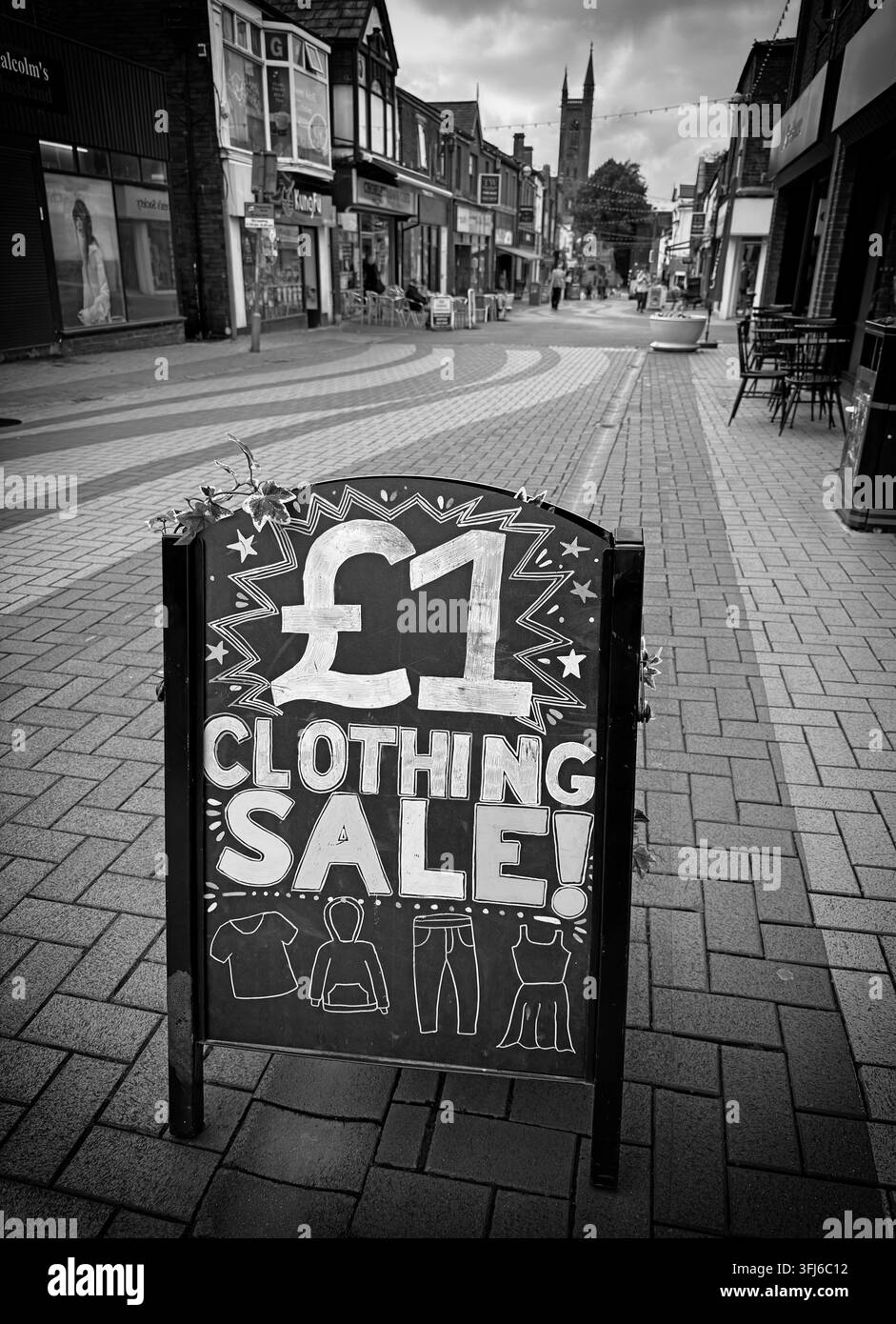
Image details
Contributor:
Tony SmithImage ID:
3FJ6C12File size:
94.8 MB (3.7 MB Compressed download)Releases:
Model - no | Property - noDo I need a release?Dimensions:
4899 x 6764 px | 41.5 x 57.3 cm | 16.3 x 22.5 inches | 300dpiDate taken:
16 September 2026Location:
13 Chapel Street, Chorley, Lancashire, PR7 1BNMore information:
A bold “£1 Clothing Sale!” pavement sign stands on an unusually quiet pedestrianised British high street, creating a stark image of discount retailing, weak footfall and the economic pressures facing some UK town centres. Photographed in black and white, the almost empty street, subdued shopfronts and low-price clothing offer combine to suggest a retail environment struggling to attract enough spending and activity. One-pound clothing is an extreme example of value retail, reflecting a market in which some businesses compete heavily on price as consumers manage tight household budgets and town-centre retailers fight for limited footfall. The image can illustrate debate over the future of Britain’s high streets, but decline is not uniform across the country. Research by Centre for Cities shows substantial differences between successful and struggling centres, with some enjoying low vacancy levels while others have far more empty shops. Factors include local spending power, the size of the customer catchment, competition from nearby centres, online shopping, out-of-town retail and simply having more shop space than local demand can support. Regeneration therefore involves more than filling every vacant unit with another shop. Policy ideas increasingly include reducing surplus retail space, bringing more housing and residents into town centres, improving public spaces and transport, supporting independent businesses, attracting leisure and hospitality uses and strengthening local employment and disposable incomes. From April 2026 the business-rates system also introduced permanently lower multipliers for many retail, hospitality and leisure properties below £500, 000 rateable value. The scene provides a concise social-documentary image of bargain retail, subdued consumer demand, changing shopping habits and the challenge of making traditional British town centres economically viable again.

