
No swimming sign beside the River Weaver, warning against entering the water during warm weather when open-water swimming may be tempting.
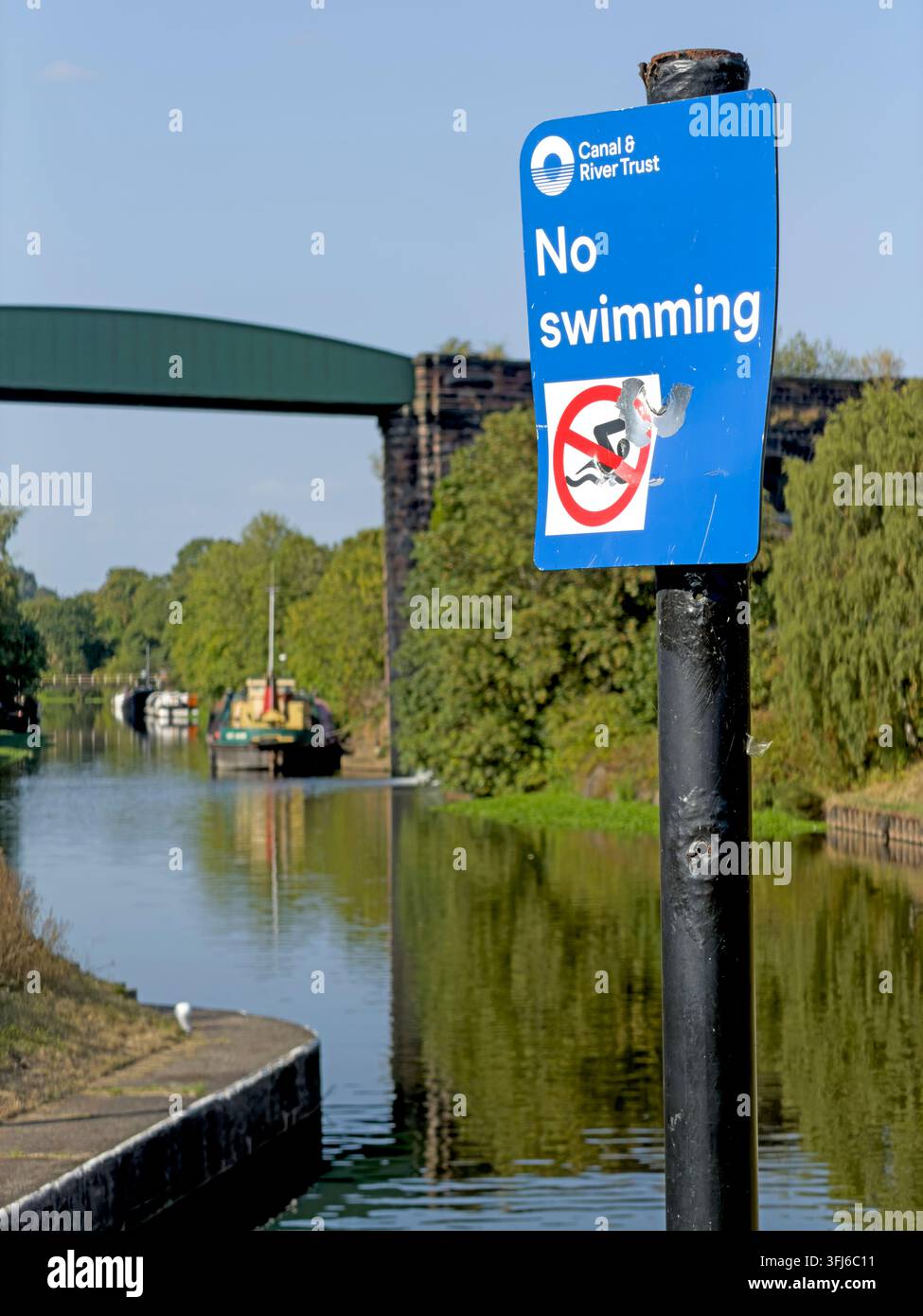
Image details
Contributor:
Tony SmithImage ID:
3FJ6C11File size:
98.2 MB (1.7 MB Compressed download)Releases:
Model - no | Property - noDo I need a release?Dimensions:
5073 x 6764 px | 43 x 57.3 cm | 16.9 x 22.5 inches | 300dpiDate taken:
23 August 2026Location:
River Weaver, Northwich, Cheshire, EnglandMore information:
. A blue No swimming sign beside the River Weaver in Northwich warns people not to enter the water, a message that becomes especially relevant during hot summer weather when rivers and canals can look inviting. Calm-looking inland water can conceal strong currents, sudden depth changes, submerged obstacles, poor water quality and steep or difficult exit points. Open-water swimming has grown in popularity, but not every stretch of river is suitable or authorised for bathing. Cold water shock can affect even strong swimmers, while moving water and boat traffic introduce risks that are absent in a supervised pool. Formal warning signs are therefore used by landowners and navigation authorities to identify locations where swimming is prohibited or considered unsafe. The image can illustrate drowning prevention, summer heatwaves, river safety, public warnings and debates about access to inland water. The River Weaver is closely connected with Cheshire’s industrial and transport history, but today its banks are also used for walking, leisure and recreation. The sign provides a simple, direct editorial visual for stories about water safety without showing an accident or identifiable casualty. During heatwaves, emergency services and water-safety organisations repeatedly warn that warm air temperatures do not mean inland water is warm or safe. Sudden immersion can trigger involuntary gasping and loss of swimming control. Rivers may also contain weirs, sluices or navigation structures that create local hazards. The sign is therefore useful for seasonal news coverage in which authorities urge people to cool down in supervised locations rather than entering unfamiliar water. The warning also provides a strong visual for campaigns by councils, emergency services and water-safety charities that urge families and young people to understand local hazards before entering rivers, canals or reservoirs.

