
Electric motor, flywheels and gearing driving the historic nodding-donkey brine pump at Lion Salt Works near Northwich.
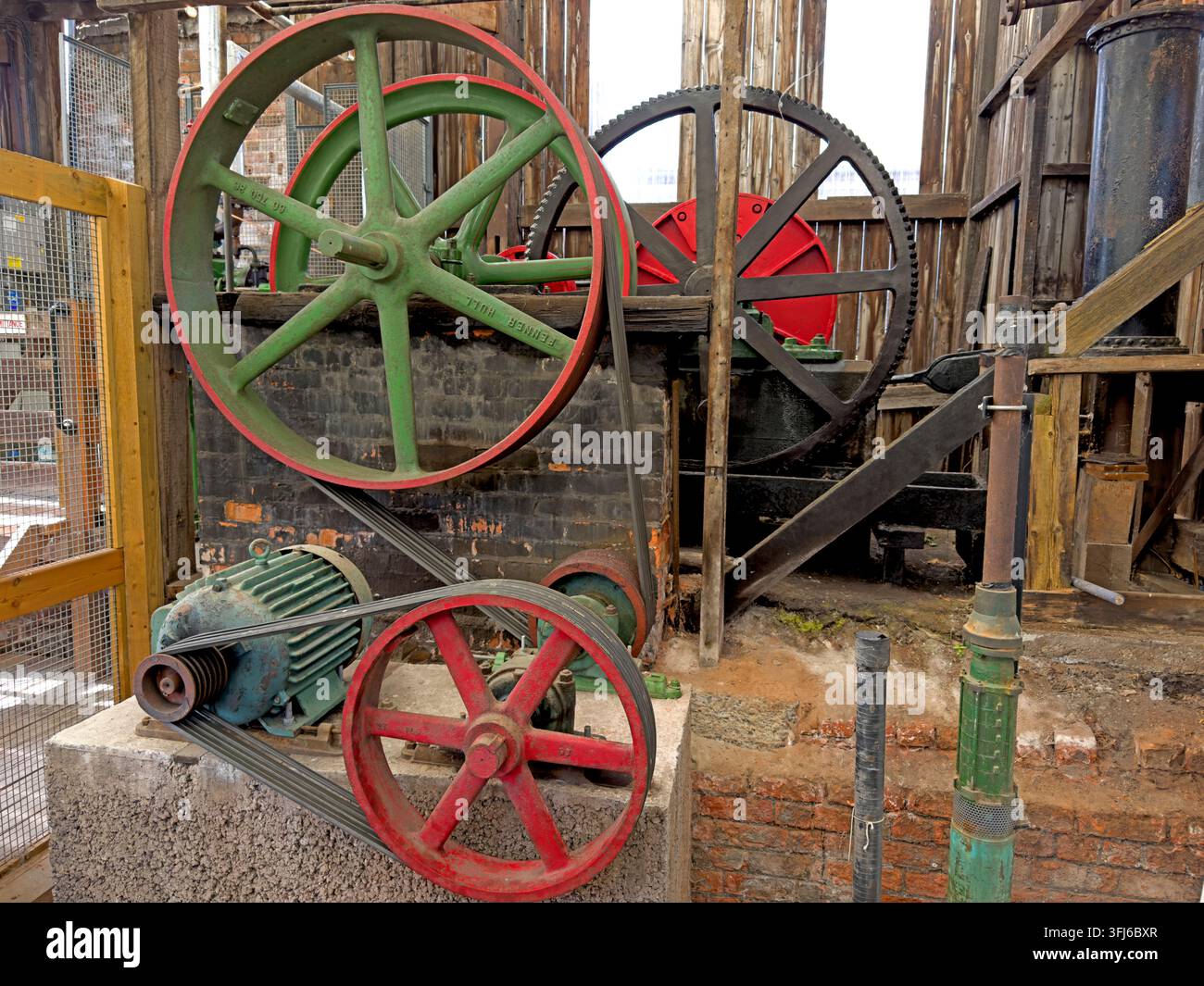
Image details
Contributor:
Tony SmithImage ID:
3FJ6BXRFile size:
89.7 MB (3.8 MB Compressed download)Releases:
Model - no | Property - noDo I need a release?Dimensions:
6464 x 4848 px | 54.7 x 41 cm | 21.5 x 16.2 inches | 300dpiDate taken:
23 August 2026Location:
Lion Salt Works, Ollershaw Lane, Marston, Northwich, Cheshire, CW9 6ESMore information:
. Electric motor, large flywheels and exposed gearing forming part of the historic brine-pumping machinery at Lion Salt Works, Marston, near Northwich. The arrangement drives the site’s characteristic nodding-donkey pump, translating rotary power through belts, wheels and mechanical linkages to raise brine for salt production. Northwich and the surrounding Cheshire plain developed around rich underground salt and brine deposits. Lion Salt Works became one of the last surviving open-pan salt-making sites in Britain and is now preserved as an industrial museum. Machinery like this demonstrates the intermediate technologies that connected extraction with evaporation: brine first had to be pumped from below ground before it could be heated in large pans to crystallise salt. The photograph is useful for engineering, industrial archaeology, salt production, energy use and the preservation of historic machinery. Exposed flywheels and gearing make the mechanical process visually understandable and show why industrial sites required careful guarding and maintenance. The scene also connects a local Cheshire resource with wider histories of food production, chemicals, transport and export, all of which helped make salt one of the defining industries of the Northwich area. Lion Salt Works preserves machinery in context, which is important because individual components make much more sense when their relationship to buildings, wells and evaporation pans can still be understood. The motor and flywheels reveal the transfer of power at human scale and show how robust mechanical systems could remain in use for long periods. This makes the image particularly useful for education about industrial processes, mechanical advantage, maintenance and the evolution from steam or line-shaft power to electric drive. The scene additionally offers documentary evidence relevant to 20th century industry, industrial archaeology, working machinery, museum exhibit and engineering history.

