
Vintage mechanical adding machine with numbered sliders and hand crank, displayed as an example of pre-electronic office calculation.
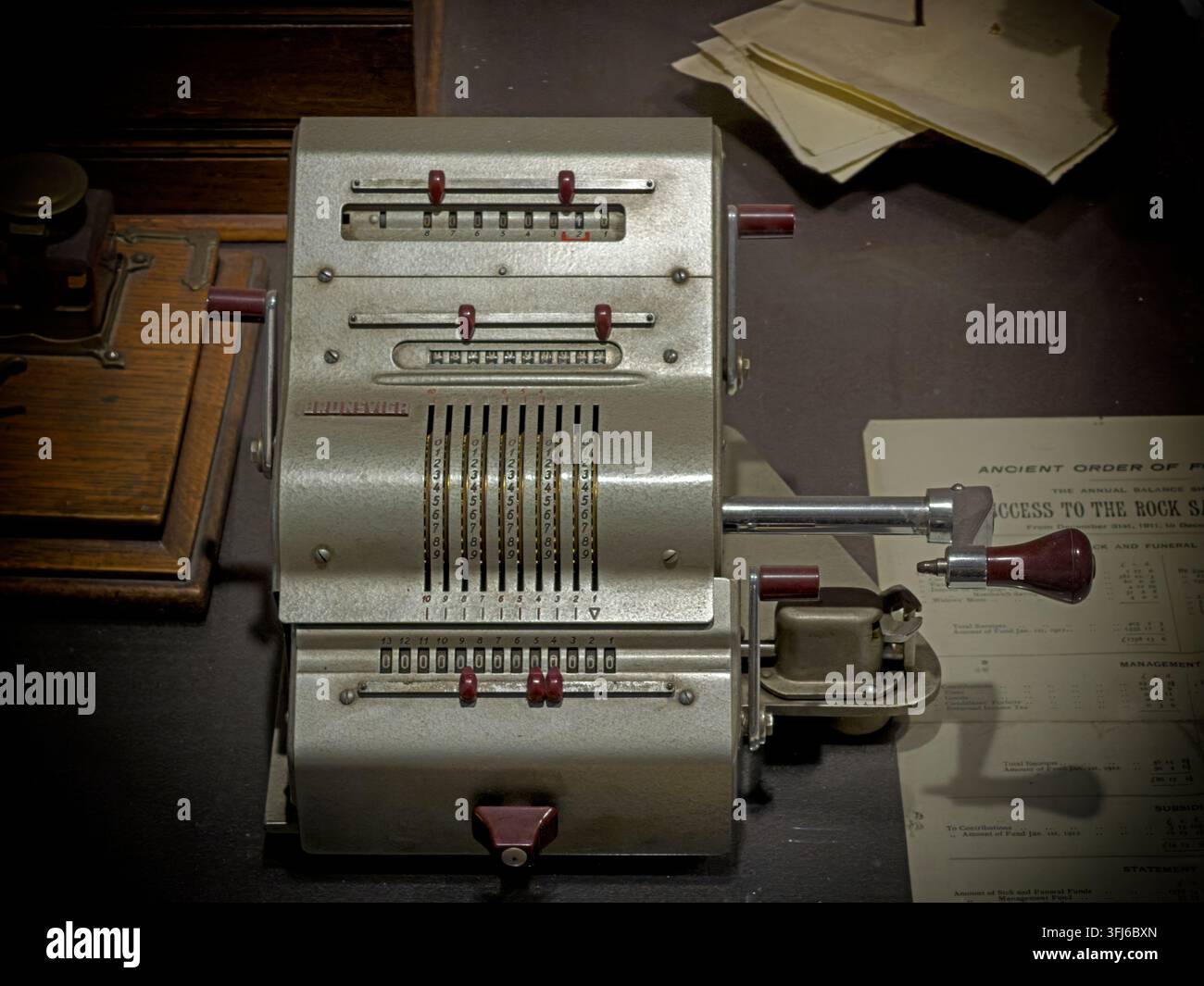
Image details
Contributor:
Tony SmithImage ID:
3FJ6BXNFile size:
85.2 MB (1.9 MB Compressed download)Releases:
Model - no | Property - noDo I need a release?Dimensions:
6301 x 4726 px | 53.3 x 40 cm | 21 x 15.8 inches | 300dpiDate taken:
23 August 2026Location:
Weaver Hall Museum & Workhouse, 162 London Road, Northwich, Cheshire, CW9 8ABMore information:
. A vintage mechanical adding machine displayed in a museum setting, with rows of numbered sliders, a metal calculation mechanism and a hand-operated crank. Before electronic calculators and spreadsheets became commonplace, machines of this type allowed clerks to total columns of figures more quickly and reliably than repeated mental or handwritten arithmetic. Mechanical calculators were important tools in offices, factories, banks, shops and accounting departments during the late nineteenth and twentieth centuries. Different makers used key presses, sliders, rotating drums or stepped mechanisms, but the basic aim was the same: converting manual input into repeatable arithmetic. Their construction also reveals the close relationship between precision engineering and clerical work before digital electronics transformed office routines. The photograph can illustrate the history of computing, bookkeeping, accounting, office automation and the changing nature of administrative employment. It is a useful counterpoint to modern laptops and cloud software because the calculation process is physically visible in gears, levers and printed numbers. As a museum object, the machine preserves the material culture of an era when everyday business calculations depended on substantial mechanical equipment rather than software. Such machines also changed office productivity and the organisation of clerical labour. Repetitive arithmetic could be delegated to a device, reducing some errors while creating new specialist skills in operating and checking the mechanism. The lineage from mechanical adders to electronic calculators, desktop computers and spreadsheet software makes the object relevant to the broader history of automation. It is a tangible reminder that digital transformation began with earlier attempts to mechanise information work. It also supports coverage of engineering, commercial history and office technology.

