
Real ale handpulls and traditional filled pub rolls on the bar at Malt 'n' Hops, Chorley, Lancashire.
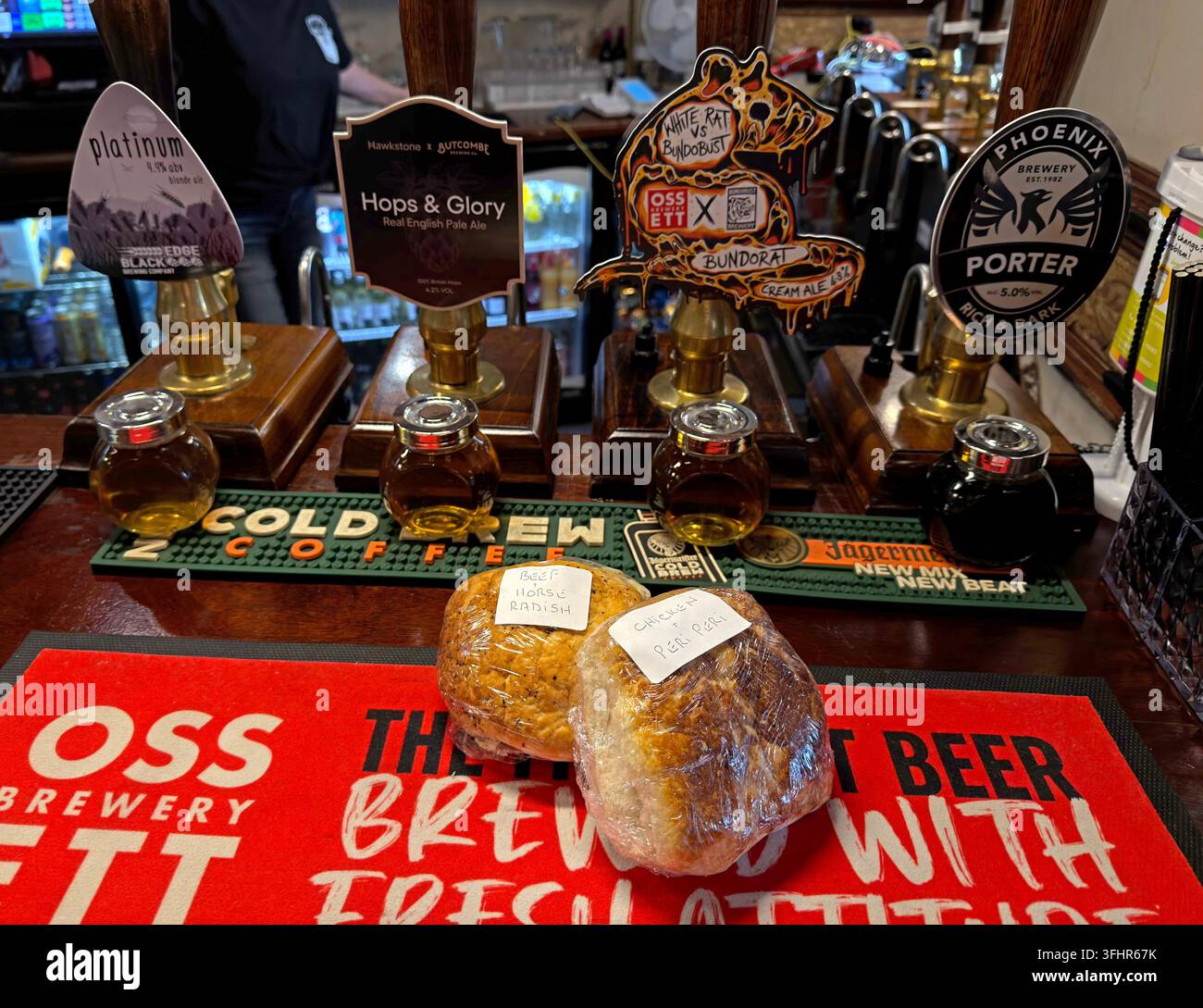
Image details
Contributor:
Tony SmithImage ID:
3FHR67KFile size:
66 MB (2.4 MB Compressed download)Releases:
Model - no | Property - noDo I need a release?Dimensions:
5476 x 4210 px | 46.4 x 35.6 cm | 18.3 x 14 inches | 300dpiDate taken:
16 September 2026Location:
Malt 'n' Hops, 50-52 Friday Street, Chorley, Lancashire, PR6 0AAMore information:
. Traditional real-ale handpulls share the bar with wrapped filled rolls at Malt 'n' Hops, an independent pub at 50-52 Friday Street in Chorley, Lancashire. The image brings together two enduring features of the British drinking pub: rotating cask beer served by hand pump and simple cold food designed to accompany a pint rather than turn the venue into a restaurant. Malt 'n' Hops is a genuine free house known for a changing selection of guest ales, with beers commonly drawn from breweries across Lancashire, Yorkshire and the wider North of England. Central Lancashire CAMRA describes the pub as offering multiple guest cask ales alongside traditional snacks including filled rolls and pork pies, a combination clearly reflected in the photograph. The building itself predates the pub and was used for many years as a grocer's shop before later commercial uses; the premises were converted into a public house and opened as Malt 'n' Hops in 1989. Its position close to Chorley railway station and bus station makes it part of the town's compact network of pubs used by local drinkers, visitors and people travelling through the centre. Cask-conditioned ale remains closely associated with British pub heritage because the beer completes conditioning in the cask and is normally served without the high carbonation typical of many keg products. The wrapped rolls beside the pumps emphasise a practical style of pub catering that survives in specialist beer houses even as much of the licensed trade has moved towards larger menus and food-led operation. The wrapped rolls beside the pumps show a practical style of pub catering that survives even as much of the licensed trade has moved towards larger food menus. It also provides a contemporary record of a venue whose identity depends as much on everyday details at the bar as on its exterior sign or architectural appearance. The visible pump clips also preserve a snapshot of the beers offered when the photograph was taken.

