
British Rail double-arrow station sign at Chorley railway station in Lancashire, north-west England.
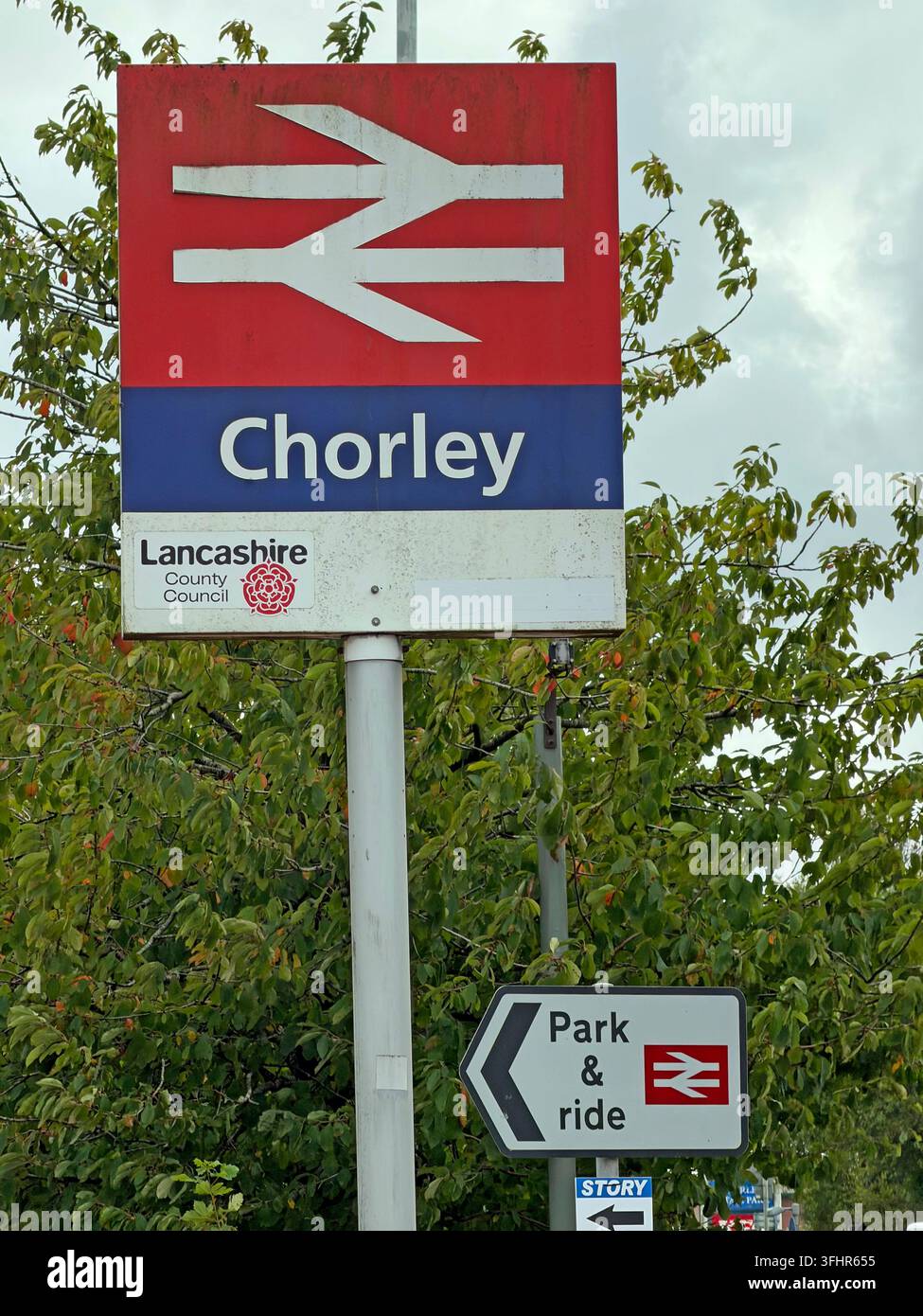
Image details
Contributor:
Tony SmithImage ID:
3FHR655File size:
50.1 MB (1.9 MB Compressed download)Releases:
Model - no | Property - noDo I need a release?Dimensions:
3624 x 4832 px | 30.7 x 40.9 cm | 12.1 x 16.1 inches | 300dpiDate taken:
16 September 2026Location:
Chorley Railway Station, Chapel Street, Chorley, Lancashire, PR7 1BSMore information:
. Red British Rail double-arrow symbol and Chorley station name sign identify the railway station serving Chorley in Lancashire, north-west England. The instantly recognisable double-arrow logo was created for British Rail in the 1960s and has outlived railway privatisation to remain the standard national symbol used to identify stations across Great Britain. Its continued presence provides visual continuity in a network now operated by multiple passenger companies, infrastructure bodies and ticketing brands. Chorley station lies on the route linking the town with destinations including Preston, Bolton and Manchester, making it an important part of everyday commuting and regional travel in Central Lancashire. The railway station stands close to Chorley Bus Station and the town centre, allowing passengers to transfer between rail, local bus services, shops and other facilities without travelling to an out-of-town interchange. Station signs are functional pieces of wayfinding, but they also become familiar local landmarks and a common visual shorthand for railway travel in editorial photography. The red symbol contrasts strongly with the pale sign and surrounding greenery, while the place name anchors the image specifically to Chorley rather than to a generic railway location. Retaining the national double-arrow across different train operators gives Britain's fragmented railway a rare piece of consistent visual identity. The photograph can illustrate regional rail, public transport, commuting, station infrastructure and the relationship between Lancashire towns and larger employment centres. It also records the physical branding of the station at a particular time, important because operator colours, signs, ticketing equipment and passenger facilities are periodically replaced. This straightforward view therefore combines local geography with one of the most enduring symbols of Britain's public-transport system.

