
Supermarket snack aisle stocked with Walkers crisps, Wotsits, Monster Munch, Squares and Skips in the UK.
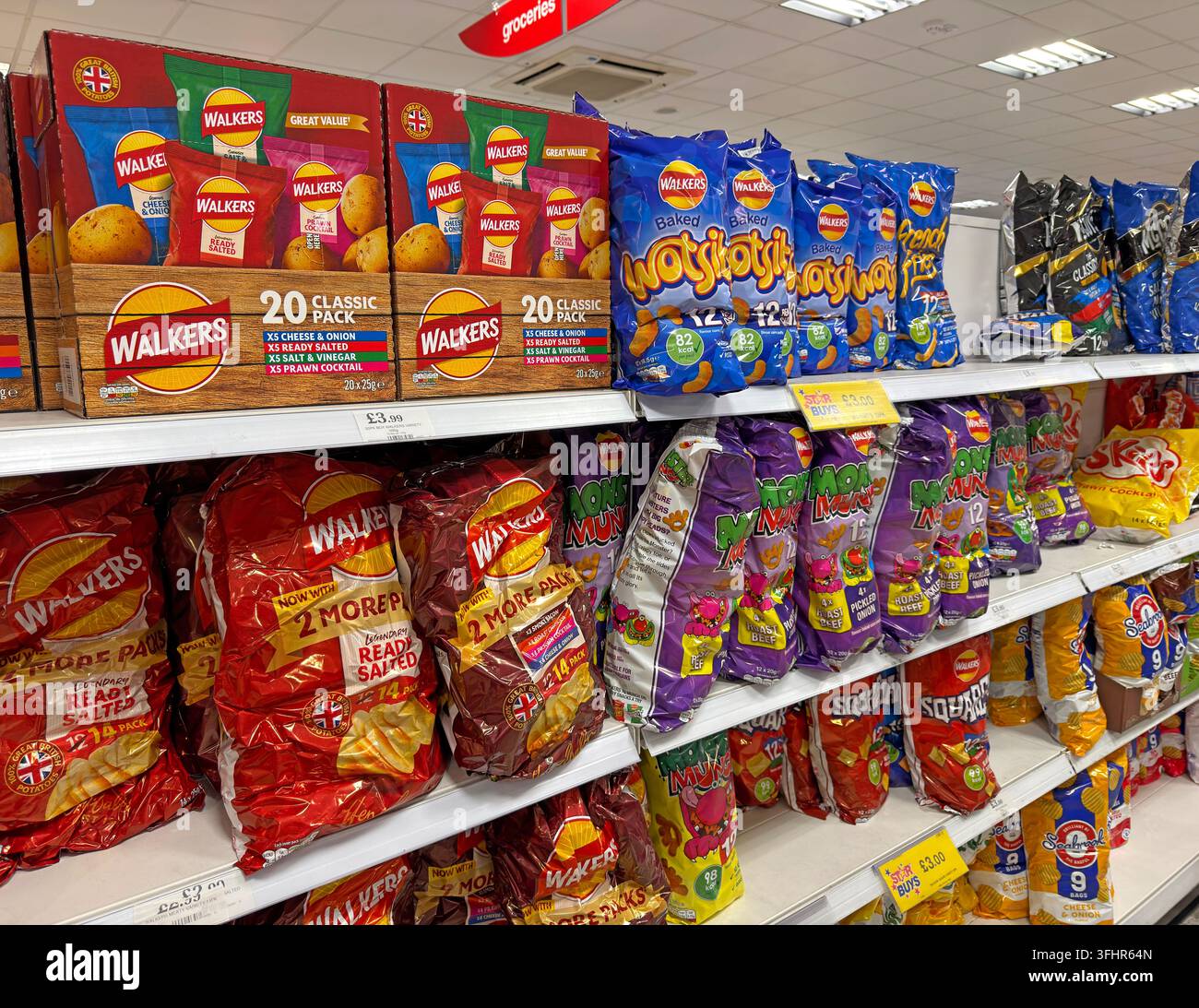
Image details
Contributor:
Tony SmithImage ID:
3FHR64NFile size:
91.5 MB (4.4 MB Compressed download)Releases:
Model - no | Property - noDo I need a release?Dimensions:
6436 x 4967 px | 54.5 x 42.1 cm | 21.5 x 16.6 inches | 300dpiDate taken:
14 September 2026Location:
United KingdomMore information:
. Supermarket shelves filled with brightly coloured multipacks and bags of familiar British savoury snacks including Walkers crisps, Wotsits, Monster Munch, Squares and Skips. The tightly packed display shows how major snack brands compete for attention through colour, logos, flavour names, pack size and repeated blocks of shelf space. Crisps and corn-based snacks are a routine part of British grocery shopping, sold as lunchbox items, household multipacks, pub snacks and individual convenience purchases. Walkers is one of the most recognisable names in the UK crisp market, while Wotsits, Monster Munch, Squares and Skips each use distinctive shapes and flavours to occupy different parts of the same snack category. The image is useful for illustrating branded food, supermarket merchandising, consumer choice and the highly competitive fast-moving consumer goods sector. Retailers organise products carefully by brand, flavour, size and promotional offer because small differences in shelf position can influence what shoppers notice and buy. Snack aisles also provide a visible record of inflation and changing household spending, since pack sizes, multipack quantities and promotions are frequently adjusted as manufacturers and supermarkets respond to costs. Packaging has become part of wider debates about nutrition, portion size, salt and fat, plastic waste and marketing to children, even though these products remain deeply embedded in everyday food culture. The strong repetition of branded bags creates a visual pattern that immediately signals mass-market grocery retail rather than a specialist food shop. Photographs of ordinary supermarket shelves can become useful economic records because products, prices, package designs and promotional strategies change quickly. This contemporary scene documents the abundance and branding of savoury snack food in a British supermarket during the mid-2020s.

