
Electronic train departure boards at Leeds railway station displaying services, platforms, times and delays.
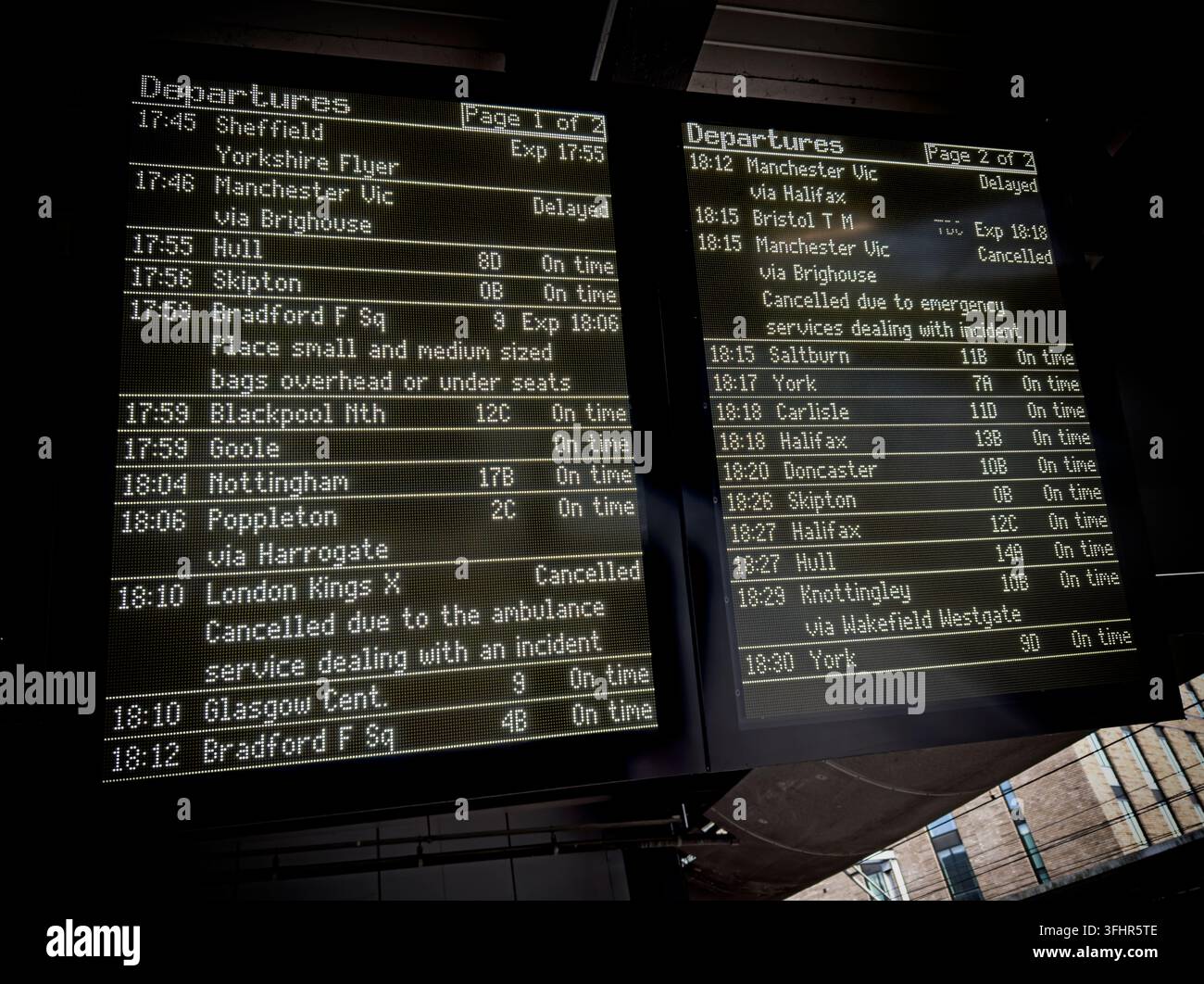
Image details
Contributor:
Tony SmithImage ID:
3FHR5TEFile size:
88.3 MB (3.5 MB Compressed download)Releases:
Model - no | Property - noDo I need a release?Dimensions:
6424 x 4805 px | 54.4 x 40.7 cm | 21.4 x 16 inches | 300dpiDate taken:
18 July 2026Location:
Leeds Railway Station, New Station Street, Leeds, West Yorkshire, LS1 4DYMore information:
. Electronic departure boards at Leeds railway station display scheduled train times, destinations, platforms and service information for passengers moving through one of northern England's busiest rail hubs. The black screens with white and amber text compress a large amount of operational information into a format travellers can scan quickly before heading to the correct platform. Leeds is a major interchange for local, regional and long-distance services across Yorkshire and beyond, so changes to platforms or delays can affect large numbers of connecting passengers. Departure boards remain central to station wayfinding even as travellers increasingly consult live information through mobile apps and websites. They provide a shared, authoritative view of the current service position and are particularly important when disruption causes trains to be retimed, cancelled or moved at short notice. The image captures the mixture of routine and uncertainty that characterises rail travel, with scheduled departure times presented alongside real-world operational updates. Digital passenger information systems are fed by railway operating data and must be kept synchronised with announcements, platform indicators and staff advice if passengers are to make informed decisions. Leeds station is also an important commuter gateway to the city centre, supporting employment, education, retail and tourism as well as longer-distance journeys. Photographs of departure boards can document individual incidents of disruption but also the broader technological infrastructure behind modern public transport. The close framing makes the information screens themselves the subject, emphasising timetables, delay management and passenger communication rather than the architecture of the station. This image provides an everyday record of Britain's rail network and the information systems passengers rely on to navigate a complex, heavily used urban interchange.

