
New ScotRail new 2026 mobile app displayed on a smartphone over a printed railway timetable, showing digital rail ticketing in Scotland.
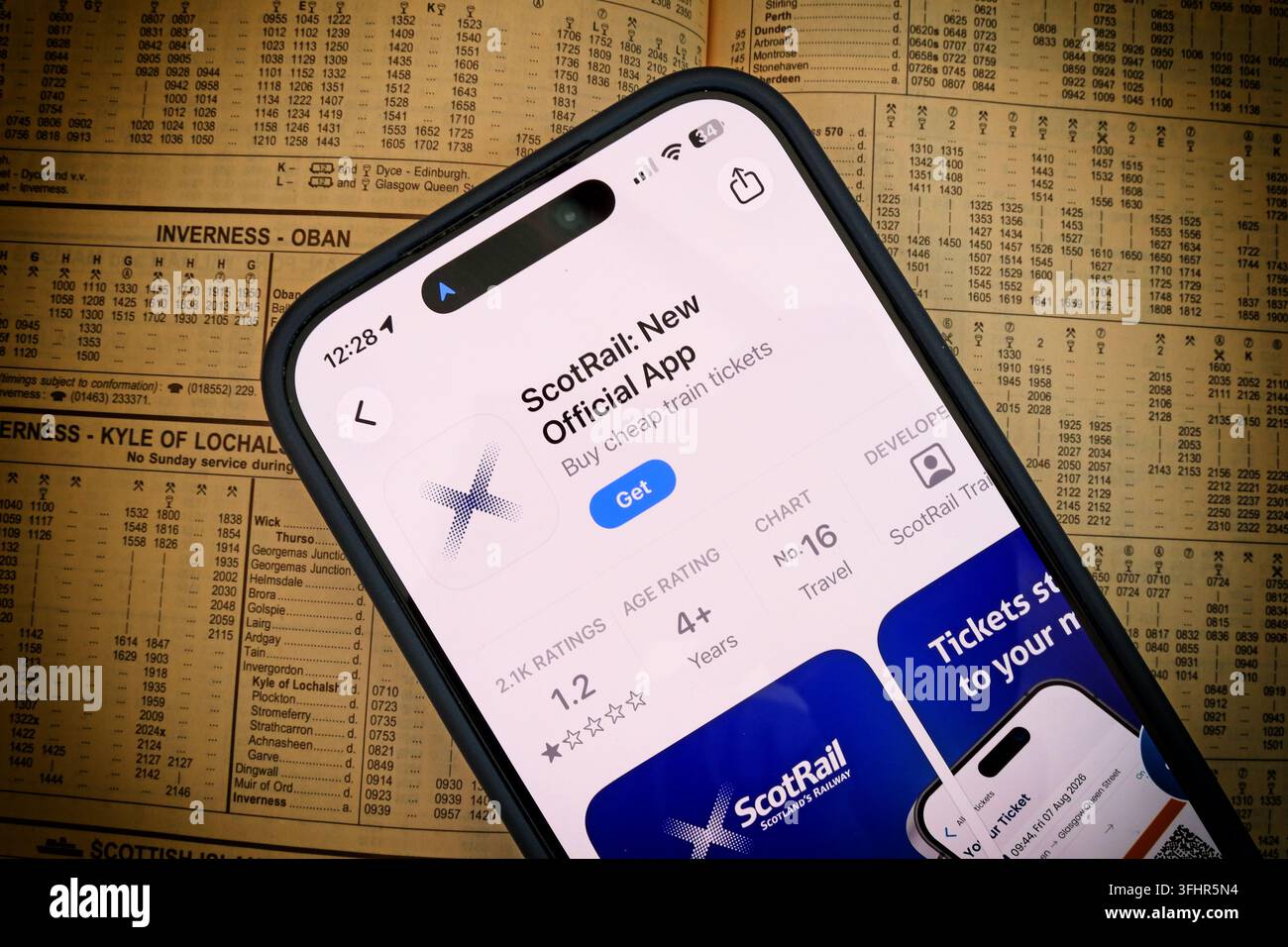
Image details
Contributor:
Tony SmithImage ID:
3FHR5N4File size:
57.1 MB (1.8 MB Compressed download)Releases:
Model - no | Property - noDo I need a release?Dimensions:
5472 x 3648 px | 46.3 x 30.9 cm | 18.2 x 12.2 inches | 300dpiDate taken:
17 September 2026Location:
Scotland, United KingdomMore information:
ScotRail’s new official mobile app displayed on a smartphone against a traditional printed Scottish railway timetable, creating a contrast between modern digital ticketing and the paper information once routinely used by rail passengers. The image illustrates ScotRail’s controversial 2026 transition to a new ticketing and journey-planning platform and the passenger complaints that followed its launch on 30 July. Around 3, 000 complaints were reported during the first ten days, with travellers encountering problems logging into accounts, receiving password resets, buying tickets and accessing tickets already purchased. Other reported difficulties included return and season tickets, ticket activation, QR codes and tickets failing to appear when required. ScotRail managing director Joanne Maguire later apologised to passengers at the Scottish Parliament’s Transport Committee, acknowledging that the launch had not been good enough. The app was supplied by SilverRail Technologies under a nine-year contract valued at £83 million. ScotRail said technical teams were working to stabilise the service, while subsequent updates addressed areas including ticket displays, booking amendments, Flexipass activation, logged-in user messaging and app stability. The photograph provides a visual commentary on digital transformation in public transport, where smartphone apps increasingly replace ticket offices, printed timetables and other traditional ways of planning and paying for journeys. It also raises contemporary themes of software testing, technology procurement, customer experience, accessibility, digital dependency and passenger confidence when essential transport services move onto mobile platforms. The juxtaposition of the brightly lit smartphone and densely printed timetable links two generations of railway information and highlights how expectations of instant, reliable access have changed for passengers using Scotland’s publicly owned rail network in 2026.

