
Yellow 'Déviation' temporary diversion road sign in France, used to direct traffic around a closure or roadworks.
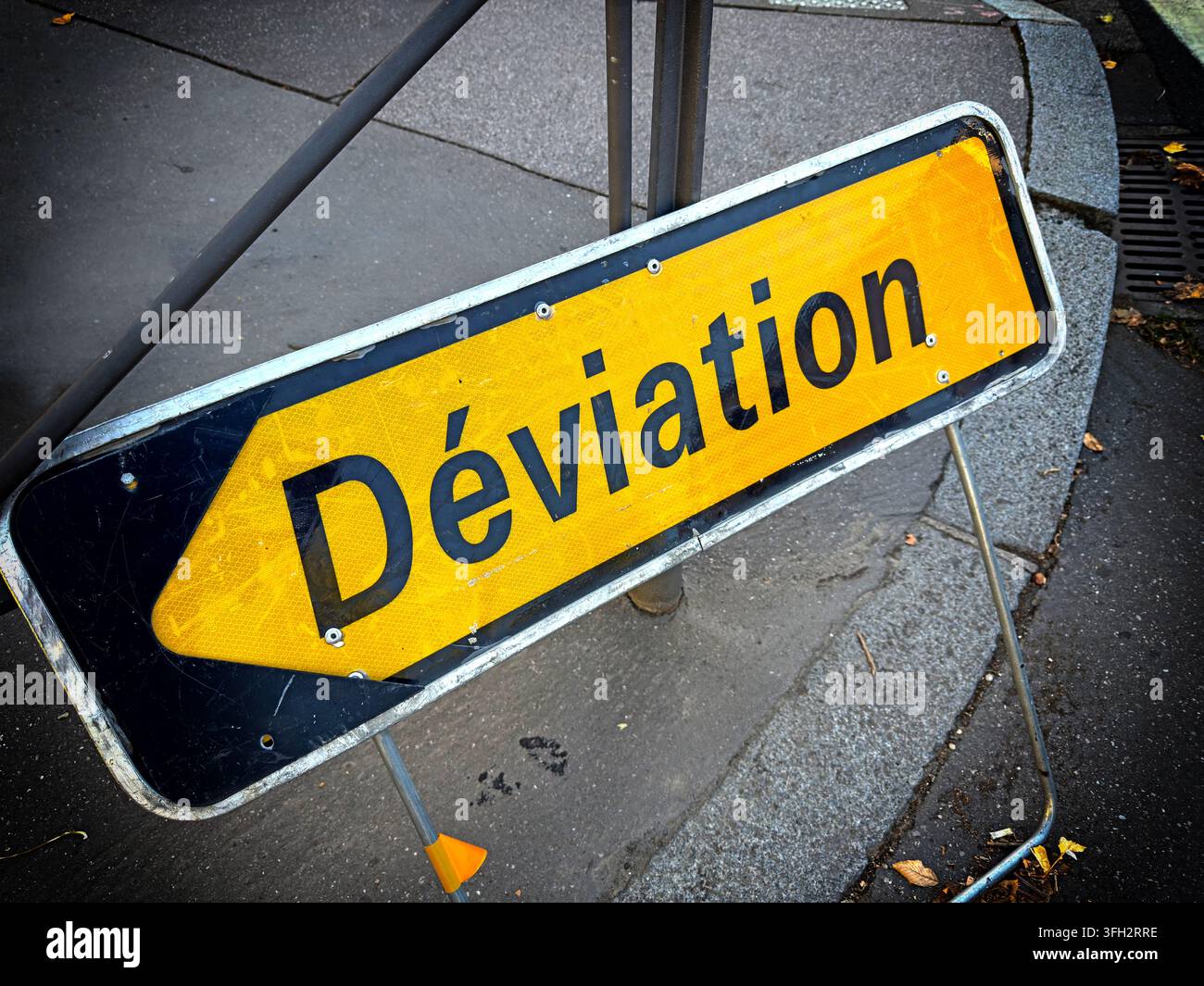
Image details
Contributor:
Tony SmithImage ID:
3FH2RREFile size:
89.7 MB (3.7 MB Compressed download)Releases:
Model - no | Property - noDo I need a release?Dimensions:
6464 x 4848 px | 54.7 x 41 cm | 21.5 x 16.2 inches | 300dpiDate taken:
9 September 2026Location:
FranceMore information:
. Yellow 'Déviation' temporary diversion road sign in France, used to direct traffic around a closure or roadworks. The sign appears detached from a permanent post and photographed close up on a wet or dark pavement surface, highlighting the portable nature of temporary traffic-control equipment. A yellow French road sign marked 'Déviation' lies or leans at street level, its black lettering and directional arrow identifying a temporary diversion route. In France, déviation signs are used to redirect traffic around roadworks, closures, events or incidents, making them a familiar part of temporary traffic management in towns and cities. The worn metal sign, kerb and pavement setting emphasise the physical equipment behind road closures rather than showing only a distant route change. Temporary diversions can affect motorists, buses, deliveries, cyclists and pedestrians, especially where urban works alter normal access or send traffic through unfamiliar streets. The strong yellow-and-black design is intended for rapid recognition by drivers and contrasts with permanent directional signage, helping road users distinguish a short-term route from the normal network. The close view shows the practical street equipment used to reroute drivers temporarily, with repeated handling and roadside use visible in the worn metal surface and frame. Diversion routes have to remain legible at speed and are normally repeated at junctions so drivers can follow a temporary path until they rejoin the normal route. Poorly placed or missing temporary signs can create unnecessary mileage and local congestion, which is why roadwork signing is a practical part of highway safety. Portable signs are designed to be deployed quickly and removed when works finish, so scuffs and wear are common on equipment used repeatedly. Repeated handling explains the scuffs and wear visible on portable signs that are moved from one temporary traffic scheme to another.

