
Stone-arched entrance to Grappenhall Heys Walled Garden in Warrington, with a timber door and visitor information beside the gateway.
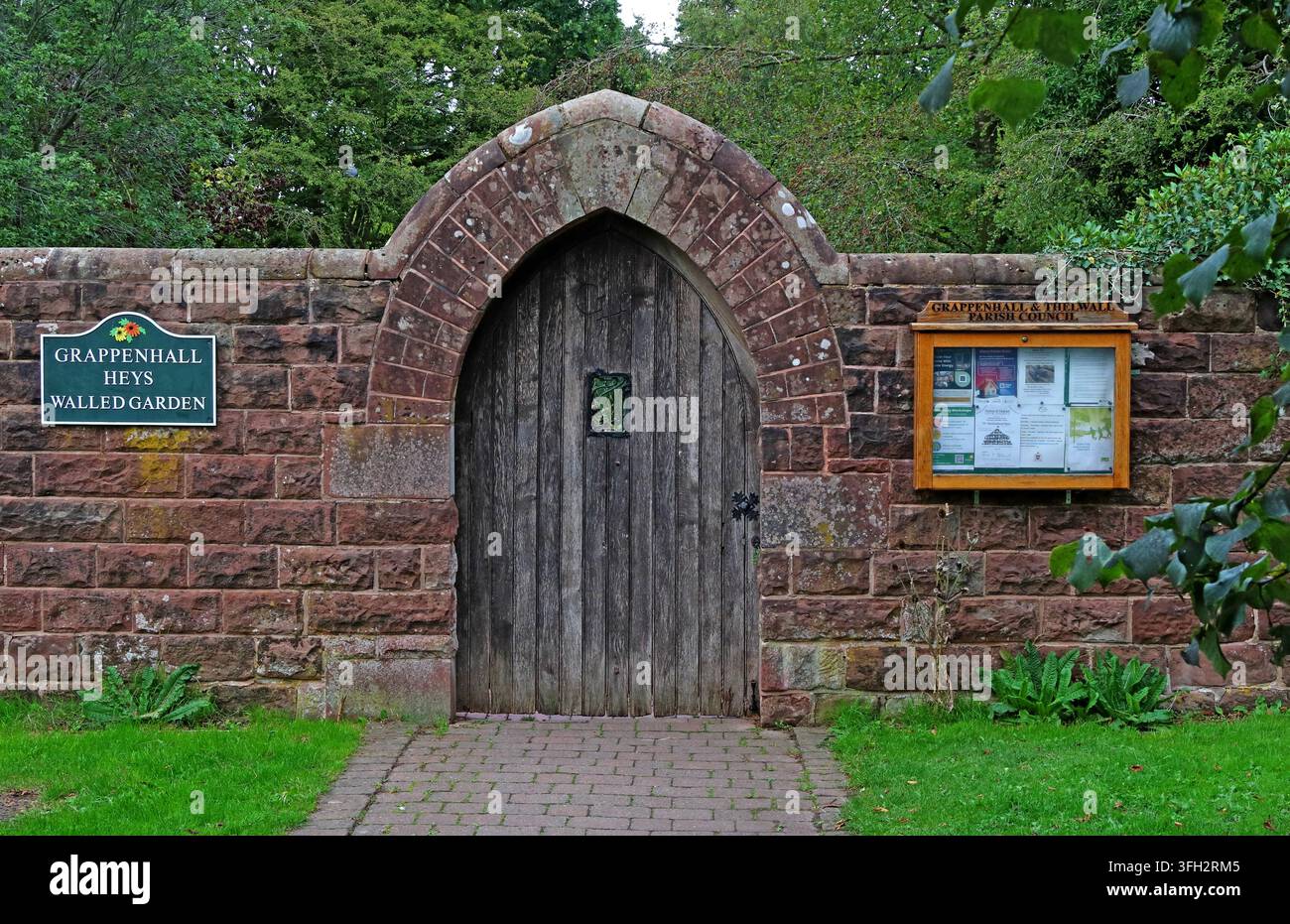
Image details
Contributor:
Tony SmithImage ID:
3FH2RM5File size:
55.5 MB (4 MB Compressed download)Releases:
Model - no | Property - noDo I need a release?Dimensions:
5472 x 3544 px | 46.3 x 30 cm | 18.2 x 11.8 inches | 300dpiDate taken:
13 September 2026Location:
Grappenhall Heys Walled Garden, Warrington, Cheshire, WA4More information:
. Stone-arched entrance to Grappenhall Heys Walled Garden in Warrington, with a timber door and visitor information beside the gateway. The gateway sign reads Grappenhall Heys Walled Garden, while the pointed arch and deep masonry reveal the former estate character before visitors enter the planted interior. The arched entrance to Grappenhall Heys Walled Garden is set into a red-sandstone and brick boundary wall, with mature greenery visible around the historic doorway and visitor information displayed beside it. The garden forms part of the historic Grappenhall Heys estate in south Warrington, associated with Thelwall Heys, a Gothic Revival house designed in the nineteenth century by architect Alfred Waterhouse for tanner William J. Long. Historic England lists Thelwall Heys, its outbuildings and garden structures at Grade II, recognising the architectural and historic interest of the house and its related estate features. Walled gardens were traditionally designed to create a sheltered microclimate for fruit, vegetables and ornamental plants, using masonry to retain warmth and protect productive horticulture from wind and frost. The heavy timber door, pointed arch and substantial masonry give the entrance a deliberately picturesque estate character, contrasting with the suburban development that now surrounds much of Grappenhall Heys. The image is relevant to heritage conservation, historic gardens, Victorian estates, Alfred Waterhouse, community green space, local history, horticulture and the reuse of former private estate landscapes for public enjoyment. The surviving wall and gateway help visitors read the garden as a designed historic enclosure rather than simply a modern public park planted with flowers. Conservation requires masonry repair, timber maintenance and sympathetic management of planting so that the garden remains usable without losing its estate character.

