
Skelmersdale Library and council offices on Southway, Lancashire, forming part of the town's central civic and public-service area.
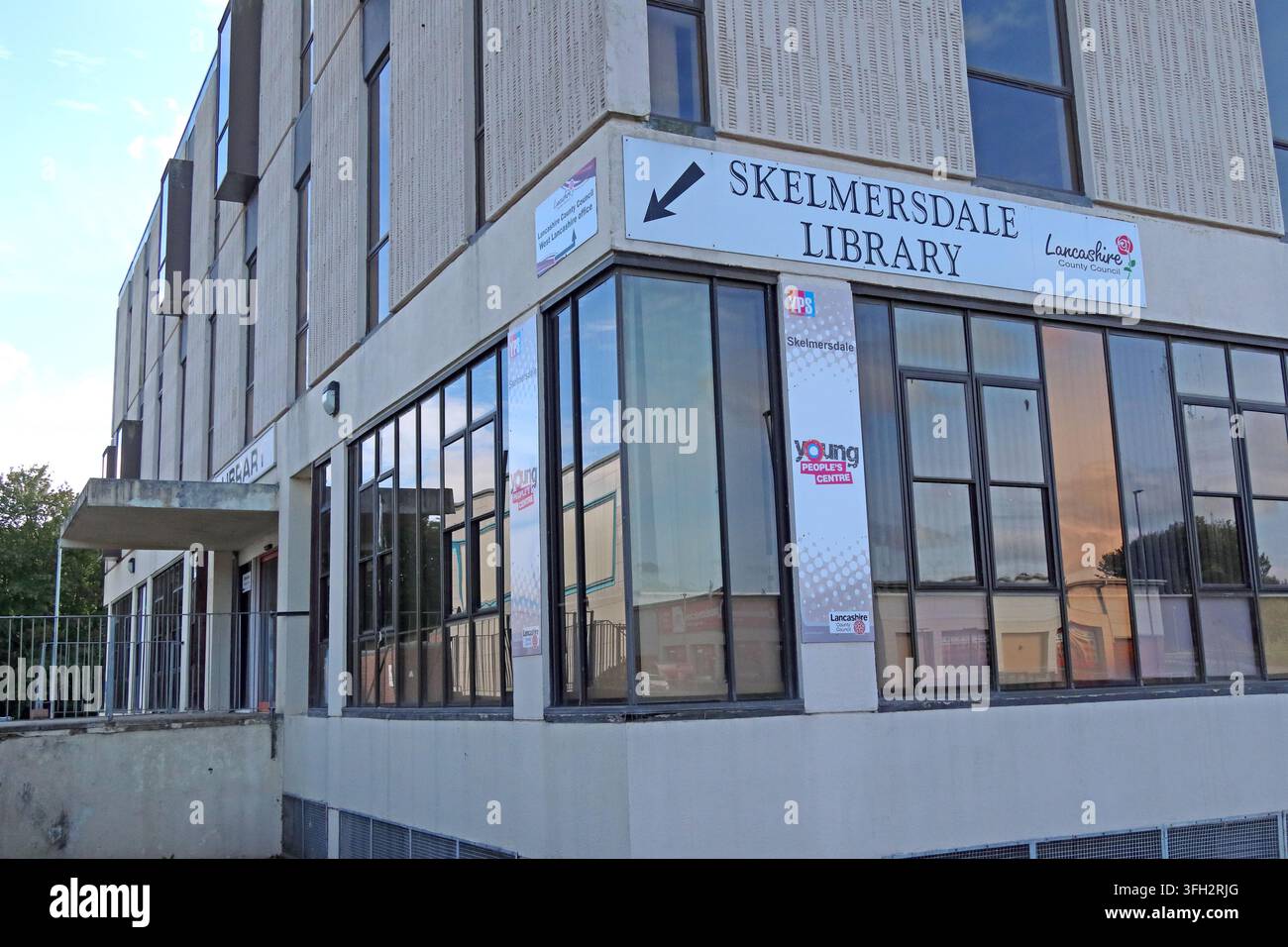
Image details
Contributor:
Tony SmithImage ID:
3FH2RJGFile size:
57.1 MB (2.2 MB Compressed download)Releases:
Model - no | Property - noDo I need a release?Dimensions:
5472 x 3648 px | 46.3 x 30.9 cm | 18.2 x 12.2 inches | 300dpiDate taken:
13 September 2026Location:
Skelmersdale Library, Southway, Skelmersdale, Lancashire, WN8 6NLMore information:
. Skelmersdale Library and council offices on Southway, Lancashire, forming part of the town's central civic and public-service area. The building carries Lancashire County Council library branding alongside other local public-service uses, reflecting the concentration of civic facilities around Skelmersdale's purpose-built town centre. The library at Southway, Skelmersdale, WN8 6NL provides books, public computers, Wi-Fi, printing, scanning, local studies material and space for community activity. Modern public libraries increasingly combine traditional lending with digital access, learning, advice, events and practical support, making them part of a town's social infrastructure rather than simply places to borrow books. That role is particularly important for residents who lack reliable broadband, devices or printers at home and need help to access benefits, housing services, job applications or other online systems. Libraries are also among the relatively few indoor public spaces where people can spend time without being required to buy anything, supporting inclusion across age and income groups. Skelmersdale itself was developed as a post-war new town, with housing, shopping, public services and road infrastructure planned on a large scale as population moved from Liverpool and surrounding areas. The civic setting around Southway therefore illustrates both the optimism of new-town planning and the continuing challenge of maintaining accessible local services decades later. Local-history collections, newspapers, photographs and reference material also help residents trace how the town has changed from the older Lancashire settlement into the modern Skelmersdale created by twentieth-century redevelopment. The scene links public libraries, literacy, digital inclusion, local government, community facilities and the changing role of town-centre civic buildings. Its continued use also records how councils balance community access with ageing civic estates.

