
Former Mid-Wales Housing Association offices, now associated with Barcud housing, Wales, UK.
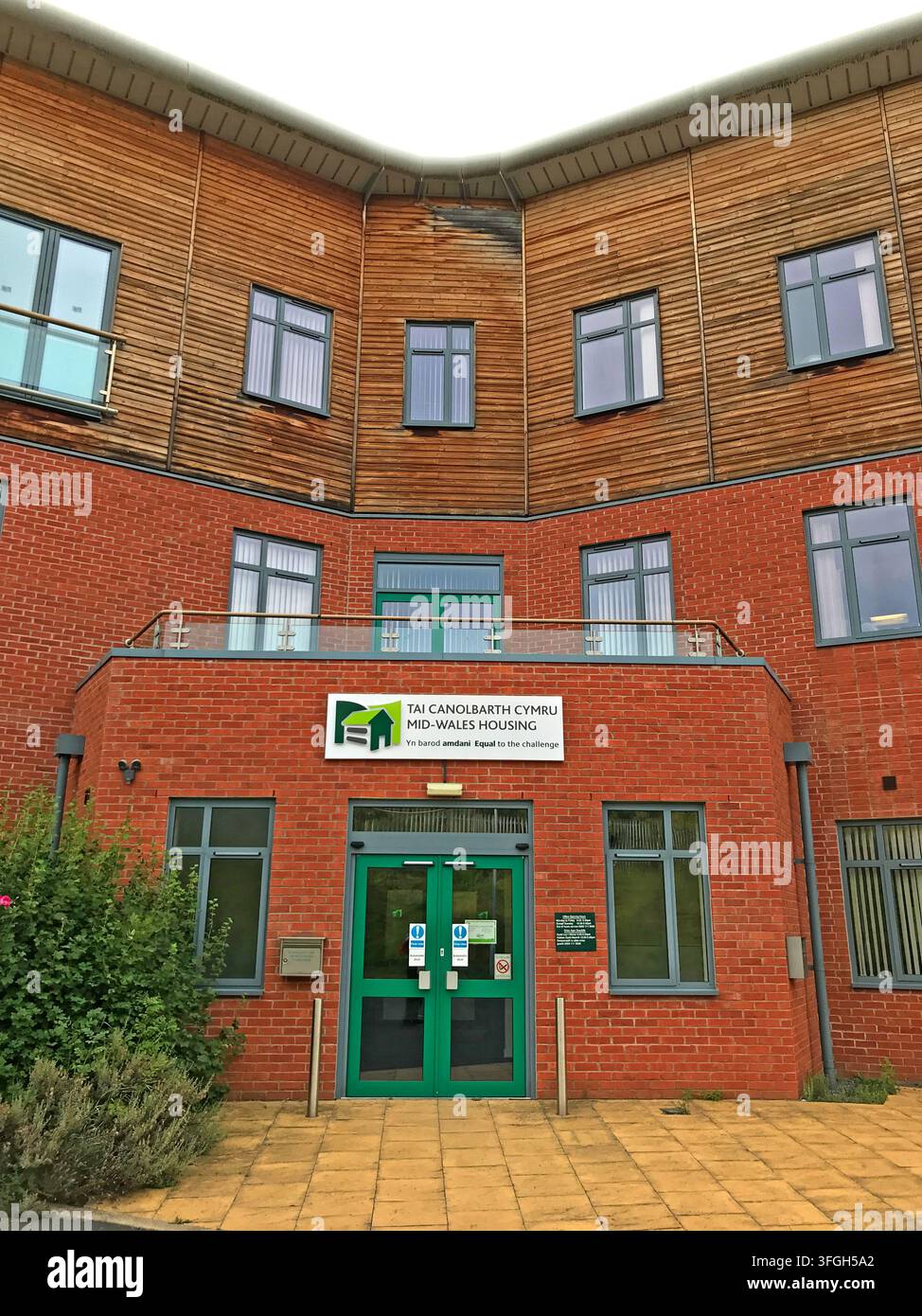
Image details
Contributor:
Tony SmithImage ID:
3FGH5A2File size:
44.1 MB (2.2 MB Compressed download)Releases:
Model - no | Property - noDo I need a release?Dimensions:
3399 x 4532 px | 28.8 x 38.4 cm | 11.3 x 15.1 inches | 300dpiDate taken:
21 August 2019Location:
Mid Wales, Wales, United KingdomMore information:
. Brick-built offices formerly used by Mid-Wales Housing Association, with bilingual Welsh and English housing-association signage visible above the entrance. The building represents the administrative side of social housing provision in rural and small-town Wales, rather than the homes themselves. Mid-Wales Housing Association was one of the organisations brought together in the creation of Barcud, a Welsh housing association operating across a large rural geography. The change illustrates continuing consolidation in the housing-association sector, where landlords combine governance, development, repairs, asset management and customer-service functions over wider areas. Bilingual branding reflects the normal use of Welsh alongside English in public and community-facing services. The bilingual sign is significant because the organisation served communities spread across mid-Wales, where Welsh-language identity is central to public-facing services. Housing-association offices coordinate rent, lettings, development, repairs and resident contact across homes that may be widely dispersed rather than concentrated in a single city. The photograph therefore records a former organisational identity that may disappear after merger, rebranding or office rationalisation. Damp, mould, building safety and energy efficiency have increased public scrutiny of how quickly housing organisations identify defects and whether residents can obtain an effective repair. Older housing stock often needs expensive retrofit to meet modern standards, especially where landlords are trying to improve energy performance without making homes unaffordable to heat. Mergers and organisational consolidation can change office footprints, branding and service structures even though residents may continue living in the same homes for decades. The housing-related service or residential setting is shown as part of the wider neighbourhood rather than in isolation.

