
Bray Daly DART railway station and platforms, Bray, County Wicklow, Ireland.
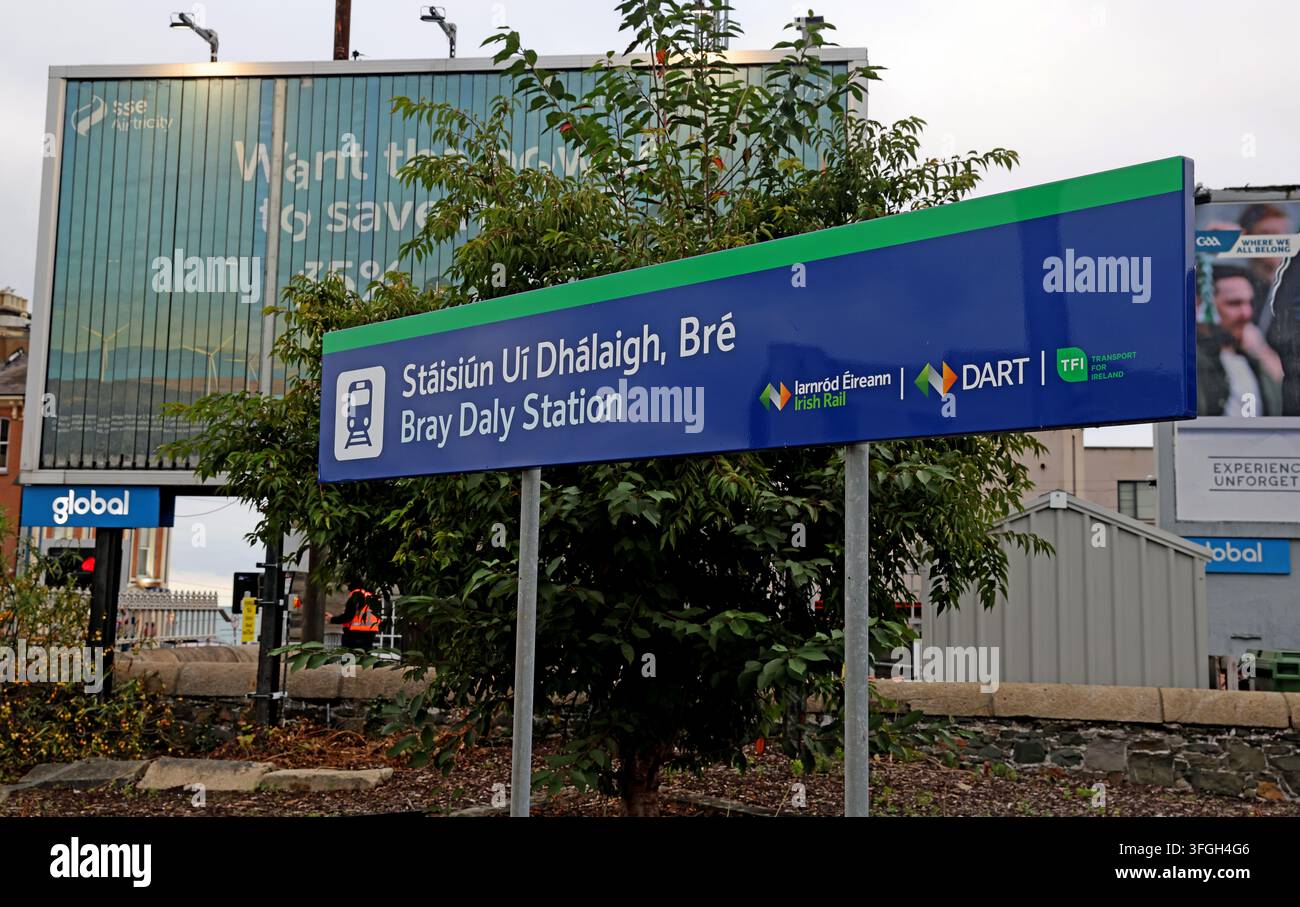
Image details
Contributor:
Tony SmithImage ID:
3FGH4G6File size:
115.8 MB (3.4 MB Compressed download)Releases:
Model - no | Property - noDo I need a release?Dimensions:
8024 x 5044 px | 67.9 x 42.7 cm | 26.7 x 16.8 inches | 300dpiDate taken:
20 August 2025Location:
Bray Daly railway station, Bray, County Wicklow, IrelandMore information:
. A wide view of Bray Daly railway station shows tracks, platforms, overhead electric wires and a DART train in the distance, with Bray Head forming the backdrop. The station combines traditional railway buildings with modern commuter infrastructure. Named after Irish revolutionary Edward Daly, Bray Daly serves the seaside town of Bray and is a key southern station on the Dublin Area Rapid Transit network. It handles commuters travelling towards Dublin as well as visitors to the promenade, coastal walks and Wicklow. The combination of Victorian-era railway heritage and intensive modern suburban use is characteristic of many stations around Dublin Bay. The wide view explains the station layout better than a close train portrait: multiple tracks, platforms, overhead electrification, footbridge and traditional station structures are all visible together. Bray Daly has to accommodate terminating DART services as well as trains continuing south, so it functions as more than a simple suburban halt. The wooded slopes beyond emphasise how quickly the railway leaves the dense Dublin urban area for the Wicklow coastline. Electric and high-capacity rail is central to attempts to reduce car dependence on busy urban and intercity corridors, although passengers judge the network just as strongly on reliability, frequency and fares. Railway signs and destination displays are part of the operational system rather than decoration, guiding passengers through complex journeys and preserving local language and place names. Overhead electrification, platforms, bridges and signalling are the less glamorous infrastructure behind frequent passenger services and can be as important to capacity as the trains themselves. Older stations frequently combine historic buildings with modern accessibility and passenger systems, producing layers of railway architecture rather than a single design period.

