
MOBY shared electric hire bikes parked in Bray, County Wicklow, part of the town's app-based public e-bike scheme.
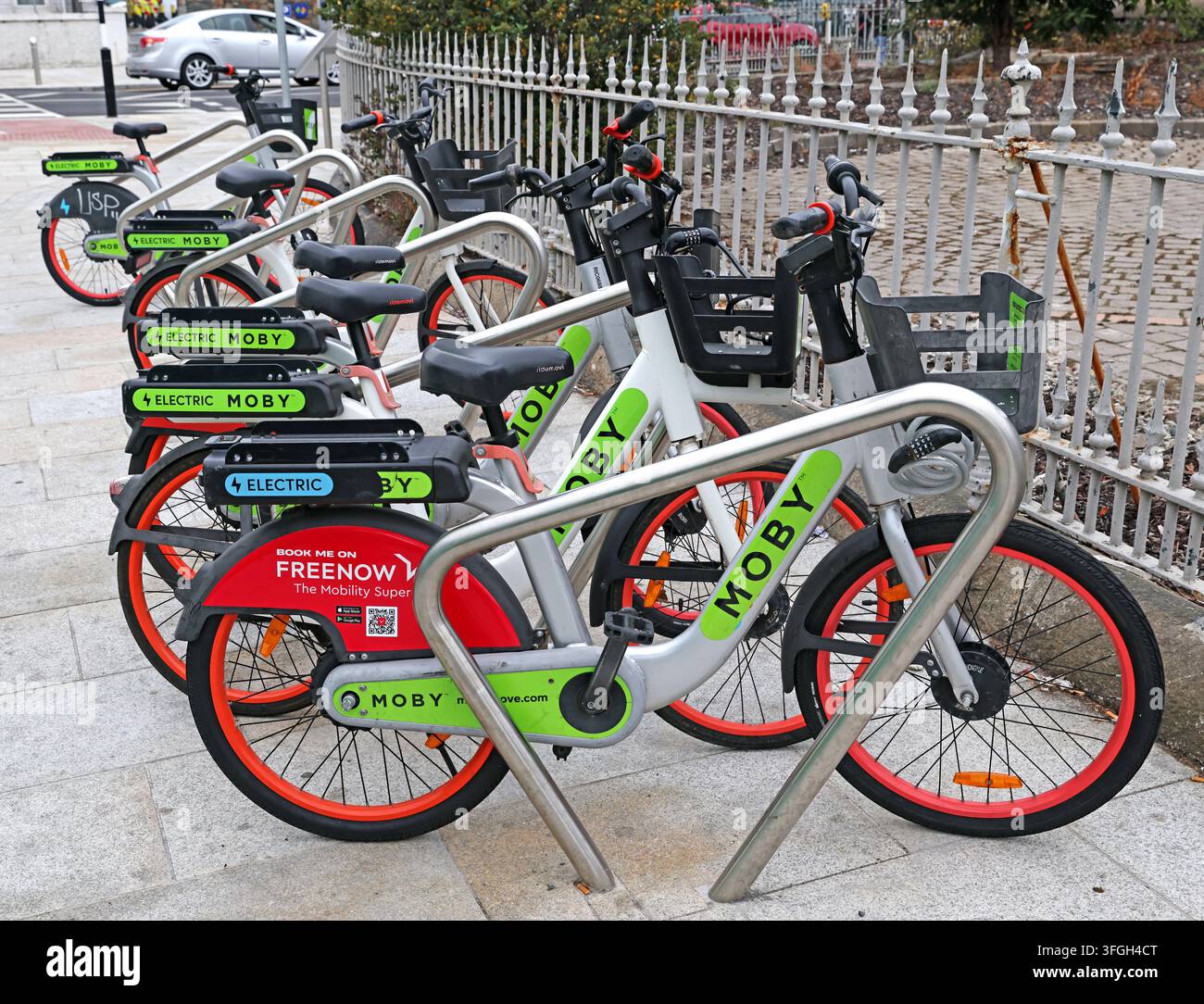
Image details
Contributor:
Tony SmithImage ID:
3FGH4CTFile size:
105.9 MB (5.1 MB Compressed download)Releases:
Model - no | Property - noDo I need a release?Dimensions:
6956 x 5320 px | 58.9 x 45 cm | 23.2 x 17.7 inches | 300dpiDate taken:
20 August 2025Location:
Bray, County Wicklow, IrelandMore information:
. A row of MOBY shared electric bicycles is parked at a public cycle stand in Bray, County Wicklow, showing the town's growing use of app-based micromobility alongside buses, trains, cars and walking. Wicklow County Council and MOBY relaunched and expanded a public e-bike sharing scheme in Bray in March 2025 with an initial fleet of 100 bicycles. Users locate and unlock the bikes through the MOBY MOVE app, with parking managed through designated physical stands and virtual mandatory parking locations. Electric assistance makes shared cycling practical for a wider range of people and journeys because hills, distance and headwinds require less physical effort than on a conventional bicycle. In Bray that can support everyday trips between the station, seafront, residential areas, shops and employment as well as leisure journeys by visitors. The scheme was planned to expand beyond Bray into other County Wicklow towns, creating the possibility of inter-town journeys and links with MOBY operations in County Dublin. Shared e-bikes sit between traditional public transport and private vehicle ownership: the customer uses an individual vehicle on demand but does not need to store, maintain or purchase it. Their success depends heavily on responsible parking, battery charging, maintenance and enough bikes being available where users actually need them. The conspicuous green, red and black frames also turn the cycles into mobile advertising for the service as they circulate through the town. Public bike schemes are increasingly part of climate and transport policy because short car journeys are among the trips most readily replaced by walking, cycling or electric-assisted cycling. Bray's DART connection means e-bikes can also solve the 'last mile' problem, allowing rail passengers to complete a local journey without waiting for a bus or using a car. Mandatory parking locations are intended to prevent shared bicycles obstructing footways after a journey ends.

