
Iarnród Éireann Class 22000 InterCity Railcar at Dublin Connolly for the Wexford line, Ireland.
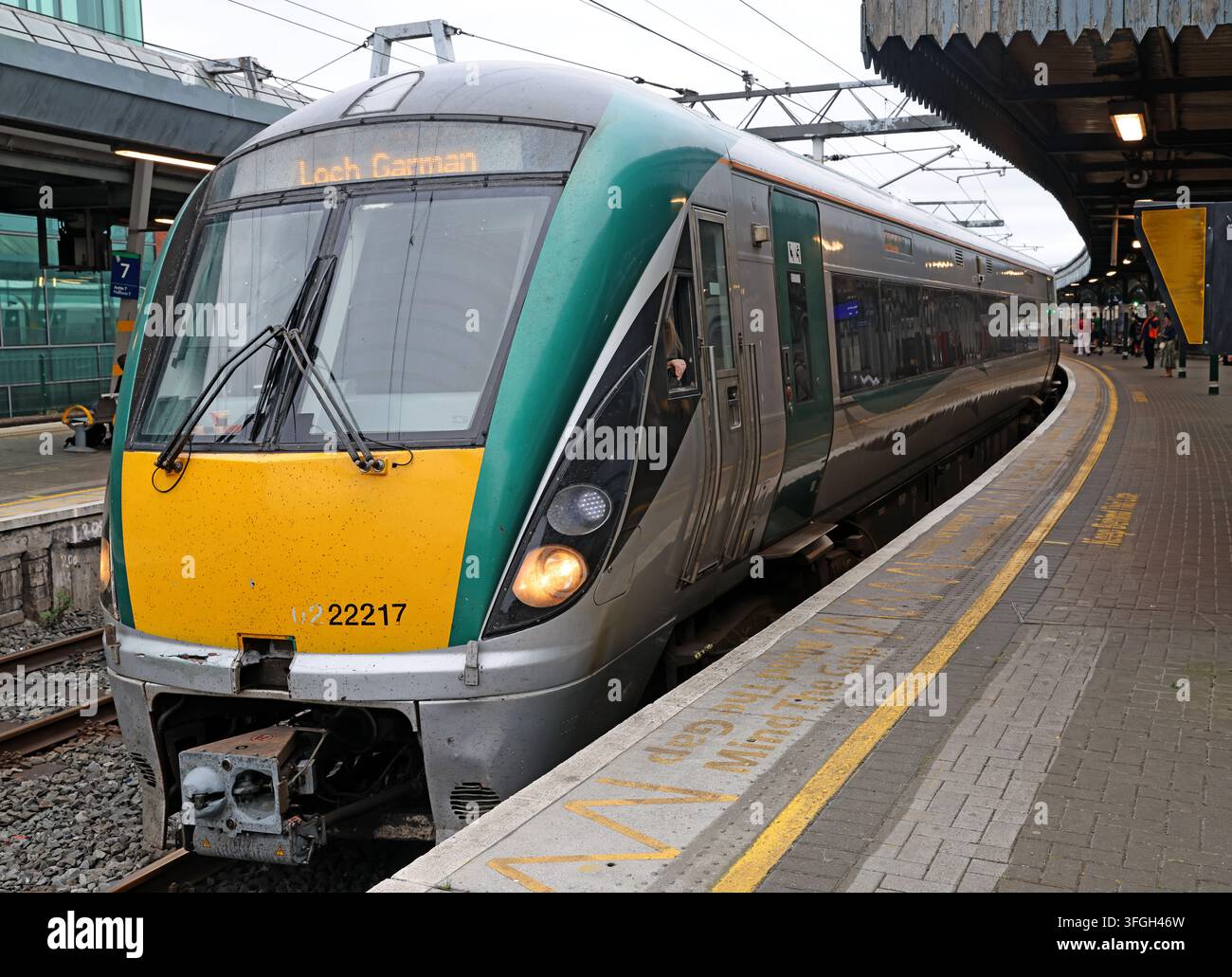
Image details
Contributor:
Tony SmithImage ID:
3FGH46WFile size:
117.9 MB (4.2 MB Compressed download)Releases:
Model - no | Property - noDo I need a release?Dimensions:
7544 x 5464 px | 63.9 x 46.3 cm | 25.1 x 18.2 inches | 300dpiDate taken:
20 August 2025Location:
Dublin Connolly station, Amiens Street, Dublin 1, IrelandMore information:
. An Iarnród Éireann Class 22000 InterCity Railcar stands at Dublin Connolly displaying a service for Loch Garman/Wexford. The streamlined diesel train, yellow cab front and bilingual destination information identify a modern Irish intercity service. The Class 22000 fleet forms the backbone of many Iarnród Éireann InterCity and longer-distance commuter services. Trains from Connolly towards Wexford follow the east coast south through County Wicklow, sharing parts of the corridor with DART services before continuing beyond the electrified suburban network. Bilingual destination displays reflect Irish-language naming throughout the national railway system. The 22000-series railcar's diesel power allows it to continue well beyond the electrified DART limit on the route through Wicklow to County Wexford. The destination display uses Loch Garman alongside Wexford, placing the Irish language prominently on a modern passenger information system. These trains replaced much older locomotive-hauled and railcar stock on many routes and have become the standard visual image of contemporary Irish intercity rail. Electric and high-capacity rail is central to attempts to reduce car dependence on busy urban and intercity corridors, although passengers judge the network just as strongly on reliability, frequency and fares. Railway signs and destination displays are part of the operational system rather than decoration, guiding passengers through complex journeys and preserving local language and place names. Overhead electrification, platforms, bridges and signalling are the less glamorous infrastructure behind frequent passenger services and can be as important to capacity as the trains themselves. Older stations frequently combine historic buildings with modern accessibility and passenger systems, producing layers of railway architecture rather than a single design period. The setting remains clearly identifiable.

