
DART train passes colourful urban murals and graffiti beside the railway in Dublin, combining public transport with street art.
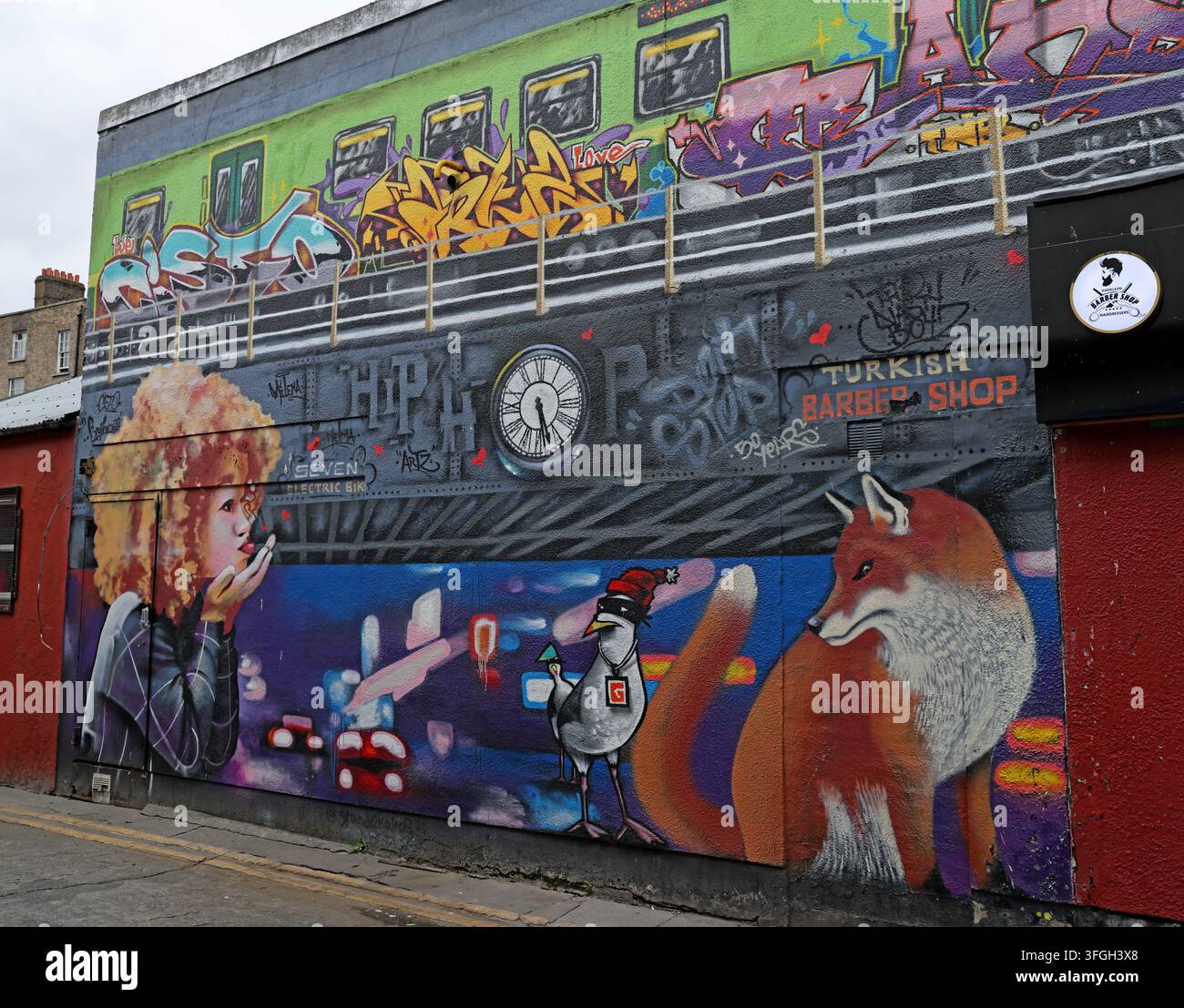
Image details
Contributor:
Tony SmithImage ID:
3FGH3X8File size:
109.1 MB (6.8 MB Compressed download)Releases:
Model - no | Property - noDo I need a release?Dimensions:
6980 x 5464 px | 59.1 x 46.3 cm | 23.3 x 18.2 inches | 300dpiDate taken:
20 August 2025Location:
Dublin, IrelandMore information:
. A DART electric train passes a wall covered with colourful murals and graffiti in Dublin, bringing two highly visible elements of the contemporary city into the same railway scene. The Dublin Area Rapid Transit network has carried commuters through the capital since electric services began in 1984, using a north-south rail corridor that cuts through neighbourhoods with very different architecture, land uses and social histories. Railway boundaries, arches, retaining walls and industrial buildings often provide large surfaces for both commissioned street art and unofficial graffiti, making rail journeys an evolving gallery of urban visual culture. The work visible here includes large lettering, figurative imagery and layered tags, suggesting a wall that has accumulated different interventions over time. DART trains are themselves moving pieces of the cityscape, their familiar green livery appearing repeatedly behind housing, businesses, bridges and public art as they travel through Dublin. Street art can transform neglected or defensive infrastructure by adding colour and local character, although distinctions between legal murals, commissioned pieces and unauthorised graffiti remain important to property owners and councils. The railway setting also affects how the artwork is seen: passengers may encounter it only for seconds from a moving train, while pedestrians experience the wall at street level. Dublin has developed a substantial street-art scene alongside its more formal cultural institutions, with murals increasingly used for regeneration, business promotion, political expression and community projects. The juxtaposition with DART emphasises a city constantly moving past surfaces that are themselves repeatedly repainted and reinterpreted. Rail corridors are particularly valuable documentary locations because they preserve layers of advertising, industrial history, informal art and infrastructure within a narrow strip of urban land.

