
Historic Clerys clock on O'Connell Street in Dublin, restored as a famous meeting place outside the former department store.
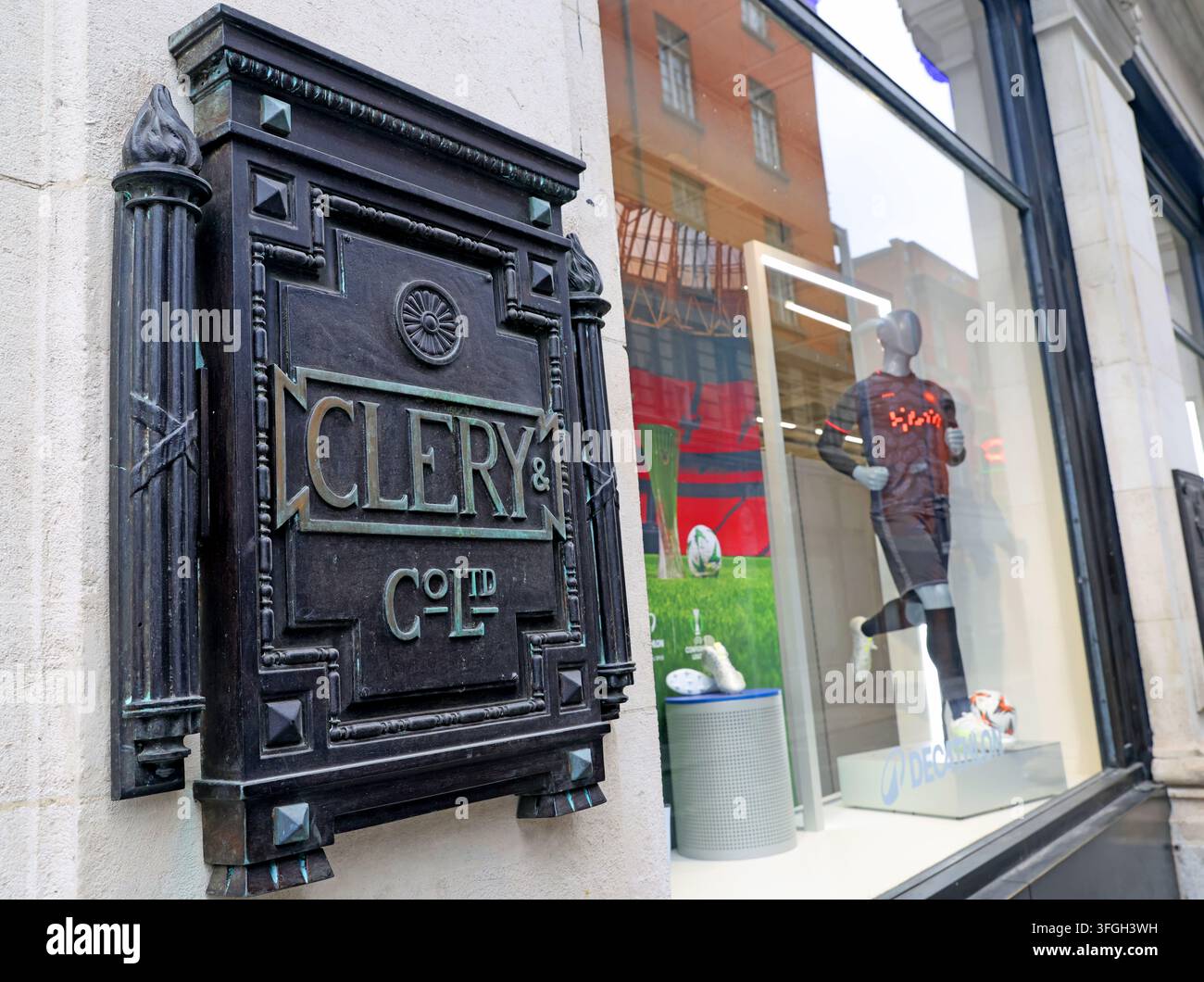
Image details
Contributor:
Tony SmithImage ID:
3FGH3WHFile size:
114.4 MB (4 MB Compressed download)Releases:
Model - no | Property - noDo I need a release?Dimensions:
7316 x 5464 px | 61.9 x 46.3 cm | 24.4 x 18.2 inches | 300dpiDate taken:
20 August 2025Location:
Clerys Quarter, 18-27 O'Connell Street Upper, Dublin 1, IrelandMore information:
. The historic Clerys clock projects above O'Connell Street in central Dublin, one of the city's most famous meeting points and a surviving symbol of the department store that traded here for generations. Clerys developed into a major Dublin retail institution during the nineteenth century, occupying a prominent position on what was then Sackville Street and later became O'Connell Street. The building was destroyed by fire during the 1916 Easter Rising and subsequently rebuilt, reopening in the early 1920s. Over time the large exterior clock acquired a social importance beyond its practical function: 'under Clerys clock' became a standard rendezvous for friends, couples and families long before mobile phones made last-minute changes of plan easy. The store also featured in Dublin's wider cultural life through shopping, entertainment and its place on the capital's principal ceremonial street. Clerys closed abruptly in 2015, ending the traditional department-store operation and prompting controversy over job losses and the future of the building. The subsequent Clerys Quarter redevelopment restored important heritage features, including the clock, while adapting the complex for a mixture of new commercial uses. Its return to the street preserves a tangible link with generations of Dublin social history even though the retail business behind the name has changed fundamentally. O'Connell Street itself has witnessed rebellion, political commemoration, transport change and repeated redevelopment, so the clock belongs to a much larger historic streetscape. The phrase 'under Clerys clock' remains embedded in Dublin memory precisely because the object served as neutral public territory where people could wait without needing to enter a shop. Its survival demonstrates how a relatively small architectural feature can carry more collective meaning than much larger buildings around it.

