
Dublin Bus route 1 double-decker on O’Connell Street with city-centre passengers, Dublin, Ireland.
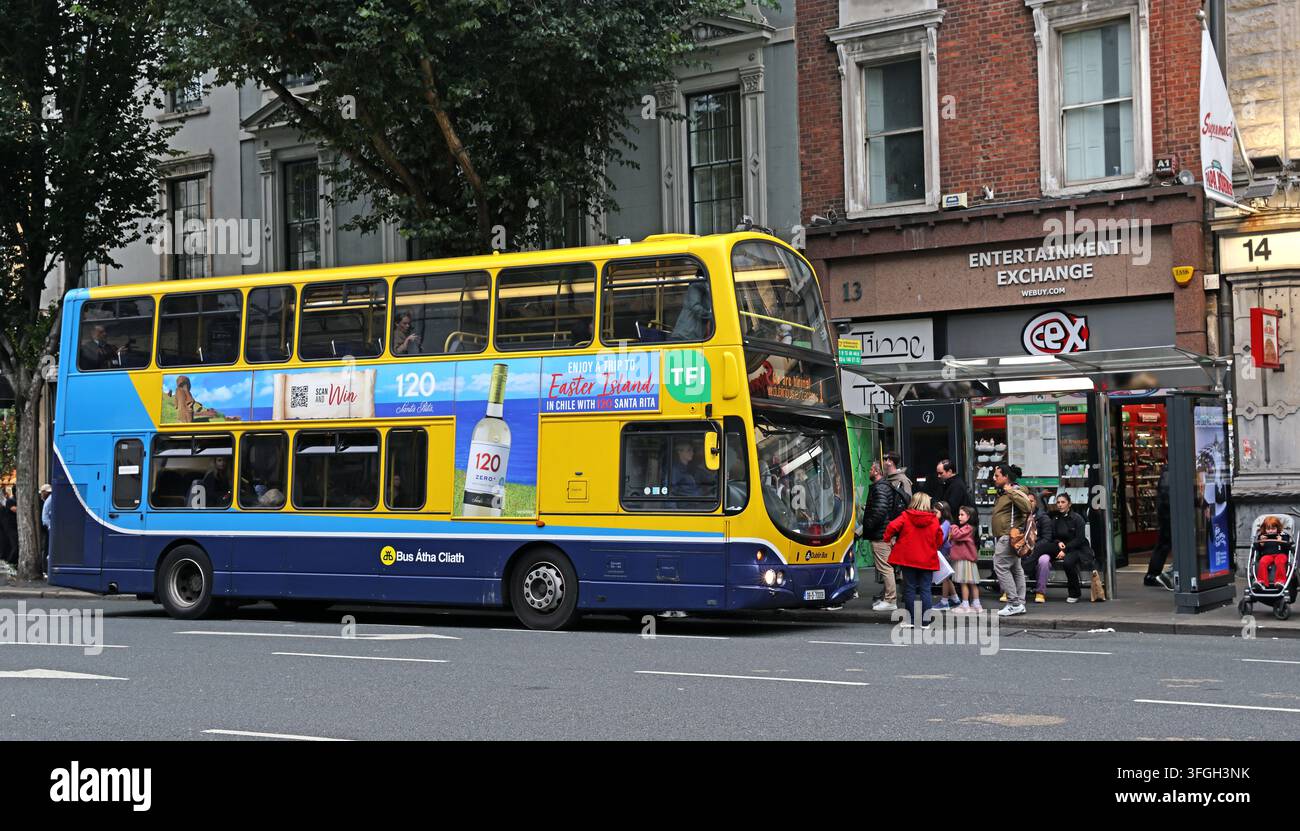
Image details
Contributor:
Tony SmithImage ID:
3FGH3NKFile size:
110.6 MB (4.5 MB Compressed download)Releases:
Model - no | Property - noDo I need a release?Dimensions:
8232 x 4695 px | 69.7 x 39.8 cm | 27.4 x 15.7 inches | 300dpiDate taken:
20 August 2025Location:
O’Connell Street, Dublin 1, IrelandMore information:
. A Dublin Bus route 1 double-decker operates on O’Connell Street as passengers and pedestrians gather in the busy city centre. Shops, bus stops and upper-floor commercial premises create a dense urban backdrop to the blue-and-yellow bus. O’Connell Street is one of Dublin’s principal transport and shopping corridors and carries numerous bus routes through the heart of the capital. Double-deck buses remain central to everyday commuting because many parts of Dublin are not served directly by rail. The street scene records the interaction of public transport, retail, tourism and heavy pedestrian movement in the central city. Route 1 is shown in the middle of the capital's busiest streets rather than on an outer suburban road, demonstrating how ordinary local bus services share space with tourists, shops and national landmarks. People waiting near the stop add the passenger side of the story, while upper-floor signs show the mixed commercial uses lining O'Connell Street. The blue-and-yellow livery also records the appearance of Dublin Bus before further fleet electrification and branding changes. Historic buildings and modern transport systems sit unusually close together in central Dublin, so infrastructure changes often have to work within streets shaped long before mass motor traffic. Street art, commercial signs and transport branding together show a contemporary capital whose visual identity is not confined to Georgian architecture and national monuments. The area around Connolly, O'Connell Street, College Green and Westmoreland Street is especially significant because national transport, local buses, retail and tourism overlap within walking distance. Dublin's compact centre concentrates buses, rail passengers, tourists, shoppers and pedestrians into a small number of streets, making transport policy immediately visible in the public realm. The scene combines a recognisable Dublin location with the everyday movement of people through the capital.

