
The York Tap real-ale pub at York railway station, North Yorkshire, England, UK.
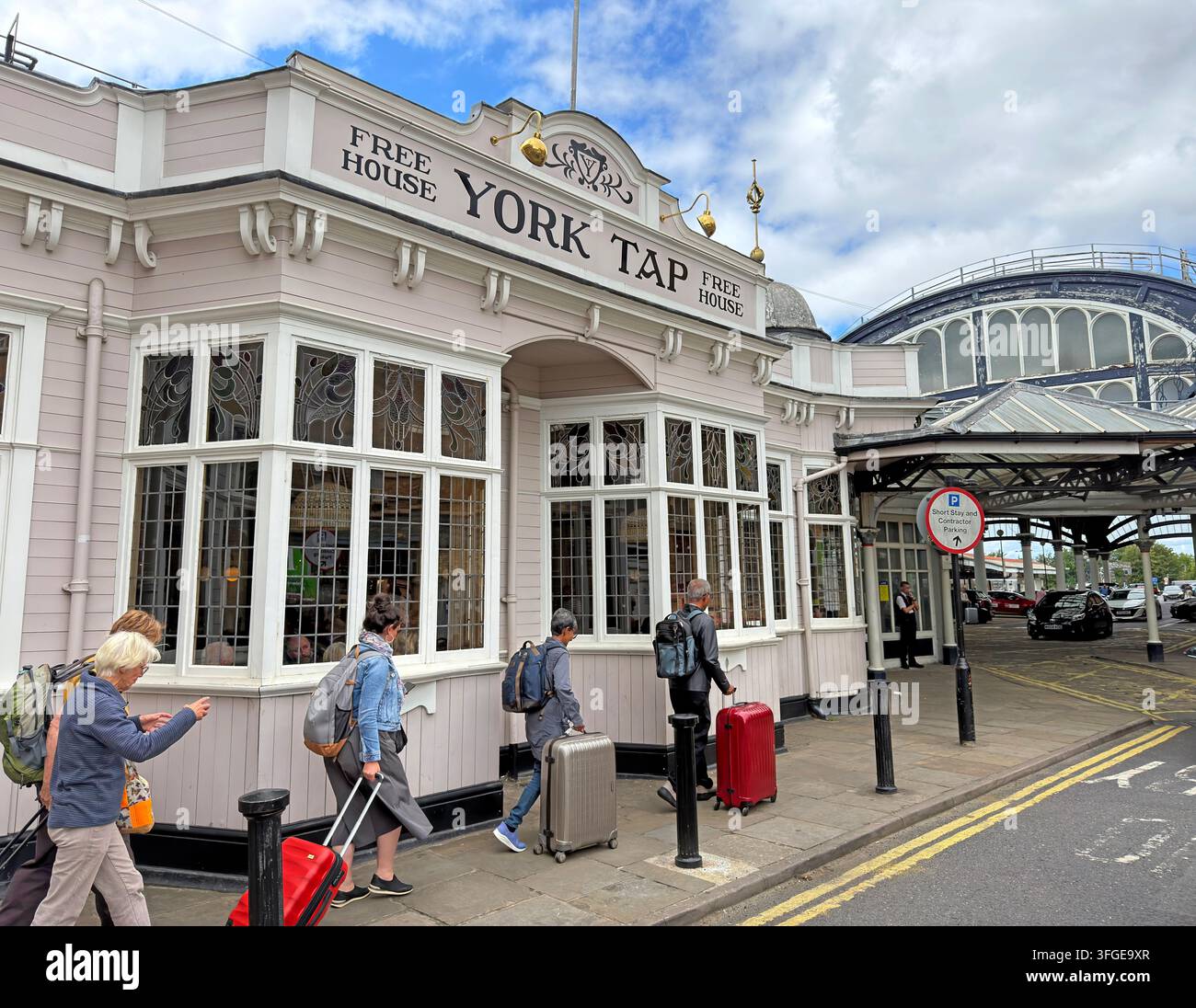
Image details
Contributor:
Tony SmithImage ID:
3FGE9XRFile size:
93.9 MB (3.5 MB Compressed download)Releases:
Model - no | Property - noDo I need a release?Dimensions:
6512 x 5042 px | 55.1 x 42.7 cm | 21.7 x 16.8 inches | 300dpiDate taken:
5 September 2026Location:
York railway station, Station Road, York, North Yorkshire, YO24 1AB, UKMore information:
. The York Tap pub occupies part of the historic York railway station frontage, with passengers and luggage outside beneath the prominent “YORK TAP” signage. The venue is closely integrated with the station, allowing rail travellers to stop for beer without leaving the transport complex. Railway-station pubs form a distinctive strand of British pub culture, serving commuters and long-distance passengers as well as local drinkers. The York Tap is particularly associated with cask and craft beer and occupies a restored historic part of the station. York is a major junction on the East Coast Main Line, so the pub benefits from heavy passenger footfall and the city’s strong tourism economy. The pub's position inside the station makes rail timetables part of the customer rhythm, with drinkers arriving between connections or meeting before a journey. York station is a major stop for East Coast Main Line services and also handles regional routes, so the catchment is far larger than the surrounding neighbourhood. A strong real-ale identity differentiates the York Tap from generic station catering and links it to Britain's continuing interest in independent brewing. The British pub sector has been reshaped by changing drinking habits, supermarket alcohol, staffing costs, energy prices and the growth of food-led and managed-chain formats. Pubs and beer festivals remain social spaces where the product is only part of the attraction, with meeting, music, conversation and community events central to their role. Historic pub buildings often adapt repeatedly to new expectations around food, accessibility, outdoor seating and longer opening hours while retaining older names or decorative features. Railway and music-venue pubs have an additional captive or event-driven audience, meaning customer demand rises and falls with timetables, gigs and visitor flows rather than only local residents.

