
Brick-built social housing flats off George Street in York, North Yorkshire, England, UK.
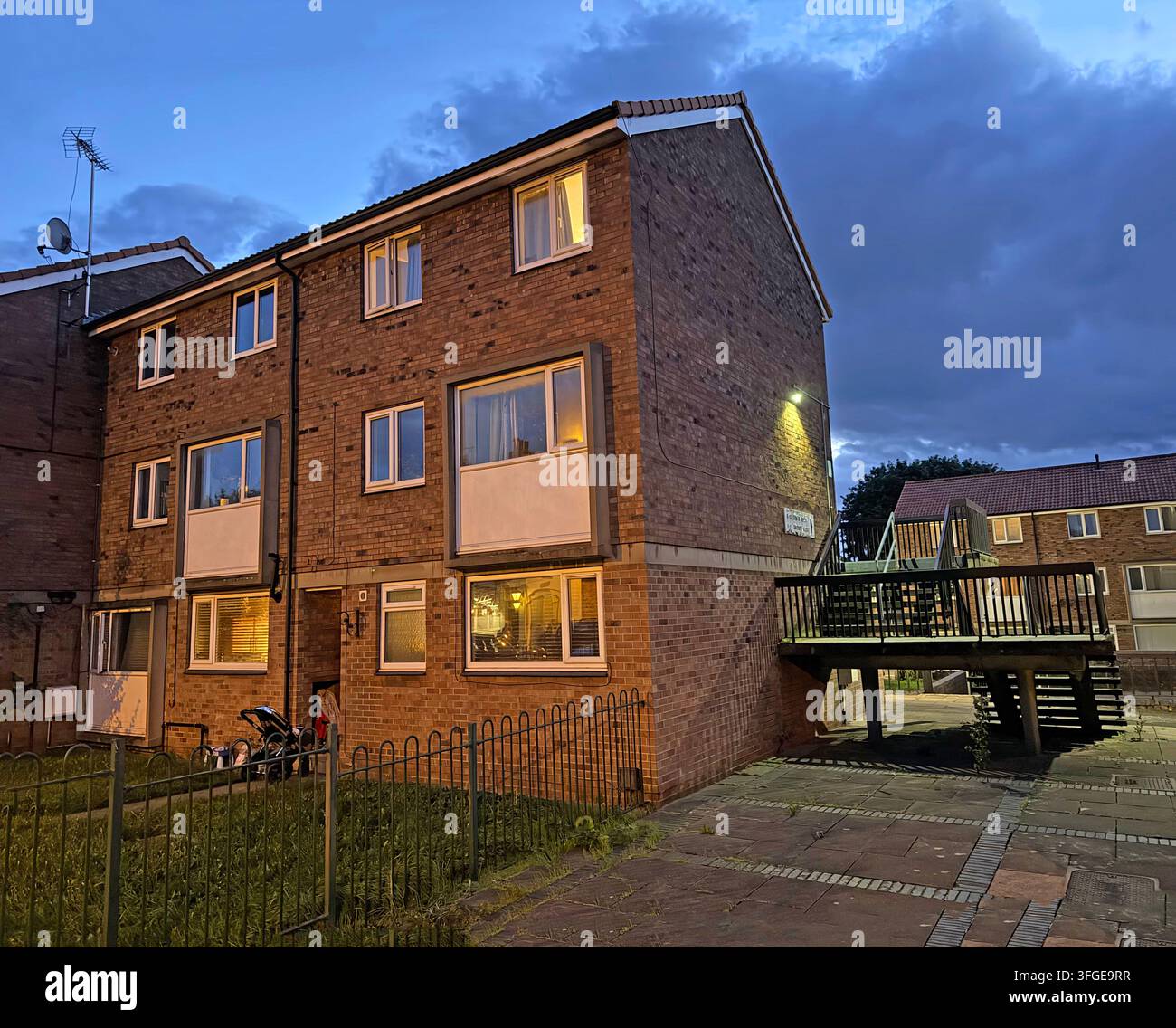
Image details
Contributor:
Tony SmithImage ID:
3FGE9RRFile size:
50.3 MB (1.9 MB Compressed download)Releases:
Model - no | Property - noDo I need a release?Dimensions:
4672 x 3761 px | 39.6 x 31.8 cm | 15.6 x 12.5 inches | 300dpiDate taken:
4 September 2026Location:
George Street, York, North Yorkshire, England, UKMore information:
Brick-built social housing flats off George Street in York, North Yorkshire, England, photographed at dusk, showing a three-storey post-war residential block with simple red-brown brick elevations, white-framed windows and external access structures beside a paved communal area. The low-rise development reflects the practical municipal housing architecture widely built by British local authorities during the 1960s, when councils were expanding affordable rented housing and replacing older or overcrowded accommodation. Evening light glows from several windows while the deep blue sky and illuminated wall light emphasise the lived-in character of the estate rather than presenting it as an architectural showpiece. Metal railings, small front garden areas, pedestrian paving, external steps and raised access decking illustrate the communal design features often associated with mid-20th-century council housing. Such estates remain an important part of York's housing stock and of the wider history of post-war social housing in England, providing homes at below-market rents for households unable to access private ownership or increasingly expensive private renting. The image can illustrate discussion of council housing, affordable homes, housing need, estate maintenance, ageing building stock, retrofit, insulation, energy efficiency, decarbonisation and investment in existing social rented homes. It is also relevant to debate about housing shortages, waiting lists, regeneration and the long-term future of 1960s residential developments, many of which now require sustained spending on roofs, windows, heating, fire safety, accessibility and communal areas. The modest scale and dense urban layout contrast with York's better-known historic streets and visitor attractions, highlighting the ordinary residential neighbourhoods where local people live close to the city centre. The scene records everyday housing at twilight in a historic English city.

